


Hospital complex of the Tanguiéta commune (Benin), which includes the hospital, the nutritional center and the campsite. The last two spaces are separated from the rest of the hospital by a road.
¿Qué es lo que queremos reparar?
- Pumping and well system: improvement of water quality, filling control and leaking water networks.
- Supply system: deposit ( chlorination treatment ( 2 drops of hypochlorite per liter) and solar disinfection).
- Sanitation System
- Water abstraction
- Conveyance/Evacuation: Truck / Conduit/
- Tratamiento: Intensivo (mecánicos con decantador + biodigestor….) o Extensivo: 1ºrastrillo o malla, 2º tanque de grasas, 2ºA filtros verdes (chopos), 2ºB lagunaje (carrizos, eneas…); 2ºC humedales artificiales. Todos los sistemas con derivación (máximo 1m3/hora). Unido a la mejora del pavimento, control de la escorrentía.
- Treatment: Intensive (mechanical with decanter + biodigester) or Extensive: 1º rake or net, 2º grease reservoir, 2ºA green filters, 2ºB lagooning (reed, bulrush), 2ºC artifical wetlands. All the systems with derivation (max. 1m3/hour). Along with the pavement improvement, control of runoff.
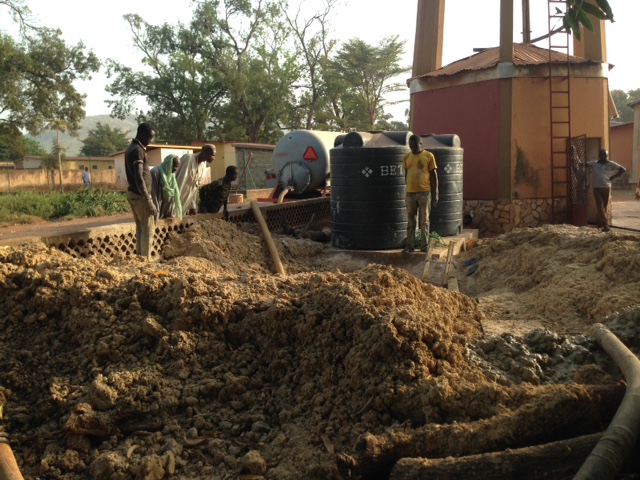
Hospital complex of the Tanguiéta commune (Benin), which includes the hospital, the nutritional center and the campsite. The last two spaces are separated from the rest of the hospital by a road.
¿Qué es lo que queremos reparar?
- Pumping and well system: improvement of water quality, filling control and leaking water networks.
- Supply system: deposit ( chlorination treatment ( 2 drops of hypochlorite per liter) and solar disinfection).
- Sanitation System
- Water abstraction
- Conveyance/Evacuation: Truck / Conduit/
- Tratamiento: Intensivo (mecánicos con decantador + biodigestor….) o Extensivo: 1ºrastrillo o malla, 2º tanque de grasas, 2ºA filtros verdes (chopos), 2ºB lagunaje (carrizos, eneas…); 2ºC humedales artificiales. Todos los sistemas con derivación (máximo 1m3/hora). Unido a la mejora del pavimento, control de la escorrentía.
- Treatment: Intensive (mechanical with decanter + biodigester) or Extensive: 1º rake or net, 2º grease reservoir, 2ºA green filters, 2ºB lagooning (reed, bulrush), 2ºC artifical wetlands. All the systems with derivation (max. 1m3/hour). Along with the pavement improvement, control of runoff.
The water supply service is intended for towns in the Department of Matam (Senegal), with a population between 2,000 and 5,000 inhabitants and a daily demand that ranges between 80 and 200 cubic meters.
Technical support for the design and implementation of six hybrid photovoltaic pumping units with diesel or electricity grid.

The water supply service is intended for towns in the Department of Matam (Senegal), with a population between 2,000 and 5,000 inhabitants and a daily demand that ranges between 80 and 200 cubic meters.
Technical support for the design and implementation of six hybrid photovoltaic pumping units with diesel or electricity grid.
Aimed at villages in the Chamwino District (Tanzania), where more than a third of the homes lack latrines and the existing ones do not meet the minimum standards, which, together with the lack of water, has serious consequences on the health of the population .
Improvements and participatory design of sustainable sanitation systems, through research and innovation.
The Universidad Politécnica de Madrid (UPM) leads the cooperation project “Sustainable sanitation systems in the Chamwino district (Tanzania). Improvements and participatory design through research and innovation”. The Spanish NGO Ongawa (ONGD) and the Ardhy University (located in Dar es-Salam, the most populous city in Tanzania) also participate.

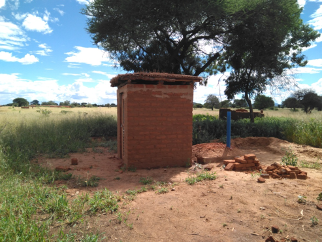
Aimed at villages in the Chamwino District (Tanzania), where more than a third of the homes lack latrines and the existing ones do not meet the minimum standards, which, together with the lack of water, has serious consequences on the health of the population .
Improvements and participatory design of sustainable sanitation systems, through research and innovation.
The Universidad Politécnica de Madrid (UPM) leads the cooperation project “Sustainable sanitation systems in the Chamwino district (Tanzania). Improvements and participatory design through research and innovation”. The Spanish NGO Ongawa (ONGD) and the Ardhy University (located in Dar es-Salam, the most populous city in Tanzania) also participate.