My Reflection on The Week – Luis Quintero

Taking part in The Week was a meaningful experience for me. I already knew a lot about climate change, but watching everything together with time to think, discuss, and imagine the future, made me reflect more deeply on my own feelings and my role in this crisis.

Day 1

The first day showed the main problems we face: melting ice, extreme weather, and the lack of strong political action. While the situation is serious, my main takeaway aligns with what I noted in our group work: I believe that being sad or angry won’t solve the situation. That’s why I prefer to keep a positive attitude toward the future and work to change it. When we imagined our lives in 2050, I pictured myself happy, with no worries about the climate situation because we managed to solve it collectively.

Day 2

Day 2 made me think about personal choices and the bigger system. My philosophy, which I shared with the group, revolves around balance and a holistic approach. I try to live a “better” life, seeking functionality over quantity, but I recognize that some “more” aspects, like eating meat or air travel, are hard to change without big sacrifices. The key for me is ensuring the story of “better” is higher than the story of “more.” I also agree with the idea from the videos and my teammate Linda that we don’t need to be perfect; we just need everyone to try their best.

Day 3

The last day focused on imagining a positive and realistic future. This resonated strongly with me. I see myself developing environmentally optimized solutions for manufacturing industries, contributing to a circular economy. This future-oriented thinking gives me motivation instead of fear. Hope is not unrealistic; it is a necessary driver for action.

Talking With the Group

The group discussion was one of the best parts. Majo from Ecuador and I (from Colombia) shared concerns about our coastal cities facing flooding and sea-level rise, while Mavis said Ghana is already experiencing irregular rainfall and heat. In contrast, Linda noted that Austria is “not deadly affected.” This made the climate crisis feel immediate and personal, showing it’s not a future problem but a current one that impacts people unevenly. Our personal philosophies also aligned; we all emphasized mindful consumption, with Linda and I focusing on awareness of what we consume, and Majo and Mavis on mindful eating and anti-consumerism. We all want to support a fair and sustainable future.

Inner Development Goals

Reflecting on the Inner Development Goals, I can see my strengths and areas for growth. I am generally good at Being and Thinking; I have a strong sense of curiosity and a learning mindset, and I can use systems thinking to understand our complex world. However, I feel my presence could be stronger, and I need to work more consciously on the Relating domain, particularly on deepening my empathy and improving my communication skills. I want to grow in my ability to truly connect with others’ experiences and articulate ideas collaboratively. These personal skills are not just important for my future work, but are essential for the collective transition our world needs.

Final Thoughts

The Week did not completely change my worldview, but it helped me slow down and reflect. It reinforced my belief that the future is not fixed, it depends on what we do today. By 2050, I hope to look back and feel that I contributed something meaningful through my work, my support for sustainable solutions, and a life aligned with my values. I cannot change everything. But I can choose how I act, how I work, and what kind of future I support.

About LUIS ANGEL QUINTERO SERRANO

Environmental engineer passionate about creating innovative solutions that promote circular economy to drive positive change in society. My professional trajectory has focused on research, proposal development, and computational modeling in various areas of environmental engineering, especially in water resources and solid waste. I am convinced that addressing environmental challenges requires interdisciplinary collaboration and the formation of a strong network of professionals with deep knowledge in science and technology. My goal is to actively contribute to this collective effort, applying my skills and experience to generate positive impact on the environment and society as a whole.

🌍 The Week: From Fear to Responsibility

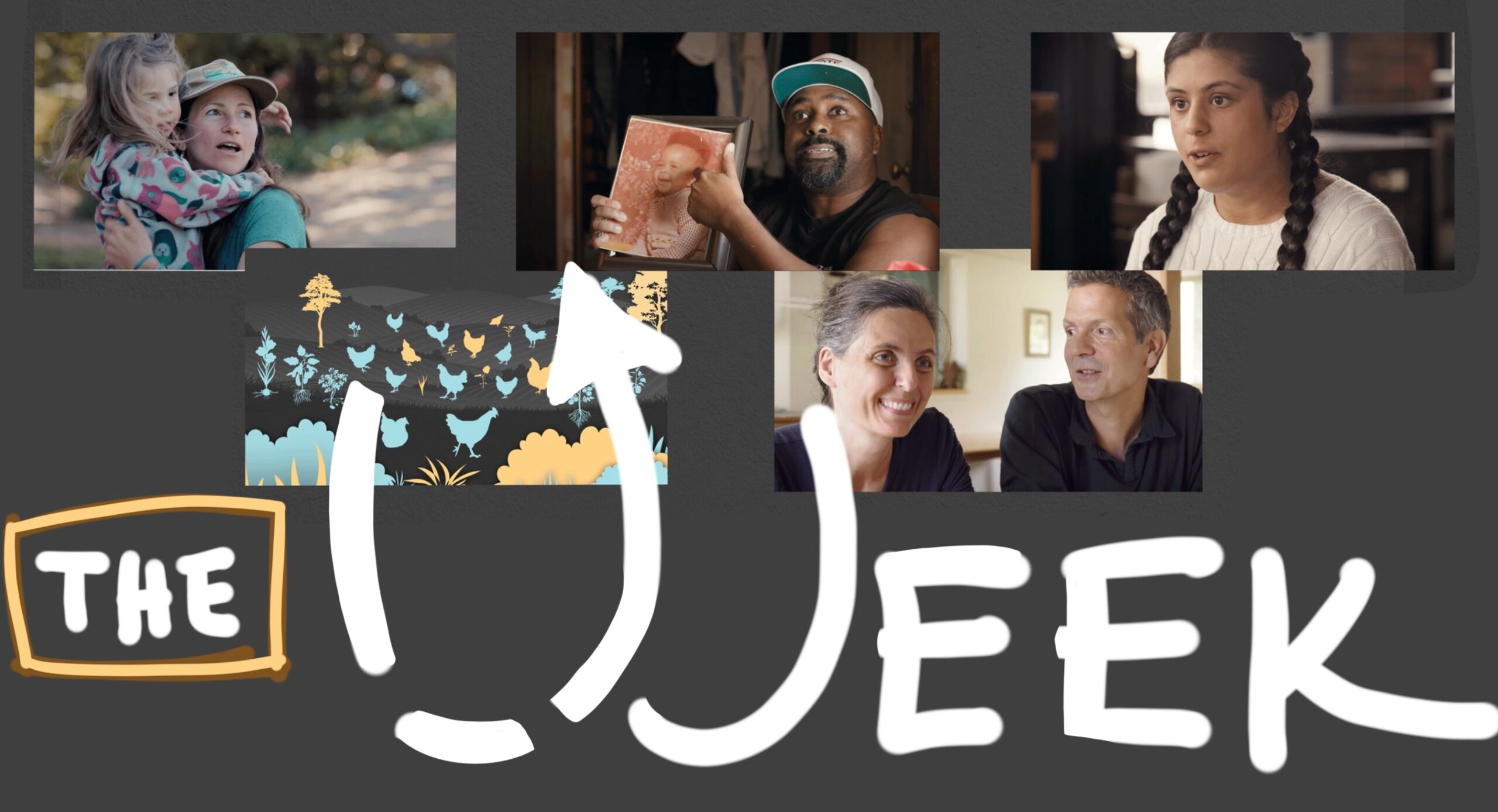
🌿 The Week is a three-part journey that takes us down into the reality of the climate and social crisis, leaves us for a moment in that uncomfortable space, and then invites us to imagine how we want to live and act in the future. It is built like a U: we start with facts and emotions, we go through confusion and questions, and we come back up with a different sense of responsibility.

━━━ ✿ ✧ ⋆ 。˚ ⋆ ✧ ✿ ━━━

🌈 Our group perception of The Week

We are four people with very different stories, so it would be natural for us to see things differently.

🌊 One of us grew up with annual floods that now hit even the wealthiest areas, ☀️ another with Mediterranean summers that already feel like ovens, 📰 a third in a country that talks a lot about climate but rarely feels it directly, 🕊️ and me, who grew up in a post-communist country where living with very little was still normal in my early years.

I was probably the most emotional one in the group 💧, while others felt the tone was too dramatic and preferred more data, nuance and concrete numbers.

The turning point in our discussion came when we started comparing our real experiences. For some of us, climate change is still something mostly seen in graphs and news headlines; for others, it already means flooded homes, unbearable summers or damaged ecosystems. Realizing this contrast made us understand that what some call a “future risk” is already everyday reality for many people.

🌱 But we all agreed on one point: the crisis is real, and it is already here.

What united all these ideas was the wish to be useful, not just successful. It reminded us that the SDGs are not only about technology, but also about the kind of people and societies we want to become.

Behind all our reactions to The Week, the real question was who actually drives change: individuals or systems? Individual action alone mostly reduces guilt, while systemic change without people pushing for it will never arrive. They are not alternatives; they are two sides of the same strategy.
Profit is not ‘automatically’ the enemy, but profit that relies on destroying ecosystems or deepening inequality cannot last. The same economic model that is pushing us beyond planetary boundaries is also the one that is emptying the middle class, widening within-country inequality, and making young people postpone or completely abandon the idea of having children.

🌡️ Consumerism is not only cooking the planet; it is cooking our mental health and our hope for the future at the same time.

Any real solution must respect planetary limits and protect social foundations. The week invites us to rethink what “development” really means and what kind of future we want to create as earth citizens.

━━━ ✿ ✧ ⋆ 。˚ ⋆ ✧ ✿ ━━━

🌱 2. My own critical reflection

For me, watching The Week felt like looking at the world and at myself in a mirror at the same time. On one side, I saw the big picture: rising temperatures, social tensions, damaged ecosystems, and a model of endless growth that is simply impossible on a finite planet. On the other side, I saw my own story: a young industrial and environmental chemist, just entering the field of circular economy, trying to find her place between fear and action.

I appreciated that the series did not stay only on the level of “save the polar bears” or “take shorter showers”. It tried to show how our economic system, our food systems, and our cultural idea of a “good life” are all connected. From my point of view, individual choices are important, but not enough. If we only tell people to recycle, eat less meat or buy less, while large structures remain unchanged, we create frustration and guilt more than real transformation.

This is where the SDG framework helps me to think more clearly. The goals remind us that sustainability is systemic: climate (SDG 13) is tied to energy (SDG 7), cities (SDG 11), health (SDG 3), inequality (SDG 10) and responsible production and consumption (SDG 12).
As someone who is moving towards a career in circular solutions, I feel called to work not only on “less waste” but also on better design, fairer value chains and long-term health for people and ecosystems.

The videos made me realize something else: the dominant economic story of the last decades: endless growth on a finite planet! It is not only disconnected from ecological reality, but also mentally draining. We were promised that more stuff would make us happy. Instead, we got burnout. It is coming a generation delaying having children because “how can I bring a child into this world?”. If we want a different future, we have to rewrite this story together.

🌿 The “Story of More” is literally eating the future.

I do not know exactly which job title I will have, but I know that I do not want to be “just another brick in the wall”. I want to contribute to a transition where science, policy and daily life move in the same direction.

━━━ ✿ ✧ ⋆ 。˚ ⋆ ✧ ✿ ━━━

🌸 3. Inner Development Goals: who I need to become

The Inner Development Goals bring a deeper, more personal dimension to this reflection. They suggest that deep change in the world also requires inner change in people: in how we are, think, relate, collaborate and act.

When I think about Being, I recognize myself in an openness and learning mindset: I am genuinely curious, and I am ready to update my views when I meet new information or perspectives. In the area of Thinking, I feel close to perspective skills: I naturally try to see issues from different sides: Global North and South, present and future, individual and system, which protects me from simplistic solutions.

In terms of Relating, I notice that my heart is soft: empathy, compassion and a sense of connectedness come quite naturally to me, even if forgiveness is sometimes difficult. Still, I know that holding anger forever does not help. For Collaborating, I rely a lot on my communication and mobilization skills. I like to listen, to create understanding between people, and to encourage others when they hesitate. Finally, in the dimension of Acting, I want to cultivate courage, hope, optimism and a proactive attitude. The future can look dark, but if I lose hope, I also lose my ability to contribute.

Taken together, these inner qualities are not separate from my professional path; they are part of it.

The Week did not give me a list of perfect solutions, but it helped me see the kind of person I want to be in this transition: an earth citizen who thinks in the long term, who cares about both people and planet, and who is willing to act, even when the balance is hard and the outcome is uncertain.

In 2050 I will be 55. I do not know if the world will be cooler, fairer, or more beautiful than today. What I do know is that the direction we take will be decided by the small and large choices of people who are alive right now, people like us.

🌱 So, this is my promise, written publicly so I cannot quietly forget it:

I choose the better story. Not because it is easy or guaranteed to win. But because it is the only story worth telling to the future generation who will ask us, one day,

💙 “What did you do, back when there was still time?”

~ Dea ♡ November 2025

            ━━━ ✿ May we all choose the better story together ✿ ━━━

About DEA ZAKOLLI

Hi! I’m an Industrial & Environmental Chemist (B.Sc. + M.Sc., Albania) with five years experience in the mining industry. In 2024 I began a Master in Advanced Materials & Circular Economy in Madrid to go deeper into life-cycle assessment, materials recovery, and circular process design. I combine careful lab work with a practical mindset and I’m excited to keep growing. My goal is simple: use solid data to improve efficiency and build more circular, real-world solutions. Open to collaborations and roles where analytical excellence meets circular innovation.

Linda Prinz – The Week Summary

Reflecting on The Week:

A Three-Day Journey Through Climate RealityI recently took part in The Week, a three-day documentary and reflection exercise about the climate crisis. I didn’t go into it expecting dramatic revelations. As most oft he people in my generation, I grew up with climate change, and it has been part of my life for decades. Because of that, much of the content wasn’t surprising. Still, sitting down and confronting everything in a concentrated, structured format brought up emotions and thoughts I don’t always give space to.Here’s what I took away from each day.

Day 1 – Reality Check

The first day focused on the blunt reality of where we’re heading. Again, nothing was new to me: the melting ice caps, the extreme weather, the political inaction. I’ve known about this since I was young.But even if the facts weren’t surprising, the emotional impact was still real. I felt sad and angry about the future, and frustrated that meaningful action is still so limited. These feelings weren’t caused by the video; they’ve been with me for years. The documentary simply brought them back to the surface.One part of the exercise was imagining my life in 2050. I pictured myself in a world that managed to stay at least somewhat stable. Not perfect, but one where we acted early enough to avoid the worst outcomes. A world where people chose cooperation over panic.Thinking of Vienna and Austria in 2050 felt strangely down-to-earth. We probably won’t be among the most drastically affected regions at first. But winters will look different, skiing may barely exist, and we’ll likely have more immigration from countries hit harder. The changes will be real, even if they don’t arrive explosively.

Day 2 – How Did We Get Here? Is There a Way Out?

Day 2 focused on responsibility: both personal and systemic. It made me reflect more honestly on my own choices.A big takeaway was the importance of knowing the impact behind what we consume: food, clothes, and everyday items. Asking simple but uncomfortable questions:Does eating meat really make me that much happier compared to a plant-based meal? Do I actually need this new T-shirt? What’s the cost behind it?I try to live with these questions in mind. I buy carefully, eat mostly plant-based, and use my bike or public transport whenever possible. But I’m far from perfect — traveling by plane is still my biggest weakness, and I know it.One thing I appreciated from the documentary is the reminder that we don’t need perfection. Two percent of people living flawlessly sustainable lives won’t fix anything. What matters is everyone contributing, even if imperfectly. And judging others for not choosing the same battles doesn’t help.

Day 3 – What Can We Do? Is There Hope?

The last day asked us to imagine a hopeful scenario. Not a fantasy, but a realistic version of 2050 where our actions actually mattered.I pictured myself at 34 years, having built a solid, meaningful career in sustainability or the circular economy. I imagined myself working on solutions, influencing others, and doing something that aligns with my values. Not saving the world, just contributing something real.This vision isn’t overly optimistic or utopian. It’s simply the version of the future I’d like to be able to look back on and feel okay about.Being frustrated and pessimistic about the future will get us nowhere. Of course, we shouldn’t be naïve about the current situation. However, a bit of optimism is necessary to keep trying and having a positive impact.

Final Thoughts

I wouldn’t say The Week changed my worldview. Climate change has been on my radar for most of my life, and nothing in the documentary was shocking or revolutionary. But it did force me to pause, reflect, and confront feelings I often push aside.It reminded me that the future we imagine isn’t guaranteed, but it also isn’t written yet. And while the documentary itself wasn’t perfect or particularly uplifting, the exercise of reflecting on my own role and my own future, was worthwhile.I think a similar exercise on very new topics, such as the impact of AI on our society, could have had a greater impact on me.

About SHAH SAUD

Hi! I am Shah. Professionally, I like to exist in the intersection of materials and circularity. Currently pursuing a Master’s in Advance Materials Innovative Recycling at Universidad Politécnica de Madrid (UPM). Outside my professional sphere, you will find me chasing sunsets, travelling to lesser-known destinations and making a mean carrot cake.

The Week Experience – Reflection

Hello everyone🙏🏽! so let me tell U
about this U-Shaped Week
I had…

The first session reopened a topic I’ve lived with for years: climate change. The video carried an emotional message, urging responsibility and awareness. However, us Gen-Zs have grown up to be part of the most climate aware and active generation, so this was not surprising at all and neither did it make me feel emotional. What struck me most was the diversity of reactions in the group. Some felt shaken; others, like me, viewed it through the lens of someone who has grown up with this crisis as a constant reality.

Our conversation highlighted how differently we internalize the same message depending on where we come from, what we’ve lived through, and how climate change has touched our lives.

The second day shifted toward a more philosophical tone. We explored the systems beneath the crisis—consumerism, capitalism, and the way narratives shape our understanding of the world. The idea of the “Story of More” resonated with me, especially as someone from the Global South, where “more” is often synonymous with a “successful life.” I grew up in a culture, where good grades, translated into better jobs which translated into a high-paying career. So the focus was always cramming for a ‘story of more.’

Our discussions reminded me how personal sustainability choices can be, and how they intersect with identity, culture, and most importantly privilege.

The final session brought the whole class together. Instead of focusing on climate change directly, we reflected on pride, identity, and the futures we imagine for ourselves. Hearing so many voices, each shaped by unique experiences, felt grounding. It was a reminder of how connection and empathy are powerful tools for imagining a shared future.

Overall, The Week did not transform my understanding of climate change—I’ve lived too closely with its realities for too long. But it did give me something else: clarity of experiencing it through the lense of eight other individuals.

It also reminded me of the importance of small, personal acts: returning to calligraphy, nurturing connections across distance, watching sunsets in quiet reflection. These moments enrich my life far more than external achievements ever could. Things that would become increasingly difficult to pursue in a post-apocalyptic world of the climate catastrophy.

The content may not have been new, but the conversations, perspectives, and self-reflection gave it meaning. And that meaning stays with me as I continue shaping my own story, a story not of “more,” but of intention, compassion, and growth.

About SHAH SAUD

Hi! I am Shah. Professionally, I like to exist in the intersection of materials and circularity. Currently pursuing a Master’s in Advance Materials Innovative Recycling at Universidad Politécnica de Madrid (UPM). Outside my professional sphere, you will find me chasing sunsets, travelling to lesser-known destinations and making a mean carrot cake.

“The Week”

Do you know how it feels to grow up in a world that seems to be collapsing because no one seems to care? And then realizing that what you were taught was “good enough” is not even close? Our generation did not grow up in an economic boom, and we rarely hear good news, yet we still try to stay hopeful and take action. We feel responsible for fixing a world we did not fully break, even as we struggle with eco-anxiety.

The documentaries we watched this week captured these feelings well. The first showed the scale of the problem, the second explored daily life through diet, over-consumption, energy, community, isolation, anxiety and the third focused on solutions such as renewables, circular economy projects and reducing environmental impact. Even though I had already heard a lot about this, seeing it all together was inspiring and motivating.

I think the videos were not really aimed at students like us. They were more emotional than scientific, but that approach could really reach older generations. It’s very important that everyone is informed well on climate change but we cannot rely solely on individual action as I believe governments and industries also need to take responsibility and play a very big role.

Talking with my group was amazing. Everyone, coming from different countries, backgrounds, and ages, shared very different perspectives and experiences, and it made me feel less alone in caring. I left the discussions both worried and hopeful. Worried because so much damage has already been done, but hopeful because people are acting and sharing ideas.

Looking ahead, I hope to work in recycling and circular economy projects, making a positive impact on both the environment and society. I wish for a life full of love, care, and community while doing what I can to push for a greener, fairer future.

Activity on the WEEK

Watching The Week video was incredibly insightful. It clearly showed the risks of climate change, its causes, and the serious consequences we are already seeing around the world. As a student of circular economy and sustainability, this experience reminded me why my field matters. It strengthened my motivation to practice what I learn and to advocate for actions that can genuinely help put the world on a better, more sustainable path. Imaging myself in the years to come, a moment that made me feel both hopeful and curious. Hopeful, because I believe in human innovation and our ability to correct our mistakes; curious, because the future will be shaped by the choices we make today.

We must be mindful of natural resources, avoiding the waste and overuse that harm our land and water. To preserve the environment, we need to care for our soil, animals, and farms. Food choices are also key: local selection, seasonal, or plant-based options supports farmers and lessens environmental impact. Personally, I try to live simply and sustainably by rarely wasting food, reusing materials, and sorting for recycling connects directly to my career path in sustainability and the circular economy.

Reflecting on day 3’s discussions, several practical climate actions were mentioned: shifting from fossil fuels to renewables, supporting sustainable food systems, reusing items and buying second-hand, sharing resources within communities, and promoting climate awareness at work. Activism also matters, educating others, raising awareness, and encouraging governments to listen to local communities. When people feel included, climate action becomes stronger and more effective.

We also confronted the common limiting beliefs, “I’m too small to make a difference,” “I’m too busy,” “I don’t want to stand out,” or “I’m not ready to give things up.” The Inner Development Goals (IDGs) helped me reflect on these and it helped me understand better who I am, knowing now that I am good at as Self-awareness, Visioning, Integrity, resource consciousness, I as well equip moderate growth in critical thinking and creativity and I am also developing openness, empathy, communication skills, resilience, and courage. These inner qualities are essential for me in creating outer change.

Conclusively, my reflection and way of life align strongly with SDG 12: Responsible Consumption and Production, it mirrors many of my daily choices and values, and the targets of the SDG’s that resonate with me include: Reducing waste (12.3, 12.5), Using natural resources sustainably (12.2), and Promoting awareness of sustainable lifestyles (12.8).

These practices guide my personal life, my studies, and the kind of professional I aspire to become. Looking ahead, I hope to be proud of staying true to my passion for sustainability and using my skills to create greener solutions. I imagine myself having established my purpose in academia, living a peaceful, meaningful life, and seeing real impact from the things I worked for, practiced, and advocated. I hope the projects I contribute to will help communities live better and inspire others to adopt sustainable habits. Because of this, my life would feel richer in purpose, connection, and contribution, knowing that my work is part of something bigger than myself, something that helps protect the planet for future generations.

Overall, The Week reminded me that climate action is not just global, it is personal. Changing the world begins with changing ourselves, and every mindful decision moves us closer to the future we hope to see.

Avatar photo

About MAVIS OLAYEMI OLORUNYOMI

Hello everyone! My name is Mavis O. Olorunyomi, and I am passionate about sustainability, circular economy, materials innovation, and green technologies. I am currently pursuing a Master’s degree in Advanced Materials and Innovative Recycling (AMIR) through the Erasmus Mundus program, where I study at Universidade NOVA de Lisboa and Universidad Politécnica de Madrid. My academic journey began with a Bachelor’s in Industrial Chemistry from the University of Cape Coast in Ghana. Over time, I have developed a strong interest in creating sustainable materials and exploring how scientific research can drive environmental resilience and circular design. Beyond academics, I enjoy taking on new challenges, learning continuously, and contributing to projects that make a positive environmental impact. I am deeply motivated by the idea of building a greener and more sustainable future through innovation and practical action.

The week experience – by Victor Hermez

A three-episode journey like The Week can shift climate change from an abstract concern to a lived, collective reckoning that invites clearer thinking, grounded emotions, and concrete next steps in daily life and community roles. Experiencing the “U‑shaped” arc : facing difficult facts, making sense of them together, and rising into agency. From my point of view, this experience helps transform overwhelm into motivation and shared commitment to action at home, work, and in social circles.​

Let me make a quick recap on what we have seen and what did it bring personnally.

1st : Facing reality

The first episode’s descent into the hard truths of environmental breakdown surfaces fear, grief, and even denial. These feelings, many people instinctively avoid them, when climate headlines feel too overwhelming. The most difficult step perhaps is to name these emotions and try to normalize them. This create emotional capacity for honest appraisal and choices going forward.​

2nd : Making meaning together

The second episode’s aim is to reframe climate data within personal values and social context, enabling participants, such as me, to connect facts with what they love and want to protect. Structured dialogue help translate raw concern into clarity about risks, responsibilities, and spheres of influence, which is why the conversation is considered “the heart of the experience”.​ Indeed the conversation were really meaningful to me, it felt like a “safe place” to express ourself and everyone really played the game.

3rd : From concern to agency

The final episode is designed to restore “hope”. There is a shifting from individual eco‑anxiety to collective impacts through examples, next‑step ideas, and the social recognition that comes from acting together. I was feeling relieved and even energized after moving through the hardest material, because agency and community reduce isolation and helplessness. It was the same as the people interviewed inside the movies.​

What did it bring personally ?

I understood that this experience is different for everyone. Here I will share my personnal thoughts. This topic of climate change is not new for me, but it did gave me lived concern by guiding a journey from difficult facts to shared meaning and then to doable next steps with others. The fact that we all shared it together with the class created trust and accountability, making the conversations the emotional core that turned concern into motivation.​ This point is really what made for “The Week Experience” really enjoyable and a grateful moment.

About my purpose

As of right now I can choose one or two high‑impact changes in my daily life and studies and also inviting a small circle to do them with me. This journey showed me that honest dialogue, supportive community, and regular reflection can transform concerns into durable agency that protects what and who I love. I also seek more informations through other kind of activities like this one ; I would like to know more to help me establish feasible goal for the future and reach my true purpose. This question of “what is my purpose ?” is a question that, in my opinion, should be asked throughout all your life. I do seek with my current studies to work in a field that aims to do good for the planet. I would like to be able to do something even at my scale and put into light what I learned through my years of studies to past, present and future generations.

Avatar photo

About VICTOR HERMEZ

Hey ! I am Victor Hermez from Bordeaux, France. I hold a bachelor's degree in Chemistry. Currently, I am pursuing my Master in Advanced Materials and Innovative Recycling (AMIR). My academic and research interests focus more on metals for automotive and aeronautic industry, hydrometallurgy for recycling of batteries, new processes and innovations. Outside academics, I am found of hiking, traveling and challenging myself through sports. Through my travels, I love discovering nature and animals.

“The Week”

During this week’s experience, I encountered several insightful reflections. In the first video, I sensed that its primary audience was parents, as the protagonists expressed a deep concern for the future they are leaving to their children. Although this does not directly apply to my current situation, I am already aware of the issues discussed—particularly how our consumer-driven lifestyle contributes to many of today’s environmental and social problems. The second video encouraged a more personal reflection on the way we live, and I found myself positioned somewhere in the middle: aware of these challenges, yet still working toward meaningful change. As suggested, adopting new positive habits is something I plan to integrate into my daily life.

In relation to the IDG (Inner Development Goals), reflecting on these areas helped me better understand my own strengths and areas for improvement. In the dimension of Being, I consider self-awareness one of my strongest qualities. I know myself well and continue to learn more about how I think, feel, and respond to different situations. Within Thinking, creativity is a skill I intentionally cultivate—although it does not come naturally, I actively develop it through activities such as painting, completing puzzles, and engaging in other creative practices. In the Relating and Collaborating dimensions, I recognize the need to improve my communication skills, as strengthening this ability will help me work more effectively with others and build stronger, more meaningful connections. Finally, in the Acting dimension, I see opportunities to further develop my proactivity and resilience, enabling me to take initiative and adapt with confidence in challenging or changing environments.

Avatar photo

About MARIA GODOY VIVAR

Hello, my name is Maria Jose, but you can call me Majo. I studied mechanical engineer in Ecuador (back home). I worked in the plastics and metals recycling industry, where I discovered I wanted to continue my studies in materials science, which is why I'm here in this master's program. Outside of my professional life, I love animals, desserts, and hiking.

Personal reflection on the professional future

Having watched “#MiEmpleoMiFuturo” videos, I see an urgent narrative about the future of professional life. This isn’t a distant future; it’s unfolding now, and it demands a specific mindset. The central tension is clear: technology is accelerating at an exponential rate, while our traditional models for education and career paths are struggling to keep up. This isn’t a minor adjustment; it’s a fundamental restructuring of what it means to have valuable skills and build a meaningful career.

For me, this reality is both a warning and a validation. It warns against the comfort of deep specialization in a single, static tool or methodology. The ability to simply execute a complex model or analysis is being rapidly commoditized. The value is shifting upstream, toward the ability to frame the right problems, to ask the foundational questions that these powerful tools are then unleashed to solve. My recent experience into materials science research during my first year internship feels like a direct response to this shift. Working with Density Functional Theory isn’t just about learning another software; it’s an immersion in first-principles thinking. It’s about understanding matter at its most fundamental level, which is the ultimate source of innovation and the last bastion against automation. This, coupled with my focus on the circular economy, represents my attempt to apply this same rigorous, ground-up thinking to the broken systems of our linear economy.

Furthermore, #MiEmpleoMiFuturo highlights the death of the linear career ladder and the birth of the dynamic skill portfolio. Looking at my own trajectory (from water resources in Colombia to solid-state batteries in France) I see this playing out. What might have once been viewed as a lack of focus, I now reframe as a strategic accumulation of diverse contexts. Each project, whether in hydrology, clean cooking, or air quality, has been a masterclass in a different facet of our global sustainability challenge. This breadth is not a distraction from expertise; it is the necessary context that makes deep expertise meaningful. It allows me to be a translator, someone who can connect the quantum behavior of a battery material to the macroeconomic policies needed for a circular future.

However, technical and strategic skills alone are not enough. The most critical insight from this new reality is that as machines master execution, our humanity becomes our greatest professional asset. My technical training has been robust, but I recognize a pressing need to consciously develop the “power skills” that enable true collaboration and leadership. This means moving beyond simply presenting data to truly understanding the feelings, motivations, and concerns of stakeholders, be they community members affected by a project, engineers from a different discipline, or policymakers with competing priorities. The ability to build trust, navigate resistance, and foster a shared vision is what transforms a technically sound solution into an adopted and successful one.

My path forward, therefore, is a threefold endeavor: to continue deepening my technical and strategic integration, to actively build bridges between disparate fields, and to deliberately cultivate the empathy and communication skills necessary to lead and inspire collective action. The future of work is not something that will happen to me; it is something I must actively build. By weaving together technical depth, systemic thinking, and a profound understanding of the human element, I can strive not just to adapt to the new world, but to help shape it into one that is more sustainable and equitable for all.

About LUIS ANGEL QUINTERO SERRANO

Environmental engineer passionate about creating innovative solutions that promote circular economy to drive positive change in society. My professional trajectory has focused on research, proposal development, and computational modeling in various areas of environmental engineering, especially in water resources and solid waste. I am convinced that addressing environmental challenges requires interdisciplinary collaboration and the formation of a strong network of professionals with deep knowledge in science and technology. My goal is to actively contribute to this collective effort, applying my skills and experience to generate positive impact on the environment and society as a whole.