🌿 The Week is a three-part journey that takes us down into the reality of the climate and social crisis, leaves us for a moment in that uncomfortable space, and then invites us to imagine how we want to live and act in the future. It is built like a U: we start with facts and emotions, we go through confusion and questions, and we come back up with a different sense of responsibility.
━━━ ✿ ✧ ⋆ 。˚ ⋆ ✧ ✿ ━━━
🌈 Our group perception of The Week
We are four people with very different stories, so it would be natural for us to see things differently.
🌊 One of us grew up with annual floods that now hit even the wealthiest areas, ☀️ another with Mediterranean summers that already feel like ovens, 📰 a third in a country that talks a lot about climate but rarely feels it directly, 🕊️ and me, who grew up in a post-communist country where living with very little was still normal in my early years.
I was probably the most emotional one in the group 💧, while others felt the tone was too dramatic and preferred more data, nuance and concrete numbers.
The turning point in our discussion came when we started comparing our real experiences. For some of us, climate change is still something mostly seen in graphs and news headlines; for others, it already means flooded homes, unbearable summers or damaged ecosystems. Realizing this contrast made us understand that what some call a “future risk” is already everyday reality for many people.
🌱 But we all agreed on one point: the crisis is real, and it is already here.
What united all these ideas was the wish to be useful, not just successful. It reminded us that the SDGs are not only about technology, but also about the kind of people and societies we want to become.
Behind all our reactions to The Week, the real question was who actually drives change: individuals or systems? Individual action alone mostly reduces guilt, while systemic change without people pushing for it will never arrive. They are not alternatives; they are two sides of the same strategy.
Profit is not ‘automatically’ the enemy, but profit that relies on destroying ecosystems or deepening inequality cannot last. The same economic model that is pushing us beyond planetary boundaries is also the one that is emptying the middle class, widening within-country inequality, and making young people postpone or completely abandon the idea of having children.
🌡️ Consumerism is not only cooking the planet; it is cooking our mental health and our hope for the future at the same time.
Any real solution must respect planetary limits and protect social foundations. The week invites us to rethink what “development” really means and what kind of future we want to create as earth citizens.
━━━ ✿ ✧ ⋆ 。˚ ⋆ ✧ ✿ ━━━
🌱 2. My own critical reflection
For me, watching The Week felt like looking at the world and at myself in a mirror at the same time. On one side, I saw the big picture: rising temperatures, social tensions, damaged ecosystems, and a model of endless growth that is simply impossible on a finite planet. On the other side, I saw my own story: a young industrial and environmental chemist, just entering the field of circular economy, trying to find her place between fear and action.
I appreciated that the series did not stay only on the level of “save the polar bears” or “take shorter showers”. It tried to show how our economic system, our food systems, and our cultural idea of a “good life” are all connected. From my point of view, individual choices are important, but not enough. If we only tell people to recycle, eat less meat or buy less, while large structures remain unchanged, we create frustration and guilt more than real transformation.
This is where the SDG framework helps me to think more clearly. The goals remind us that sustainability is systemic: climate (SDG 13) is tied to energy (SDG 7), cities (SDG 11), health (SDG 3), inequality (SDG 10) and responsible production and consumption (SDG 12).
As someone who is moving towards a career in circular solutions, I feel called to work not only on “less waste” but also on better design, fairer value chains and long-term health for people and ecosystems.
The videos made me realize something else: the dominant economic story of the last decades: endless growth on a finite planet! It is not only disconnected from ecological reality, but also mentally draining. We were promised that more stuff would make us happy. Instead, we got burnout. It is coming a generation delaying having children because “how can I bring a child into this world?”. If we want a different future, we have to rewrite this story together.
🌿 The “Story of More” is literally eating the future.
I do not know exactly which job title I will have, but I know that I do not want to be “just another brick in the wall”. I want to contribute to a transition where science, policy and daily life move in the same direction.
━━━ ✿ ✧ ⋆ 。˚ ⋆ ✧ ✿ ━━━
🌸 3. Inner Development Goals: who I need to become
The Inner Development Goals bring a deeper, more personal dimension to this reflection. They suggest that deep change in the world also requires inner change in people: in how we are, think, relate, collaborate and act.
When I think about Being, I recognize myself in an openness and learning mindset: I am genuinely curious, and I am ready to update my views when I meet new information or perspectives. In the area of Thinking, I feel close to perspective skills: I naturally try to see issues from different sides: Global North and South, present and future, individual and system, which protects me from simplistic solutions.
In terms of Relating, I notice that my heart is soft: empathy, compassion and a sense of connectedness come quite naturally to me, even if forgiveness is sometimes difficult. Still, I know that holding anger forever does not help. For Collaborating, I rely a lot on my communication and mobilization skills. I like to listen, to create understanding between people, and to encourage others when they hesitate. Finally, in the dimension of Acting, I want to cultivate courage, hope, optimism and a proactive attitude. The future can look dark, but if I lose hope, I also lose my ability to contribute.
Taken together, these inner qualities are not separate from my professional path; they are part of it.
The Week did not give me a list of perfect solutions, but it helped me see the kind of person I want to be in this transition: an earth citizen who thinks in the long term, who cares about both people and planet, and who is willing to act, even when the balance is hard and the outcome is uncertain.
In 2050 I will be 55. I do not know if the world will be cooler, fairer, or more beautiful than today. What I do know is that the direction we take will be decided by the small and large choices of people who are alive right now, people like us.
🌱 So, this is my promise, written publicly so I cannot quietly forget it:
I choose the better story. Not because it is easy or guaranteed to win. But because it is the only story worth telling to the future generation who will ask us, one day,
💙 “What did you do, back when there was still time?”
~ Dea ♡ November 2025
━━━ ✿ May we all choose the better story together ✿ ━━━

About DEA ZAKOLLI
Hi! I’m an Industrial & Environmental Chemist (B.Sc. + M.Sc., Albania) with five years experience in the mining industry. In 2024 I began a Master in Advanced Materials & Circular Economy in Madrid to go deeper into life-cycle assessment, materials recovery, and circular process design. I combine careful lab work with a practical mindset and I’m excited to keep growing. My goal is simple: use solid data to improve efficiency and build more circular, real-world solutions. Open to collaborations and roles where analytical excellence meets circular innovation.
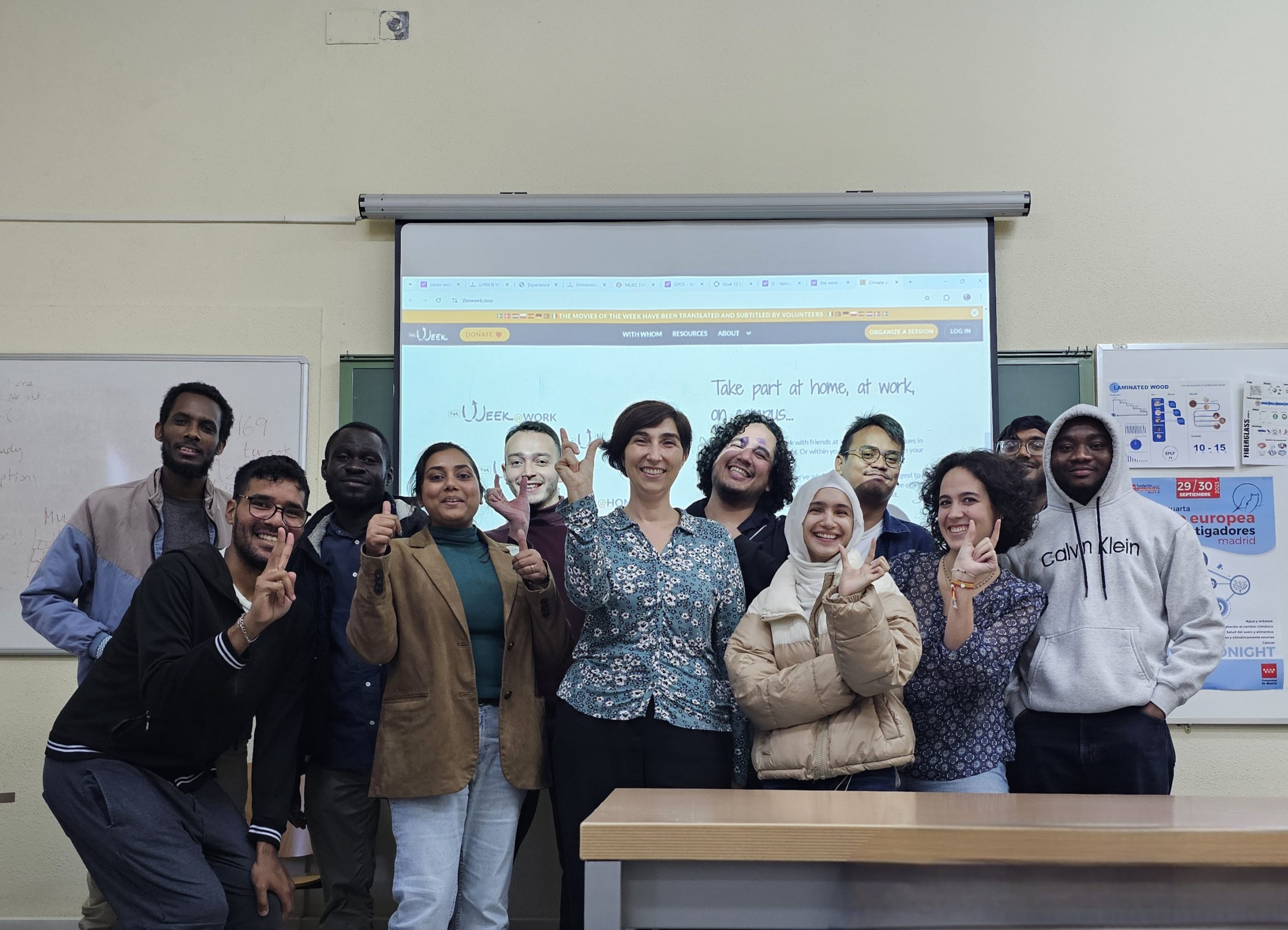 The U week was a journey of personal and collective learning that led us through three sessions in a process of reflection about the impact that our activities and those of large companies worldwide have on climate change, food production and distribution, and lifestyles in general.