Lucía Magaña, member of EELISA-on-the-MOVE: awarded at the 3rd EELISA Scientific Student Competition at Bucharest
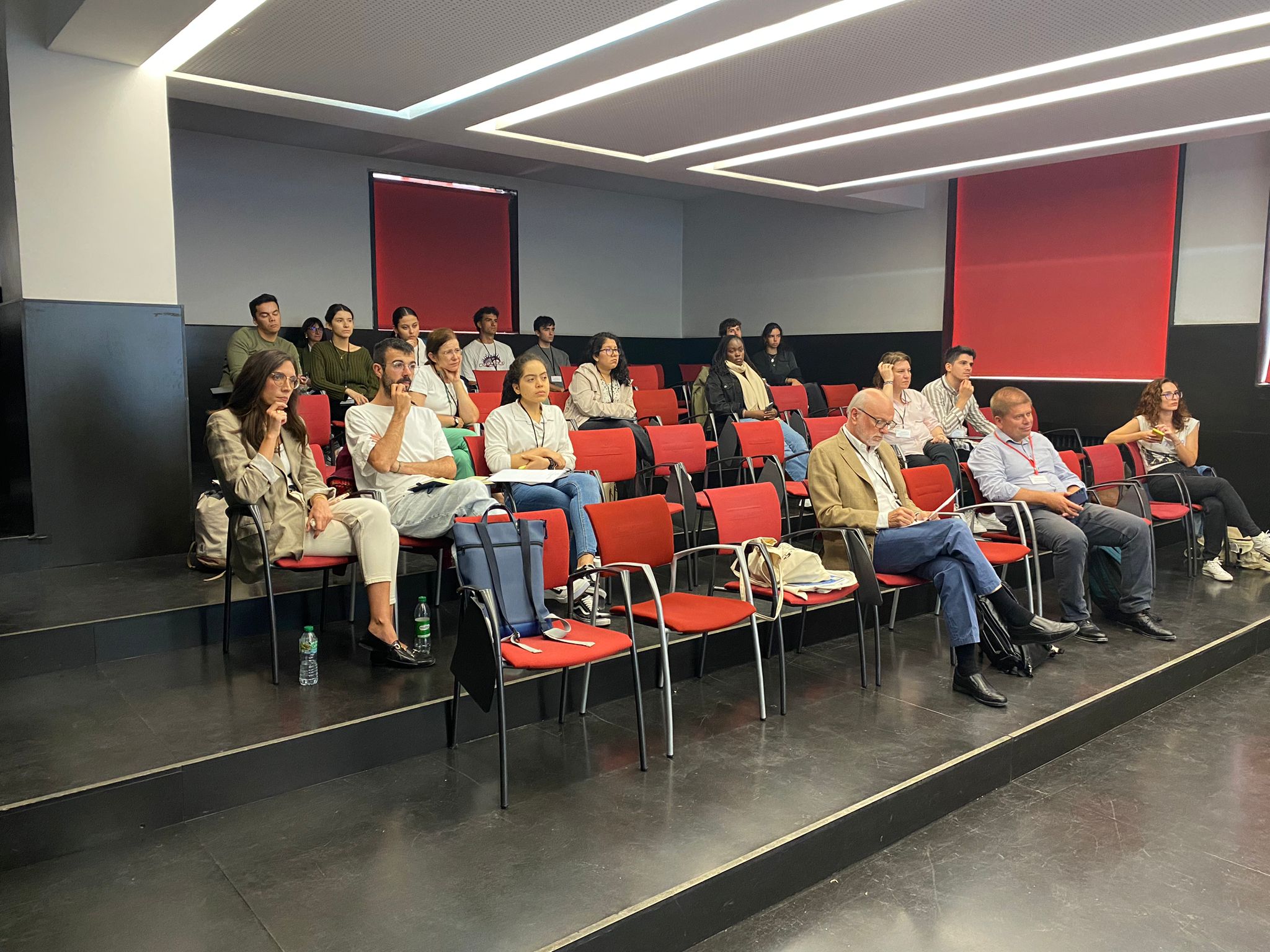
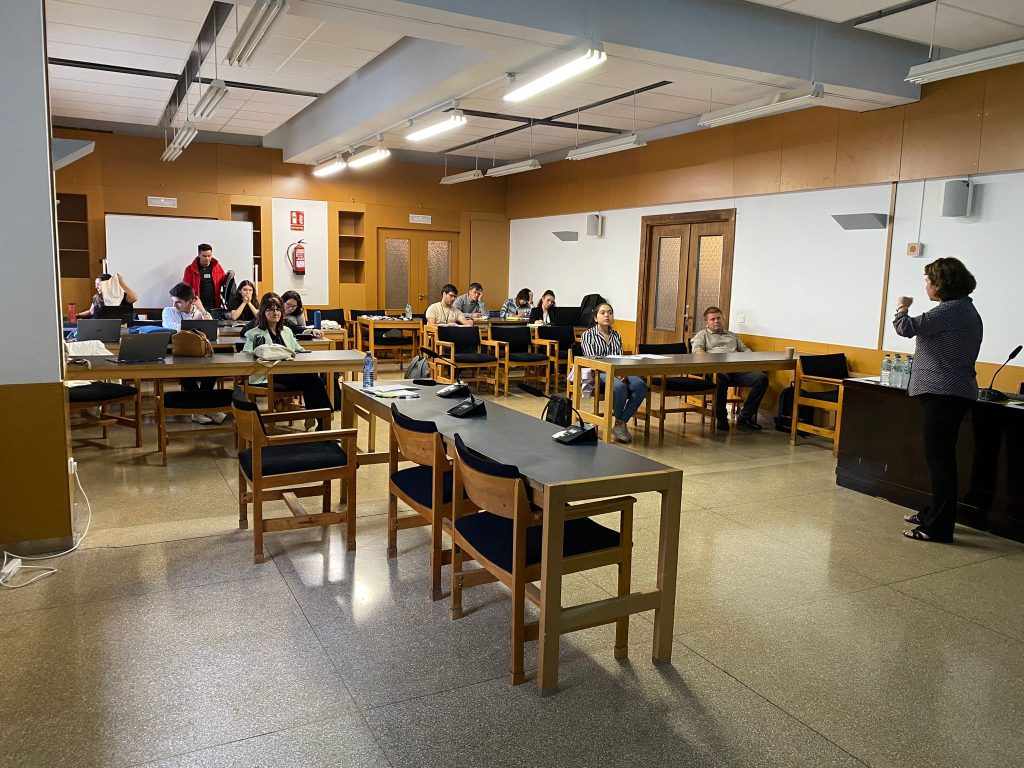
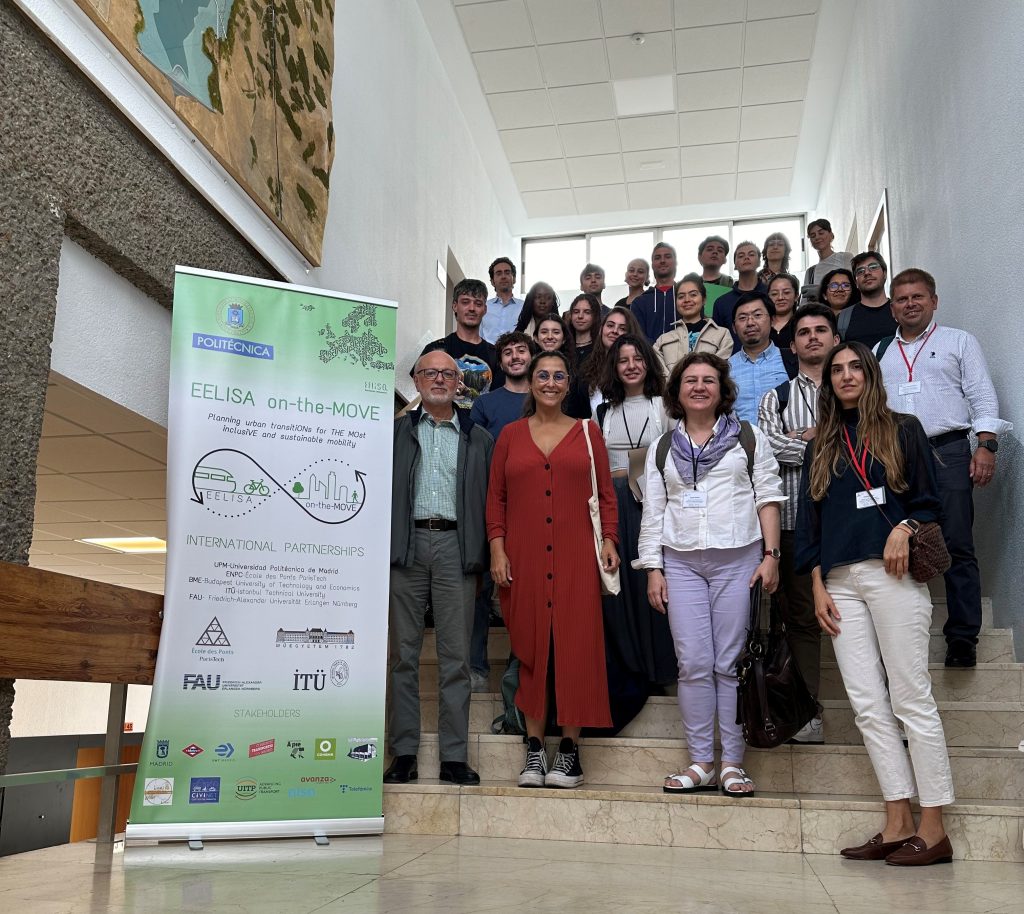
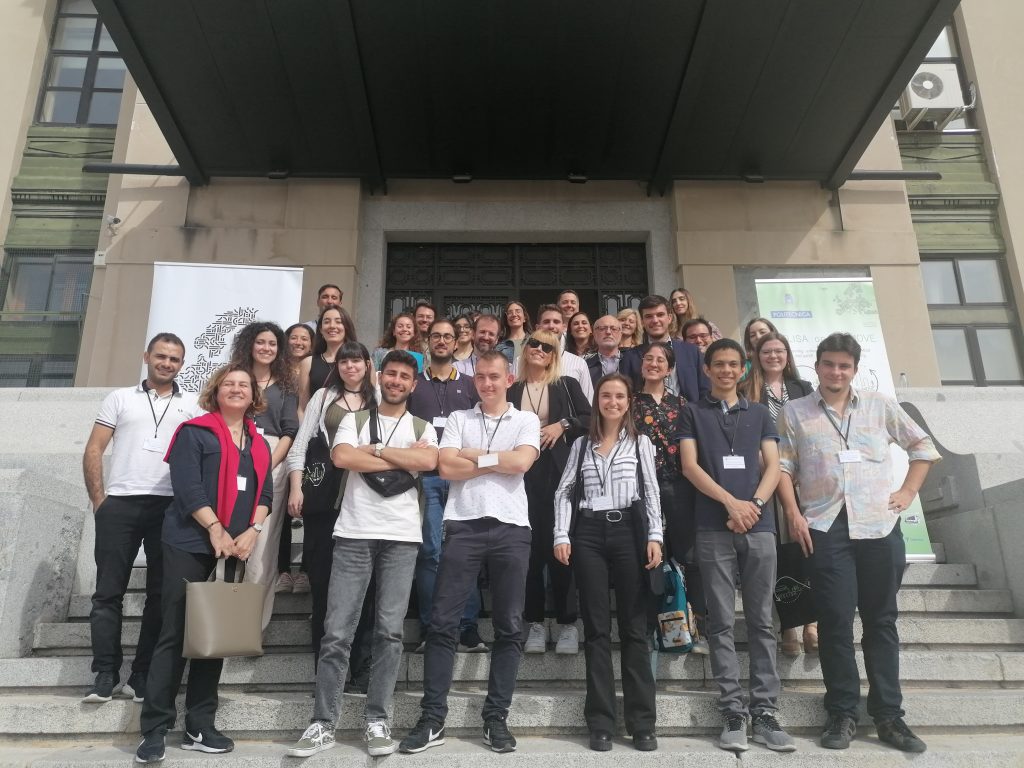
Last 12th and 13th of June, took place the 3rd EELISA European University International Scientific Student Competition at the University POLITEHNICA of Bucharest, co-organized by the Budapest University of Technology and Economics. Around 100 international students from across the EELISA European University Alliance presented their research work in 12 exciting sessions on site and online.
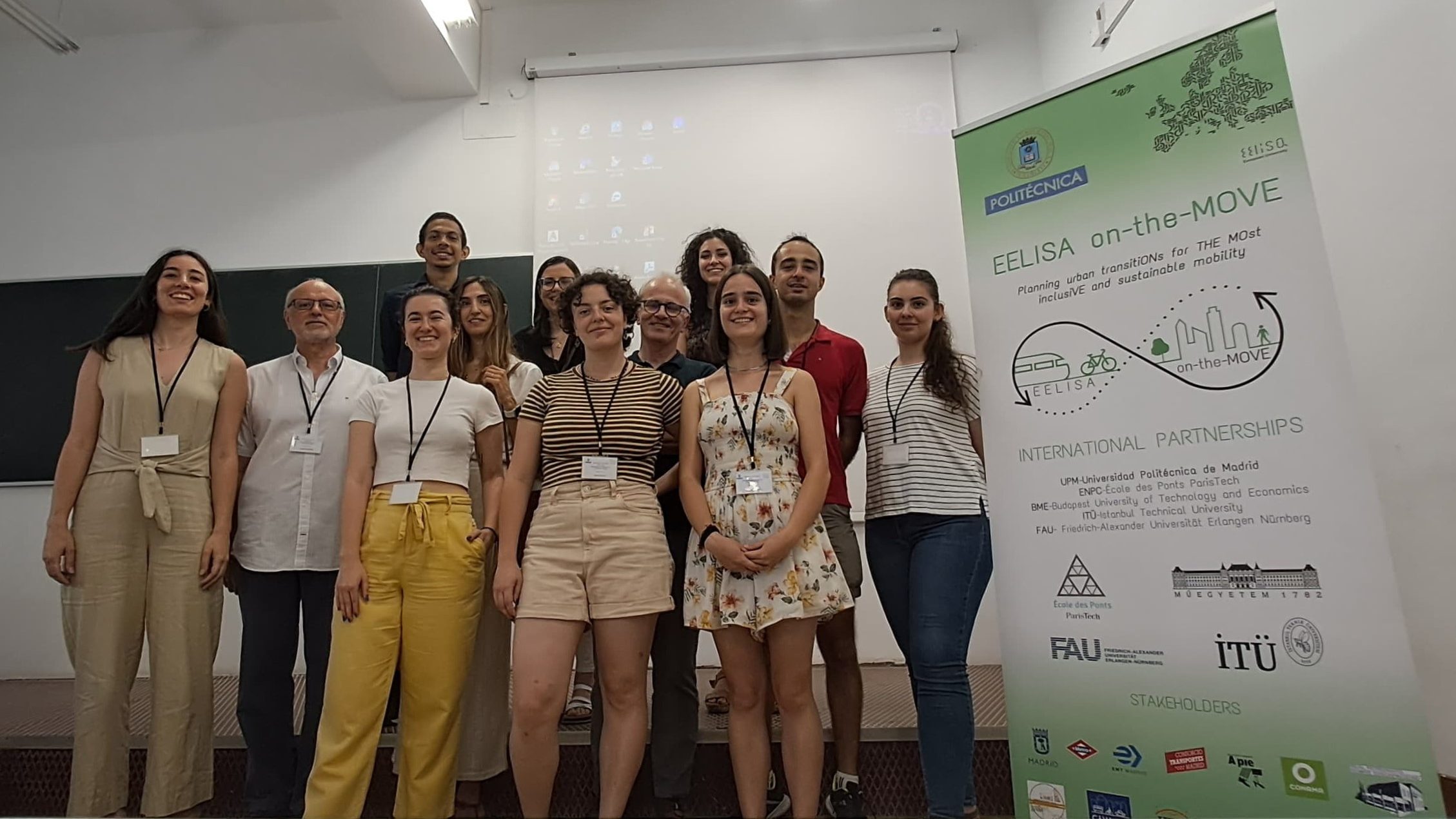
The Universidad Politécnica de Madrid was represented by 7 students from different faculties thanks to the foundation of EELISA UPM, among them our colleague Lucía Magaña Morán, who also represented our community EELISA On-the-MOVE and the Transport Research Centre of the UPM: TRANSyT.
We are proud of Lucía for having received a Special Price to publish in the scientific journal Cognitive Sustainability her study, entitled “New Pedestrian Cities. Analysis of the transformation of urban space in sustainable mobility projects.” Analyzes the implementation of pedestrianization from the pedestrian perspective, through two recent case studies in Madrid (Puerta del Sol and Plaza de Olavide).
Through surveys carried out on pedestrians in both areas and a study of the built environment where it is analysed how the interventions have been executed and which are the elements that make up the space, it is shown that the interventions more focused on the user, which promote the stay and the enjoyment of the environment produce a greater satisfaction in the pedestrian.
Students also had de opportunity to explored Bucharest and visited the main research hubs of the University POLITEHNICA of Bucharest: CAMPUS and PRECIS Institutes.
We are very grateful to the University POLITEHNICA of Bucharest, Budapest University of Technology and Economics and EELISA for this opportunity to exchange knowledge once again among young people.
The academic activity, organized by the EELISA challenges “Use of Virtual Reality as a Tool for Collaborative Planning” and “Urban i-HUBS: Towards More Equitable and Efficient Intermodal Access,” both coordinated by professors from the EELISA On-the-Move community and funded by the Ministry of Science, Innovation, and Universities, was held at the UPM.
The event brought together students, experts from various universities, and companies to explore the use of digital tools in urban mobility planning. Among the participants were 18 students from UPM (from the ETSIMFMN, ETSAM, and ETSICCP schools), one student from Istanbul Technical University, and one student from Budapest University of Technology and Economics.
Thursday 19th
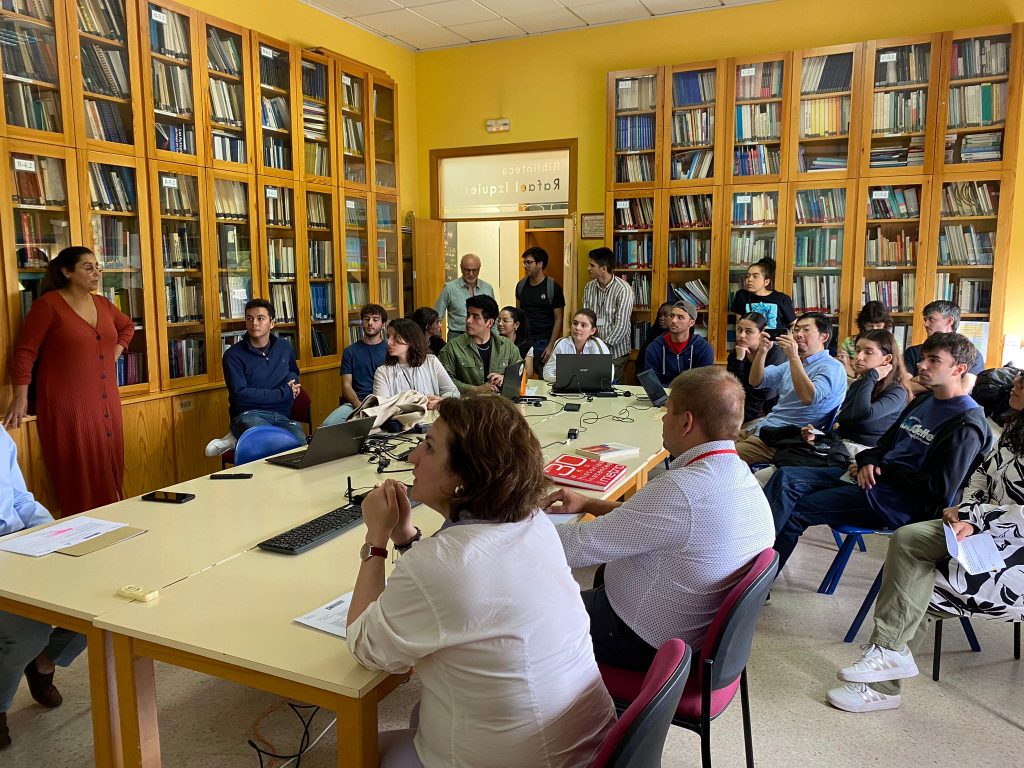
The event began on the afternoon of Thursday, September 19, with the session titled “Digitalization and Visualization Tools.” After an opening by Professor Andrés Monzón, coordinator of EEMOVE-UPM, Professor Belén Martín (UPM) presented a summary of the academic activities she coordinated in the EELISA challenge “Use of Virtual Reality as a Tool for Collaborative Planning” during the 2023/2024 academic year and those planned for the 2024/2025 academic year, developed in collaboration with ESRI. These activities explored the applications of virtual reality and digital twins in sustainable planning within the bachelor’s degree programs in Civil and Territorial Engineering, Forest Engineering, and Environmental Engineering at UPM. Subsequently, a panel of experts, moderated by Professor Martín, discussed practical applications of these technologies in urban mobility and planning. Participants included Pablo Nistal, engineer at the company INGECID; Luis Íñigo Lladró, geographer at ESRI; and Professor Julio Soria (UPM), principal investigator of the VIR2ALL project (https://vir2all.transyt-projects.com/).
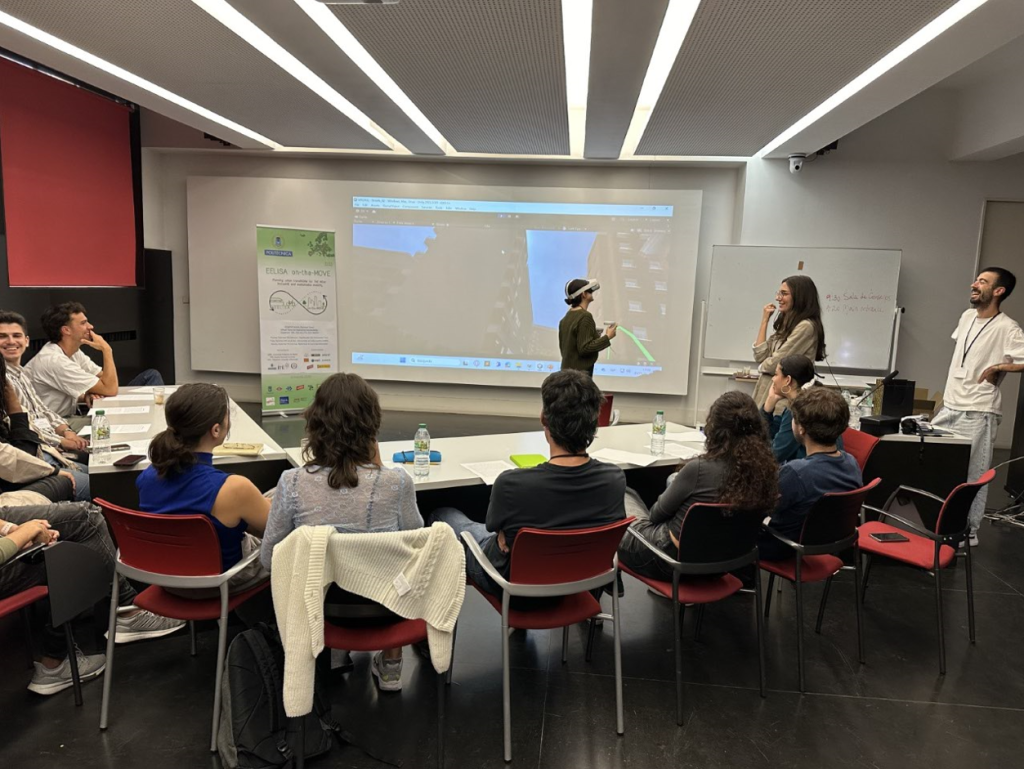
One of the most interactive activities was the virtual reality workshop led by Professor Amor Ariza (UPM) and virtual reality specialist architect Manuel Pérez (VIR2ALL Lab – UPM). In this workshop, students and academics from both UPM and other international institutions, such as Dr. Florin Nemtanu from Politehnica University of Bucharest and Professor Hande Demirel from Istanbul Technical University, collaborated in teams to experience virtual reality scenarios developed within the VIR2ALL research project.
Friday 20th
On Friday, September 20, activities focused on intermodality and active mobility. In the morning, participants attended presentations on digital tools to improve urban and mobility planning, with keynote presentations by Allison Fernández from UPM-TRANSyT, as well as Dr. Nemtanu and Professor Demirel. The “Step Counter Challenge” activity, a joint initiative between the EELISA On-the-Move and Health in the City communities, was later replicated, although in a somewhat shorter format. This activity had already been held on June 13, 2024 (https://blogs.upm.es/eemove/2024/06/17/step-counter-challenge/). In this second edition, which allowed our colleagues from Istanbul and Bucharest to replicate it at their respective universities, activity trackers were distributed as part of a walking challenge to promote active mobility in the city. The initiative was presented by Professors Ester Higueras and Andrea Alonso (UPM) and student Lucía Magaña (ETSAM-UPM).
After lunch, the afternoon was dedicated to promoting the EELISA challenge on urban i-HUBS, with the participation of Professor Andrea Alonso (UPM) and UPM students Juan Notivoli, Carmen Diéguez, and Alba Ramírez from ETSAM-UPM. The day concluded with a technical visit to the Moncloa interchange station, where multidisciplinary teams of students analyzed the challenges of the station, guided by Professor Andrea Alonso (UPM).
Saturday 21st
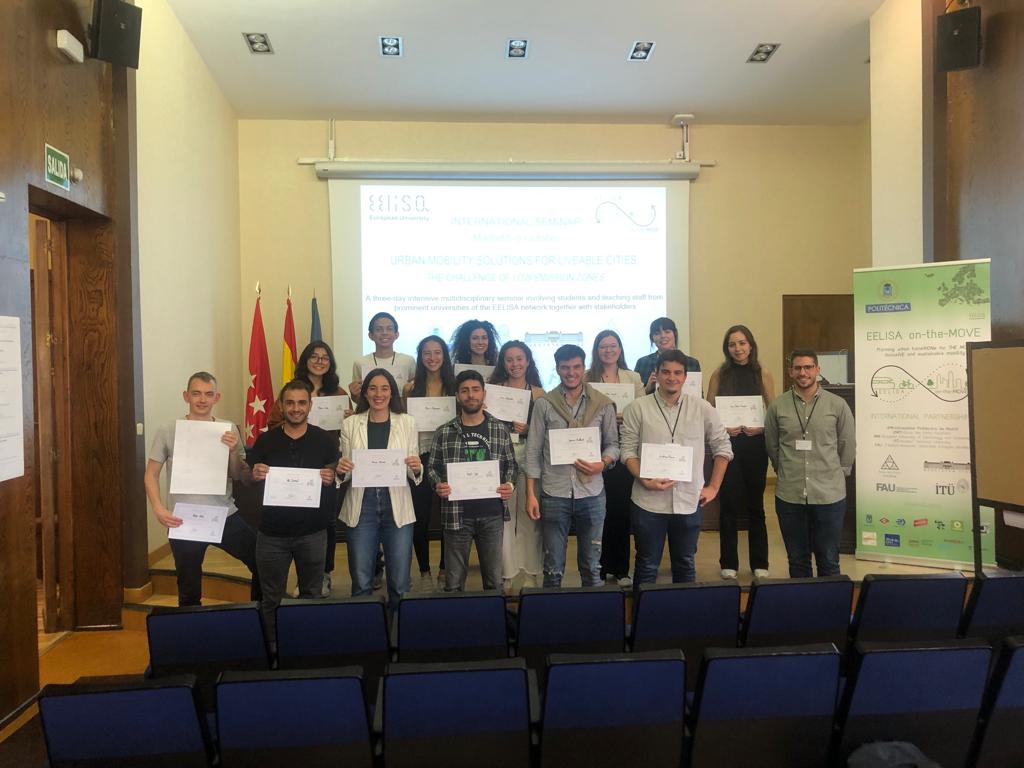
On Saturday, September 21, the event concluded with a session in which three teams of students, guided by academics from EELISA On-the-Move, worked on applying digital tools and virtual reality to propose solutions to improve the Moncloa station. Coordinated by PhD students Alba Ramírez and Allison Fernández from UPM, and Koray Aksu from Istanbul Technical University, the students presented their solutions to a jury composed of Dr. Emilio Ortega, Dr. Florin Nemtanu, and Professor Hande Demirel. The closing ceremony included the presentation of awards to the outstanding teams.
This academic event provided a rich platform for international collaboration and the exchange of innovative ideas in the field of urban mobility, deepening the importance and application of digital tools for solving current challenges in cities. The active participation of students from different universities and disciplines was key to the success of the activity.
Unveiling the Impact of Digital Trackers on Daily Activity
Madrid, 13th June 2024
This will be the first activity we will carry out during the year 2024 at the Universidad Politécnica de Madrid (UPM). In it, we will discover the influence of digital trackers on improving active mobility in society. The activity has been divided into several phases.
First Phase – This phase will consist of a series of presentations, during which collaborating professors will discuss active mobility and its consequences from different perspectives. At the end of this first phase, students will receive their digital trackers.
The activity took place on Thursday, 13 of June at the ETSAM (Escuela Técnica Superior de Arquitectura de Madrid, UPM). There were lectures given by speakers coming from UPM university, such as “Delivering healthier cities. Methods and practices” by Ester Higueras (ETSAM), “Fostering active mobility to archieve more equitable and healthier cities” by Andrea Alonso (ETSAM), “Walking and public transport: A perfect pairing for sustainable urban living” by Cristina López (ETSICCP) and “Road Traffic, emissions and urban air quality: Tools for evaluation and monitoring” by Juan Manuel de Andrés (ETSII).
Finally, digital trackers were given to the students, which will allow them to complete the challenges proposed during the upcoming phases.
Second Phase – It will take place between July and September. In it, student will participate in a challenge, aiming to record 10,000 daily steps.
Third Phase – Once the data from phase 2 is registered, another week of data collection will take place in September. During this time, students will already be in their routine environment and will attempt to balance the challenge with their mobility to the university, work, … .
Once completed, the obtained results will be analyzed, and students will be encouraged to propose ideas and reflections related to active mobility
International Co-Creation Workshops: Benchmarking the Challenge of 15-minute Cities in Europe.
Madrid 25th – 27th September
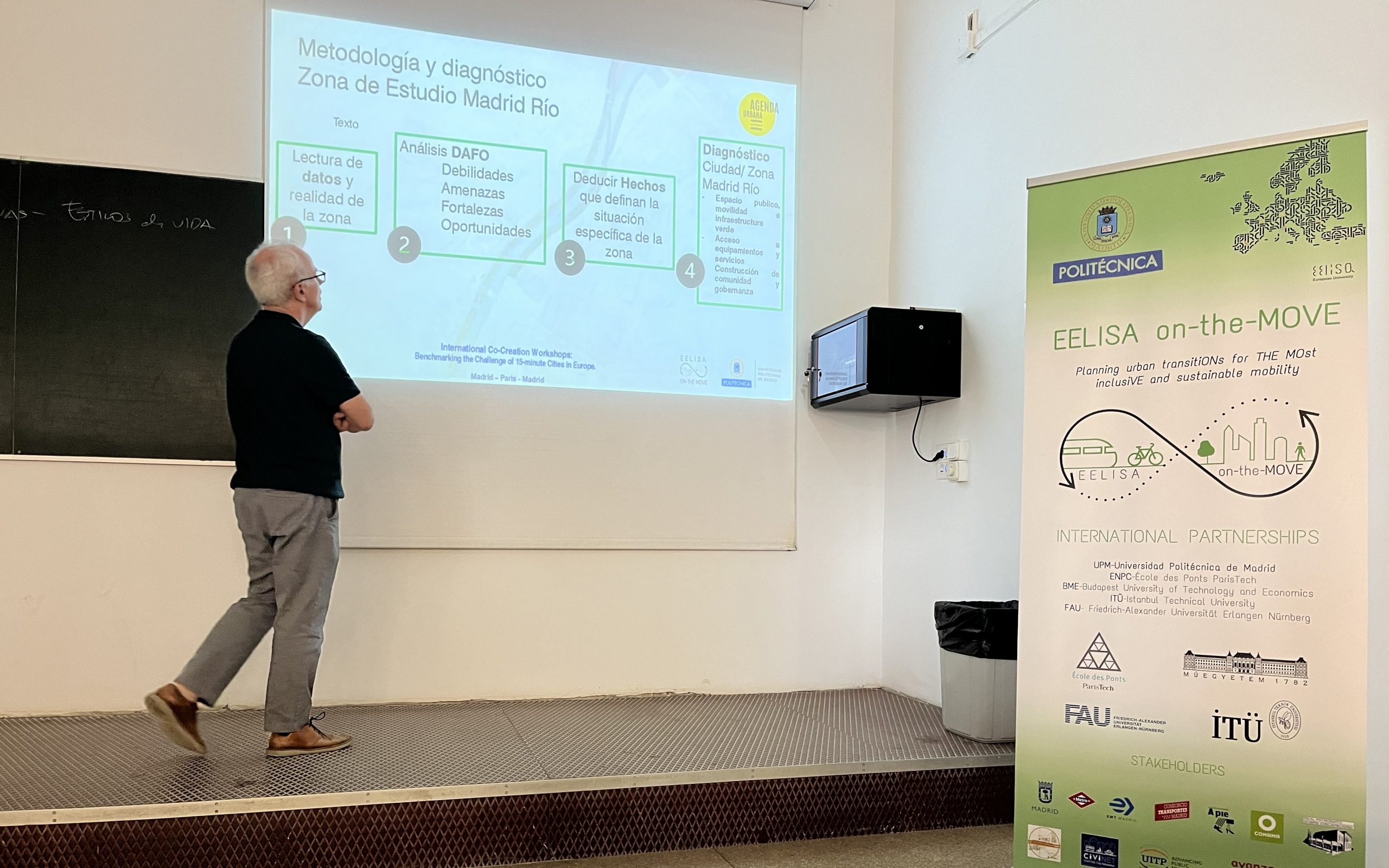
The 2nd Join Call for Co-Creation Seminars has successfully concluded with the third and final workshop. This three-day event took place from September 25th to 27th in Madrid, organized by Universidad Politécnica de Madrid (UPM).
Simultaneously, in Budapest at Budapest University of Tech and Economy (BME) and in Istanbul at Istanbul Technical University (ITU), parallel workshops were executed, following the same structured format as our Madrid event.
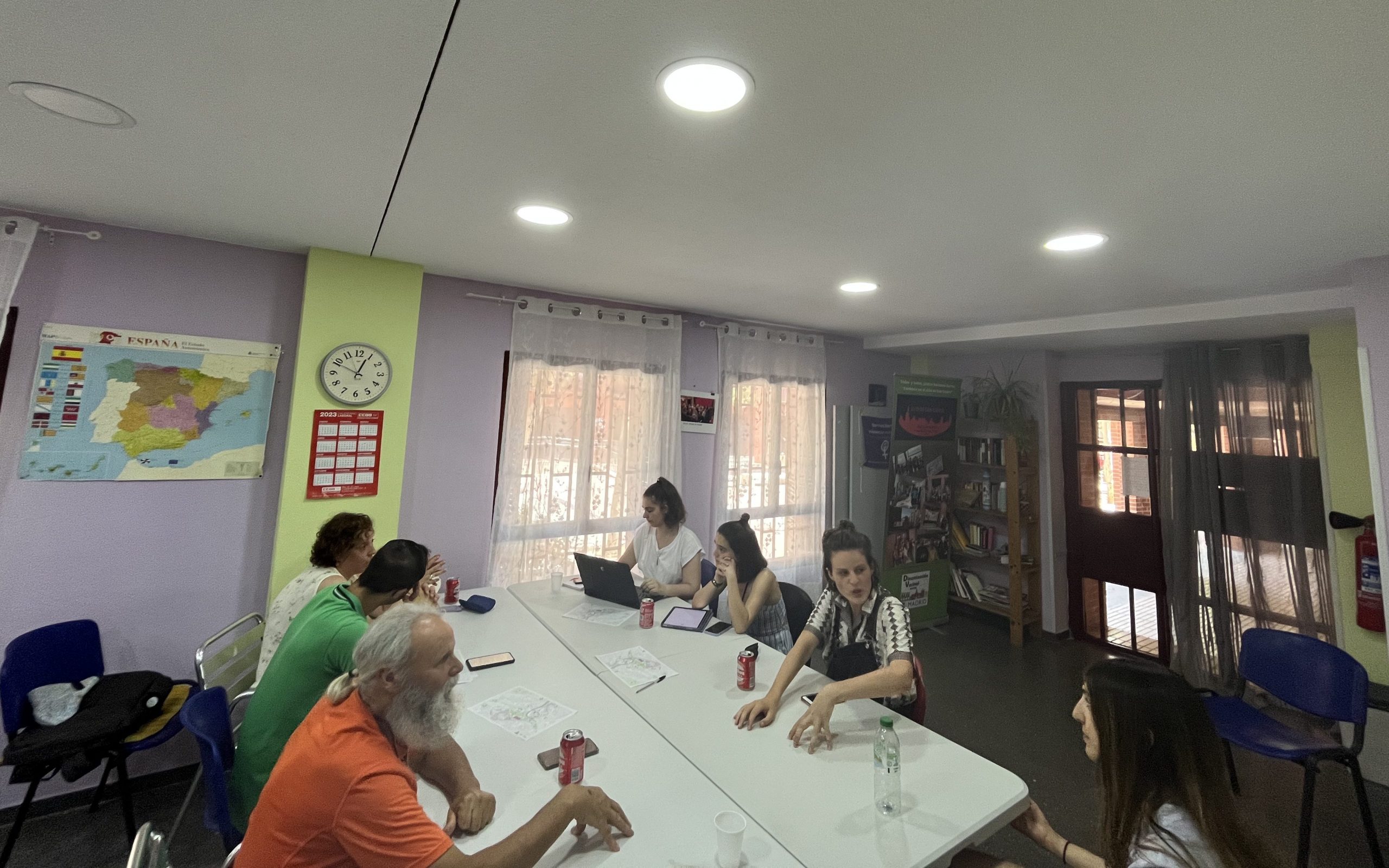
During this workshop, the initial two days were dedicated to the students, who engaged in intensive work sessions hosted at the ETSAM. These sessions were guided by our dedicated professors who provided support throughout the process. The overarching objective was to consolidate the wealth of information gathered during prior technical visits in Madrid and Paris, ultimately leading to the formulation of Special Proximity Plans tailored to their respective neighbourhoods.
The last day was dedicated to the final presentations, where representatives from the Neighbourhood Associations and the City Hall of Madrid were invited. One last day to present a summary of the previous workshops, centred on the good Parisian practices that could be extrapolated to Madrid Rio.
An engaging debate emerged among the various stakeholders, ensured thanks to the great efforts of the students. Effort that shows in the extensive work and production of multiple actions.
As we bring the curtains down on the 2nd Join Call, titled “International Co-Creation Workshops: Benchmarking the Challenge of 15-minute Cities in Europe,” we are pleased with the highly satisfactory results achieved. We remain optimistic about the potential for the continued growth of such cross-cultural and interdisciplinary learning experiences, benefiting students from diverse international backgrounds.
International Co-Creation Workshops: Benchmarking the Challenge of 15-minute Cities in Europe
Paris 4th – 6th September
This was the second of three workshops planned for this seminar. It has taken place on the 4th, 5th and 6th of September in Paris and has been organized by ENPC (Ecole des Ponts ParisTech) in collaboration with UPM (Universidad Politécnica de Madrid), ITU (Istanbul Technical University) and BME (Budapest University of Tech and Economy).
In alignment with the framework established in the Madrid Workshop, we convened a three-day international seminar with the objective of cross-checking diverse diagnoses and juxtaposing the solutions implemented in Paris.
Monday 4th
The presentation session commenced with an introduction by Paxti Lamíquiz (UPM) and Cécilia Cruz (ENPC), setting the stage for an insightful exchange of ideas. Following her opening remarks, the spotlight shifted to the student delegations from UPM, ITU and BME. Each group shared their findings, showcasing the outcomes of their prior city-wide assessments.
This intricate exchange allowed the ENPC’s incoming students to gain a deeper understanding of the distinctive urban landscapes and challenges faced in the home cities of their international peers.
Thursday 5th
The highlight of the day was a captivating technical visit led by none other than Carlos Moreno, a renowned professor from Sorbonne University, celebrated worldwide for his pioneering work in shaping the visionary concept of the ’15-Minute City.’
The site chosen was Clichy – Batignolles eco-district, one of the top ongoing urban projects in the Paris area. This innovative district exemplifies sustainable urban development in action.
In addition, other lower scale projects such as La Felicité (Morland Mixité Capitale), Martha Desrumaux Garden placed in the former Place d’Armes and La Promenade Plantée.
Wednesday 6th
The concluding day of the workshop unfolded within the Leonard Co-Working space. It was here that our students took centre stage, ready to share the knowledge and insights they had gathered during the preceding day’s exploration.
The international students presented the exemplary practices they had observed in the Parisian urban life. Following the presentations, the students engaged in discussions with their French counterparts, delving into the distinctions and commonalities that define the essence of urban life in their respective regions.
This 2nd workshop provided the perfect setting for this dynamic exchange, fostering an atmosphere of creativity, collaboration, and shared learning. Solidifying the bonds between EELISA Universities and knowledge-sharing.
International Co-Creation Workshops: Benchmarking the Challenge of 15-minute Cities in Europe.
This was the first of three workshops planned for this seminar. It took place on the 10th, 11th and 12th of July in Madrid and was organized by UPM (Universidad Politécnica de Madrid).
A three-day intensive multidisciplinary seminar for making a diagnosis of urban boroughs, comparing and cross-checking their findings to research 15mCity goals in the two areas of the case study. The seminar combined both student learning and real-world practice following a community-based learning approach.
Monday 10th There were lectures given by speakers coming from UPM university, such as Andrés Monzón (ETSICCP), Patxi Lamíquiz (ETSAM) and Mari Luz Brownrigg-Gleeson (ETSICCP). In addition, a few coaches helped in the development of the activities: Andrea Alonso (ETSAM) and Inmaculada Mohino (ETSAM).
Thursday 11th
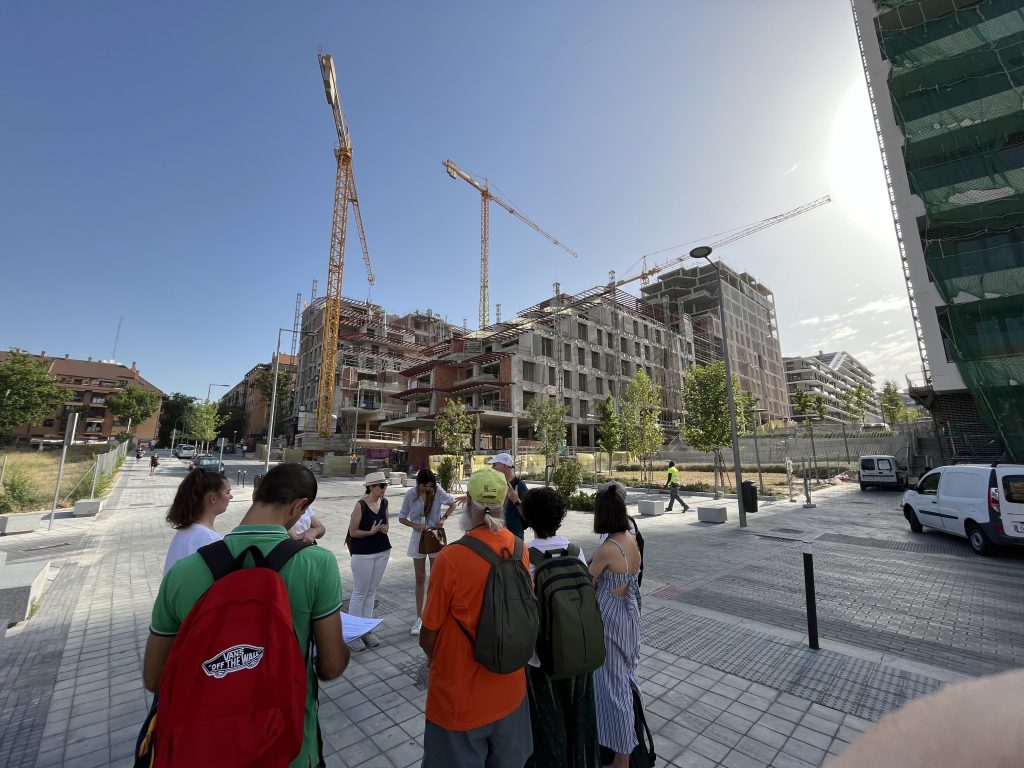
The sites chosen for the data collection and later study were two neighborhoods along the Madrid Río Park, “Imperial” and “Camino Alto de San Isidro”. On the field visit, there were representatives of both neighborhood associations “Pasillo Verde – Imperial” and “Alto de San Isidro”.
Later that afternoon the two multidisciplinary students’ groups began working on the case study.
Wednesday 12th
The seminar closed with the student’s final presentations and awards. In this presentation not only representatives of the association, but teaching staff gave their points of view on the work of both teams.
This seminar will be replicated in a second Workshop in Paris: Cross-check with the diagnosis and compare with solutions applied in Paris.
And a third one in Madrid: Results, recap Paris WS2 and applied the solutions.
Third CO-CREATION SEMINAR: URBAN MOBILITY SOLUTIONS FOR LIVEABLE CITIES: THE CHALLENGE OF LOW EMISSION ZONES
2-4 May
This is the third and last International Seminar of the call for Co-Creation Seminars of Low Emission Zones. It took place 2nd, 3rd and 4th of May in Budapest and was organised by BME (Budapest University of Tech and Economy).
International Seminar Urban Mobility ( Budapest University of Technology and Economics Building)
A three-day intensive multidisciplinary seminar for identifying and designing urban mobility solutions in the context of Traffic Calming Measures in Budapest. The seminar combined both student learning and real-world practice following a community-based learning approach.
Teams analyzing the data
There were lectures given by speakers coming from different universities and other stakeholders like Tamás Halmos (BKK) or András Ekés (Mobilissimus). In addition, a few coaches helped in the development of the activities: Attila Aba (BME), Miklós Kózel (BME) and Amor Ariza (UPM).
The site chosen for the data collection and later study was the riverside between the Szabadság Hid and the Ersëbet Hid in the Pest side of the city. The activities were focused on developing a new business game in other to improve this area.
These activities, included understanding the users, creating a customer journey map and finally pitching a methodology for such business plan. The students pitched their results to the jury form by János Tóth (BME), Andor Háznagy (BKK), Julio Soria-Lara (UPM) and Mehmet Ali Silgu (ITU).
Students pitching their ideas
The seminar closed with a ceremony lead by Andrés Monzón (UPM) in which the award was given to the “Movers” team. Thanks to their original idea of creating an app that gathers data from different mobility apps that the city already has. All this information could be used by the local government in other to implement new measures based in the reality of the city users.
This concludes the cycle of 3 seminars placed in Madrid, Istanbul and Budapest. With the hopes that this model helped strengthen the relations between the European EELISA Community. As well as served as a detonator of new international activities.
International Seminar Urban Mobility ( Escuela Ingenieros Caminos, Canales y Puertos, Retiro Building )
The International Seminar on Urban Mobility was celebrated in Madrid 6, 7 and 8 of October in the Escuela de Ingenieros de Caminos, Canales y Puertos (Bulding Retiro). The seminar consisted of a theorical and a practical part.
There were lectures given by speakers coming from different universities that collaborate in the protocommunity EElisa on-the-MOVE, such as Lya Lugon from ENPC (Paris), Hande Demirel from ITU (Istambul), and Ali Jamal from BME (Budapest). Speakers coming from the UPM and stakeholders like Transyt, TEMA Ingeniería and Instituto Carlos III also took part.
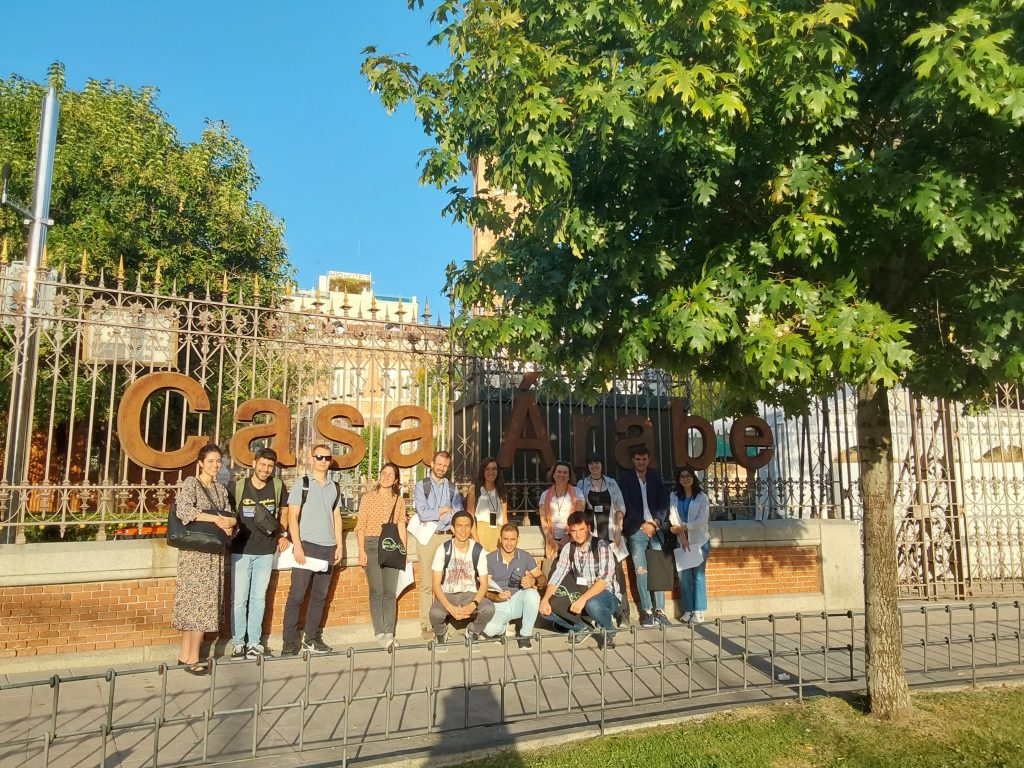
In addition to this, there was a Technical visit to Madrid LEZ (Central District), a walking tour through the Madrid air quality monitoring network and pedestrian areas, such as Sol square.
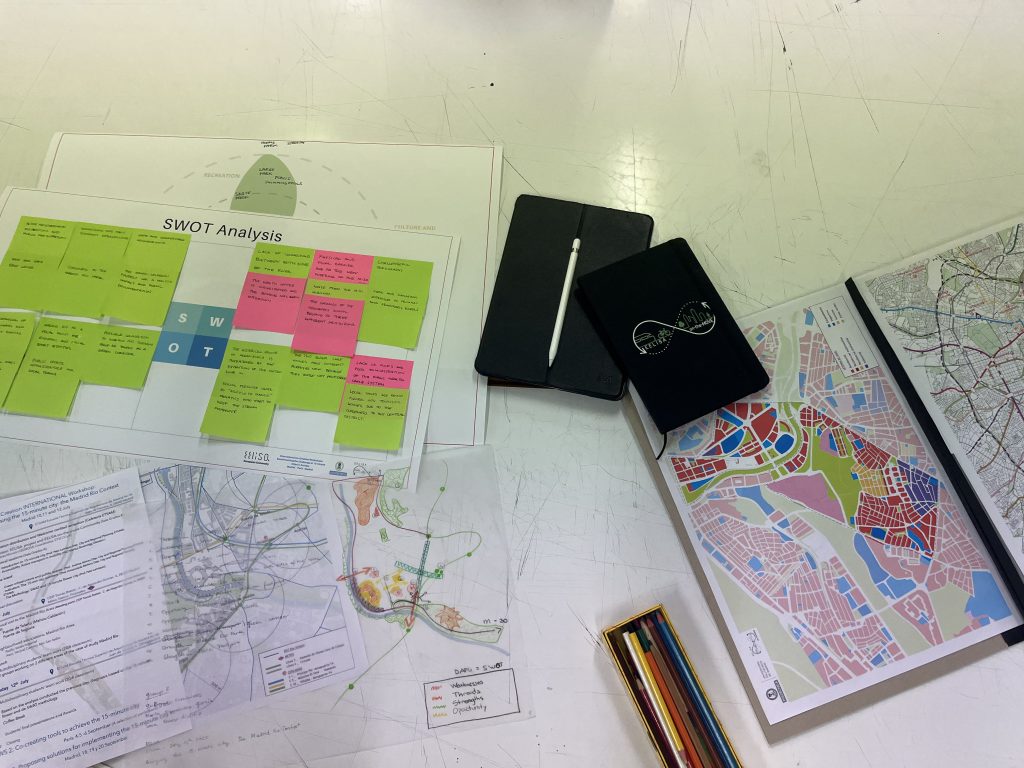
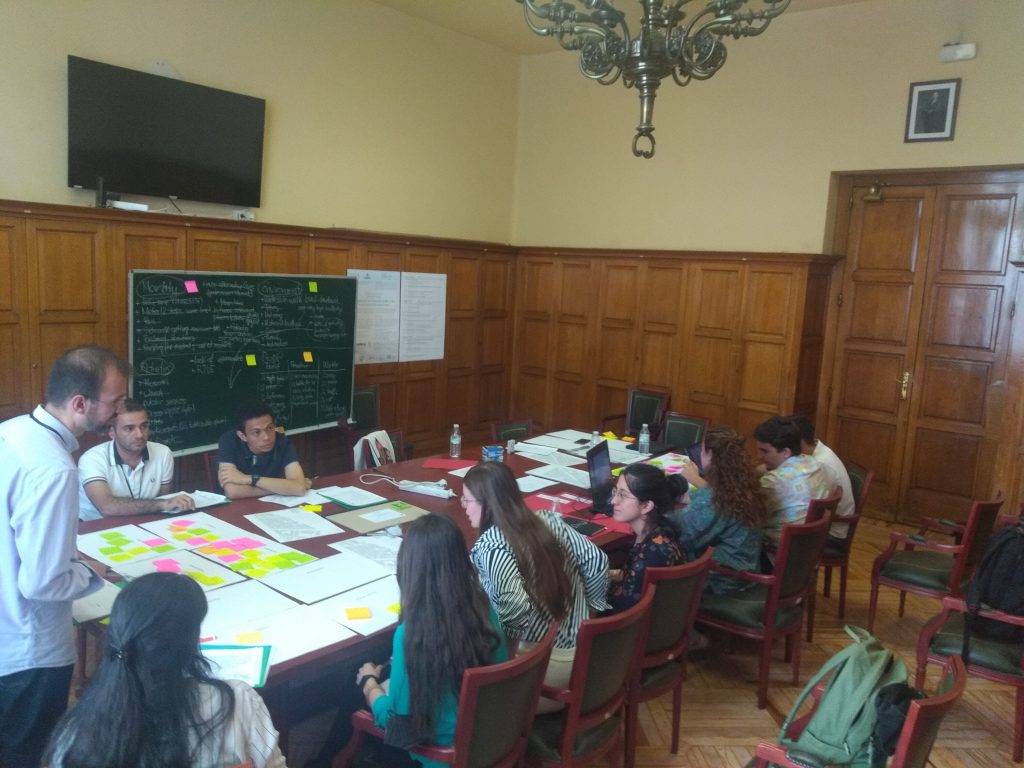
As well as this, the participants from BME, ITU, FAU and UPM worked in 3 groups focusing on different areas in Madrid LEZ (Central District): Ronda de Atocha, Calle Atocha and Paseo del Prado. First, they analyzed the different strategic points, combining field work, official data and cartography, resulting in a SWOT analysis that they later used to propose multidisciplinary solutions to improve the case study areas.
The 3 teams made a final presentation of their proposed solution. The winner group was the Paseo del Prado (Group 2), due to the real proposal of giving more space pedestrians and making more information available to citizens by means of an integrated information hub.
Students Participants
UPM Students
Nuria Blanco
María Astigarraga
Lucía Alejandre
Elena Varadé
Guillermo Fernandes
Rosa Levy
Elena Varadé
Guillermo Pásaro
Ana Belén Torrejón
Elena Gómez
UPM Professors
Andrés Monzón (Coordinator EELISA on the move)
Rafael Borge
Maía Eugenia López
Francisco Lamíquiz
Gabriel Huecas
Joaquín Salvachúa
Belén Martín
Andrea Alonso
Julio Soria
Miguel L. Navarro
International students
Pèter Tóth
Melih Safa
Ali Jamal
Ignacio Bullrich
International professors
Lya Lugon
Hande Demirel
Stakeholders
Teresa López
Beatriz Núñez
Secretariat and Coordination
Mari Luz Gleeson
Amor Ariza
Elena Gómez
This seminar will be replicated on Febrary in Istambul and on April in Budapest, looking forward to working together anew for resolve the challenges of our cities.
SWOT analysis by groups
Technical visit Air Quality monitoring Station (Escuelas Aguirre)