

Materials for solar cells and modules
Materials research has always been foundational to the work carried out at IES. Our holistic, vertically integrated approach to photovoltaic (PV) technology is anchored in a deep understanding of the materials science that drives the performance and advancement of solar technologies. This comprehensive vision enables us to push the boundaries of innovation and improve the efficiency, sustainability, and scalability of PV systems.
Below are some key areas of our ongoing research into solar materials:
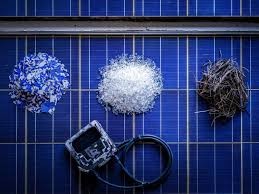
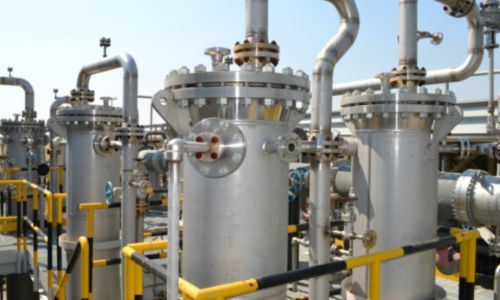
- Silicon: Crystalline silicon is the workhorse of today’s PV, having reached in industrial environments cost targets and performance levels that were unthinkable not so long ago. At IES, our research carried out on this material benefits from a long experience in the whole value chain, and adopts an integral approach that includes the production of solar silicon, the minimization of the impact of defects in device performance, and the research in promising solar cell structures, including the integration of silicon in a tandem structure with other semiconductors to surpass the practical efficiency limit of single junction solar cells.
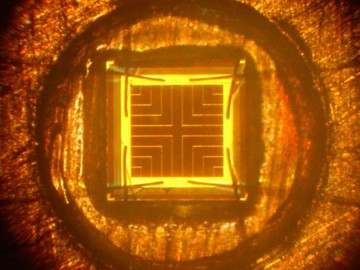
- III-V compound semiconductors: We are unlocking the full potential of III-V compound semiconductors, renowned for their high efficiency and ability to absorb a broad spectrum of sunlight. At IES, our goal is to develop next-generation III-V multijunction solar cells that are not only more efficient but also versatile and cost-effective. To achieve this, we focus on addressing key challenges such as the re-use of traditional substrates (as Ge, GaAs or InP) or the adoption of low-cost virtual substrates. These advancements are critical for enabling the production of lightweight, flexible, and high-efficiency solar cells, which are particularly well-suited for space applications and other high-power density environments, such as electric vehicles, drones or pseudo satellites.
- Perovskites: Our research into perovskite materials focuses on their incredible promise for affordable, high-efficiency solar cells. We investigate ways to enhance their stability (using Bismuth based perovskites), scalability, and compatibility with existing manufacturing processes, enabling perovskites to play a key role in the future of solar energy.
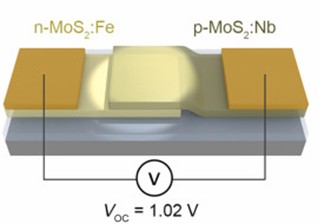
- 2D materials: We are delving into the world of two-dimensional materials, which have unique electronic and optical properties that could revolutionize the design of solar cells. By harnessing the potential of these materials, we aim to develop ultra-thin, flexible, and highly efficient solar technologies that could unlock a myriad of new applications for PV, including in wearables, windows, walls, and energy harvesting.
- Novel materials: Our team is continuously exploring novel materials that could deliver breakthrough improvements in solar cell performance, using theoretical calculations based on DFT (Density Functional Theory) and ab initio methods. These computational techniques allow us to predict the properties and behaviors of new materials at the atomic level, offering valuable insights into their potential for high-efficiency solar applications. This provides crucial guidance to experimental researchers, enabling them to focus on the most promising candidates and streamline the development of next-generation solar technologies.
- Optical materials: Beyond semiconductors, optical materials are crucial for optimizing photovoltaic performance. These materials help to manipulate and control light to maximize the absorption of solar energy, enhancing the efficiency of solar cells. At IES we conduct research on optical materials that are used in various components, such as anti-reflective coatings, light-trapping structures, and concentrators, which improve light capture and reduce energy loss.
All developments arising from our materials research are applied to the creation of advanced solar cell architectures, including bifacial, multijunction, intermediate band, and three-terminal heterojunction bipolar transistor solar cells. And there is more beyond traditional solar cells, since at IES, we also utilize these materials to innovate new photovoltaic devices, such as thermophotovoltaic cells, laser power converters, and indoor energy harvesting systems.
Research in these areas takes place at IES in state-of-the-art facilities, which include silicon production reactors, epitaxy reactors for III-V compounds (MOVPE and MBE) cleanroom spaces for micro and nanofabrication, and extensive labs for materials and device characterization.