
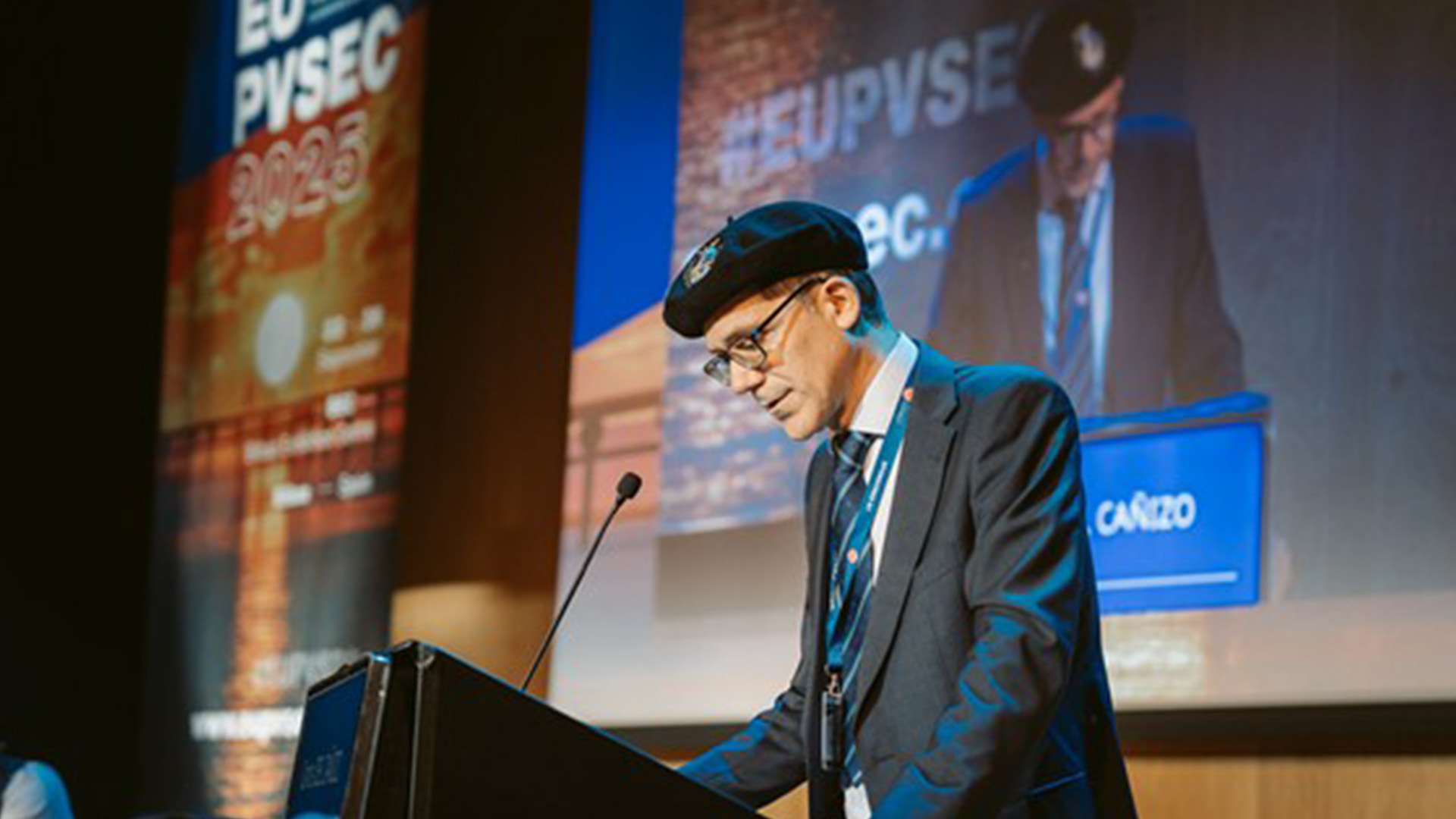
Between 22 and 26 September 2025, the Instituto de Energía Solar (IES) made a strong presence at EUPVSEC 2025, the premier international conference & exhibition in photovoltaics held in Bilbao, Spain.
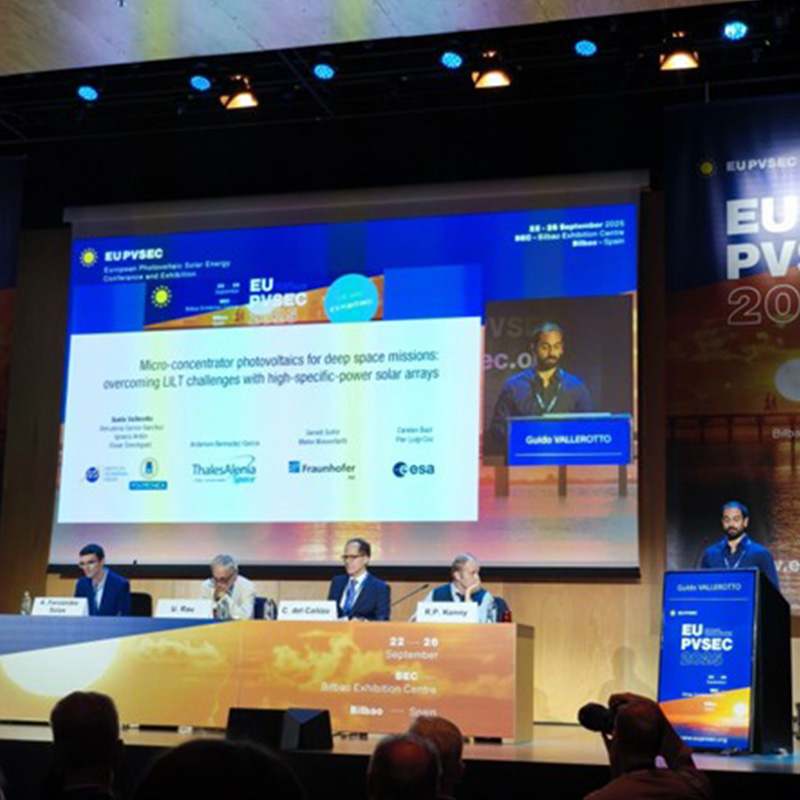
Our participation began with the opening plenary session, where IES’s Dr. Guido Vallerotto presented promising early results from a novel solar panel technology designed to enable deep space missions to the icy moons of Jupiter and Saturn in the search for signs of extraterrestrial life. This work is a collaboration between Thales Alenia Space, Fraunhofer-Institut für Solare Energiesysteme, the European Space Agency and IES.
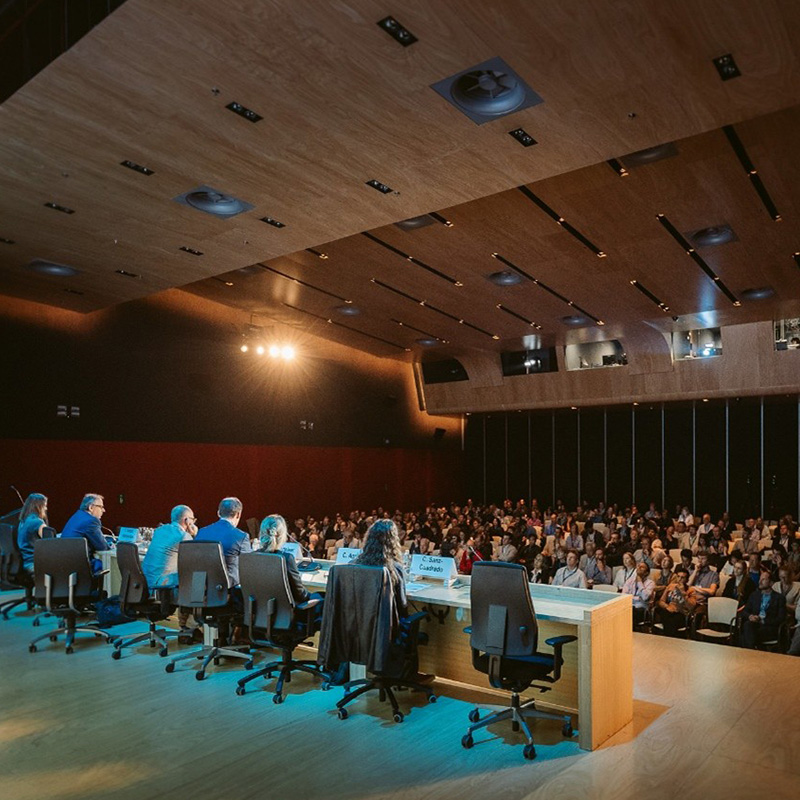
At the conclusion of the opening plenary, IES Professor Carlos del Cañizo, this year’s Chair of the conference, formally inaugurated the 42nd EU PVSEC in Bilbao, the largest scientific gathering dedicated to photovoltaic technology. In an inspiring speech, he reflected on the remarkable progress the photovoltaic community has achieved since its early days, recalling with pride how IES and Isofotón were already producing the first bifacial solar cells in the 1980s. He also addressed the challenges that remain ahead, expressing confidence that the community is well positioned to meet them through solid, well-grounded science, collective effort, and passion.
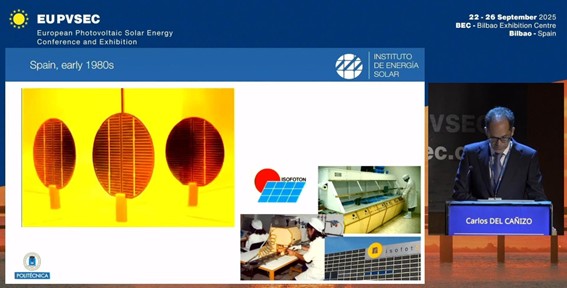
Over the course of the week, IES’s team delivered oral and poster presentations across multiple sessions, engaging with leading researchers, industry partners, and policy actors in the PV community. LinkedIn updates provide glimpses of slides, key messages, and networking moments shared by faculty and students.
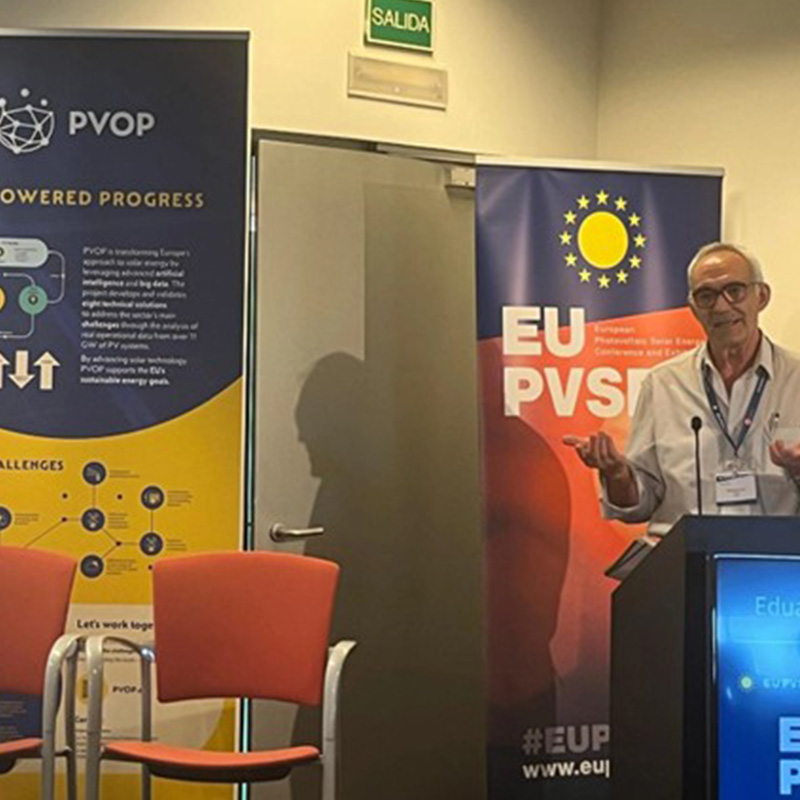
The parallel event “Why Do PV Plants Perform Lower than Expected?” merits special attention. Organized by IES and PVOP, this session drew a standing-room-only audience eager to hear expert perspectives on the critical challenges facing photovoltaic plant managers and operators. These include underperforming energy production, inefficient solar tracker algorithms, undetected performance losses, and overwhelming data management issues—all exacerbated by declining electricity prices that strain operational and maintenance budgets.
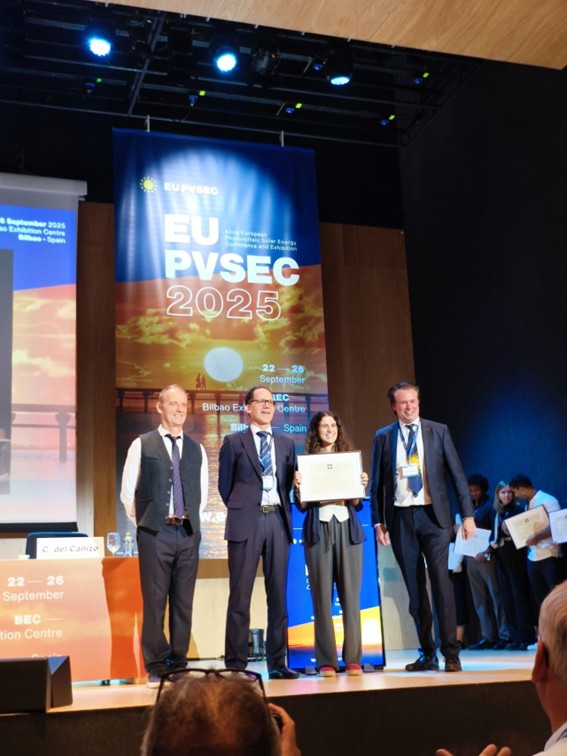
The week concluded on a high note with a remarkable achievement in student recognition. We are proud to announce that two PhD students from the Instituto de Energía Solar have received the Best Student Presentation Award at the European Photovoltaic Solar Energy Conference.
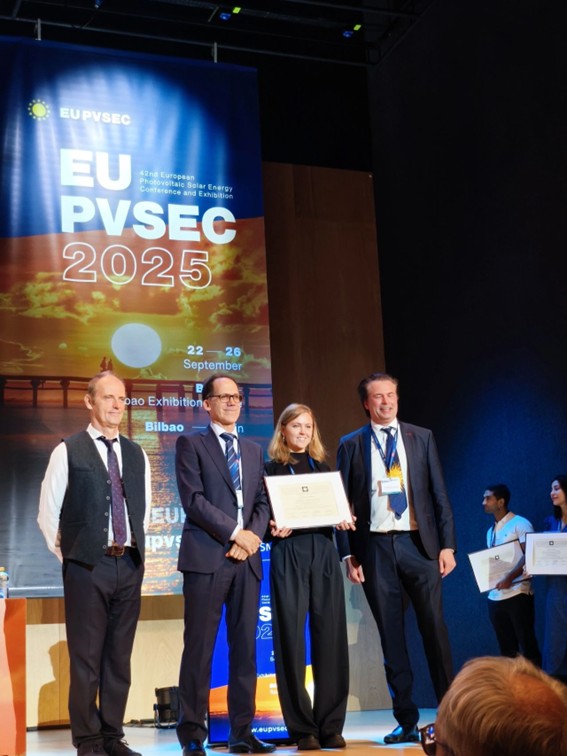
Inés Durán Rupérez and Cristina Sanz-Cuadrado were among only six recipients honored at the conference for their outstanding research contributions. Inés Durán Rupérez was recognized for her presentation “High Thermoelectric Performance in Few-Layered p-Type Molybdenum Disulfide for Photovoltaics”.
Cristina Sanz-Cuadrado received her award for “Renewable Energy Communities and Citizen Participation in Technological and Social Innovations.”
Finally, EUPVSEC provided a valuable platform for forging new collaborations. Our researchers participated in discussions on novel materials, module technologies, system integration, and the socio-technical dimension of energy communities.
We thank all the students, staff, and collaborators who made this participation possible. Special congratulations to our awardees, and to everyone who shared, commented, and amplified our research through social media.
Why EUPVSEC matters—and why IES’s role is significant
EUPVSEC is the largest forum uniting the photovoltaic research community, industry players, and decision-makers in Europe. Its technical program is coordinated with the European Commission’s Joint Research Centre, ensuring strong scientific rigor and relevance.
As Spain’s oldest active institute in PV research (founded in 1979) IES has long been at the forefront of solar innovation. Our presence at EUPVSEC 2025 underscores our commitment to pushing the boundaries of photovoltaic science and contributing to the European and global energy transition.