
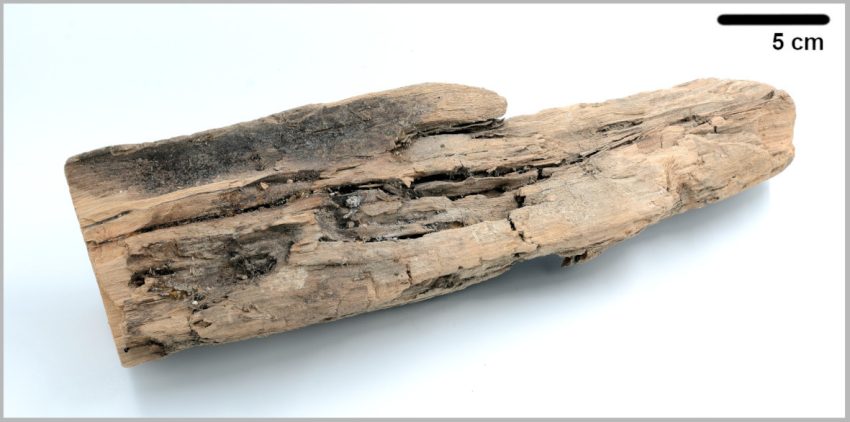
You may have read that the EMMA Herbarium has an associated collection of fossil plant materials. Since it is not yet computerized, the data associated with these remains are not easily accessible. Interested public must search for them in the scientific publications of each work. The origin of these samples is the accumulated work of one of the research lines of research group Historia y Dinámica del Paisaje Vegetal (UPM) [History and Dynamics of the Vegetal Landscape].
Interpreting current vegetation from a dynamic point of view was difficult in some cases if no information was available about how it had evolved over the past millennia. Questions as basic as knowing whether some trees are native to a specific location are difficult to answer without this type of data. Hence the importance of looking at the plant history of the Iberian Peninsula.
As an introduction, here is an informative video in Spanish made by one of the collaborators of this team, Fátima Franco Múgica, who works with fossil pollen at the Universidad Autónoma de Madrid (UAM):
Pollen is the most widely used indicator in reconstructing vegetation dynamics over the last millennia. To increase the accuracy of these reconstructions, it is essential to have data extracted from other plant indicators or even from other sources (for example, historical archives). Among these other plant indicators, the remains of wood, fruits and conifer cones stand out. Most of the remains in the EMMA-Paleo collection are wood samples. This is not surprising when we consider that it is a collection supported by research groups and teaching units in the forestry field.
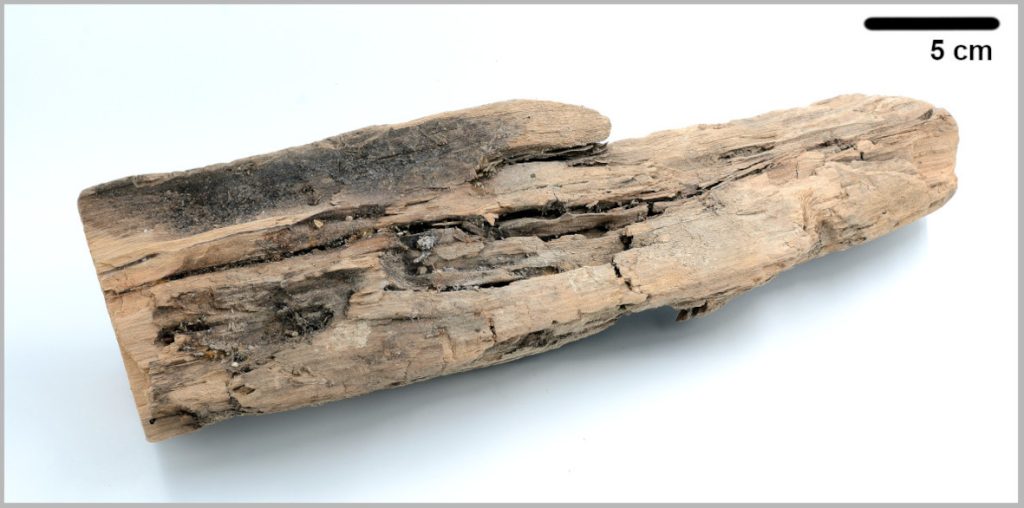
This wood that we have used as an illustrative example is part of a study that was published in 1997: Roig et al., 1997.
