Indoor Robomesh
This prototypes are designed entirely out of nowhere seeking best performance in clinical environment, focusing the gait analysis into disease diagnosis and monitoring. The implemented depth sensor, Orbecc Femto Mega, has shown better results for skeleton tracking than many other similar options, only in exchange for a quite shorter range of capture which doesn’t mean a problem at the indoor application it is intended for.
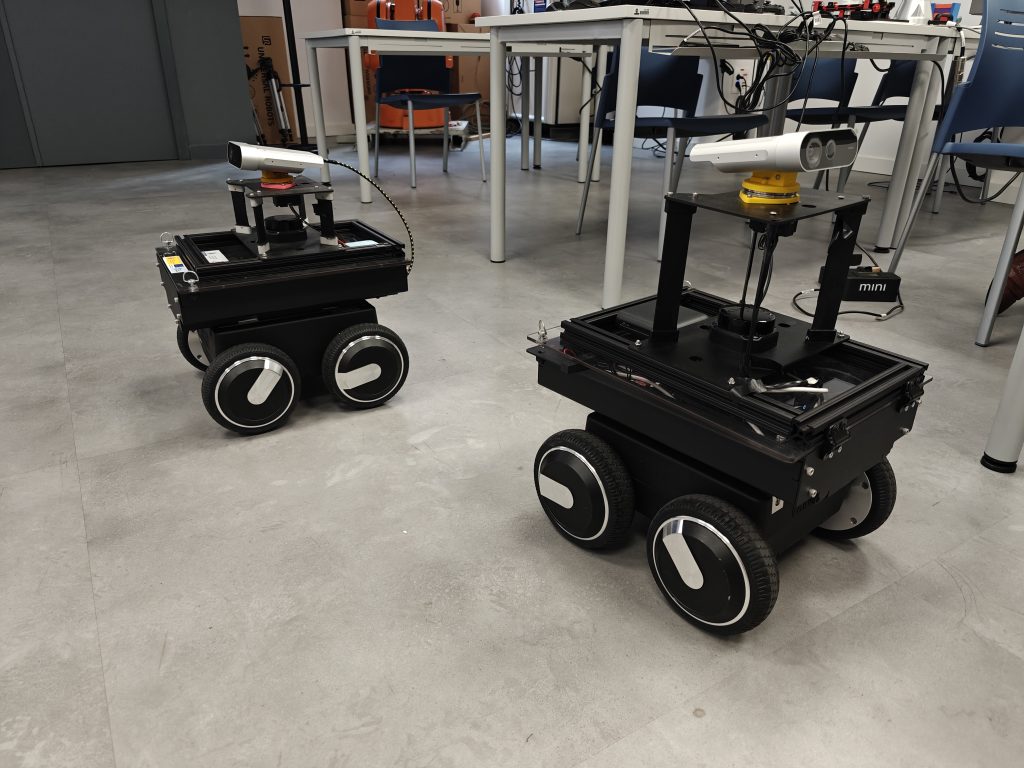
Technical specifications
| Speed | 1.5m/s |
| Capture Range | 1-5m |
| Dimensions (HxWxD) | 43 x 27 x 32cm |
| Weight | ~20Kg |
| Load Capacity | 7Kg |
| Autonomy | 2h |
| Power Consumption | 19W |
Sport Outdoor Robomesh
RC based mobile platform intended to perform gait analysis in running conditions. Uses GNSS data in order to record a waypoint array it will navigate through during the gait experiment, with the help of a LiDAR 3D sensor looking after unexpected obstacles or dangers. This robot wears a stereo depth sensor able to detect human skeletons even in outdoor environments by using the ZED X camera in a similar way to how human eyes work. Due to the high speeds this robot will reach, a security system was implemented with which the operator can override control wirelessly in case of emergency.
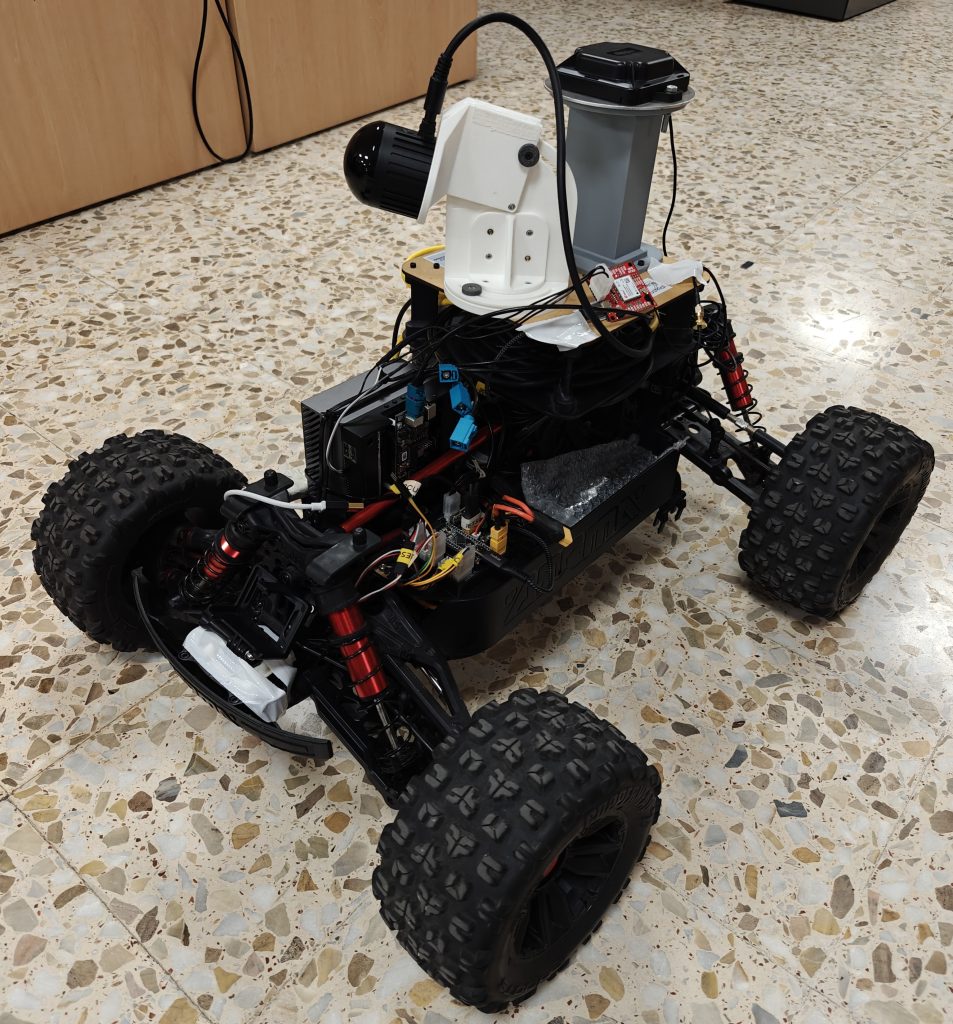
Technical specifications
| Speed | 15m/s |
| Capture Range | 1-10m |
| Dimensions (HxWxD) | 48 x 60 x 70cm |
| Weight | ~10Kg |
| Turn radius | 1.1m |
| Autonomy | 3h |
| Power Consumption | 19W |

“Proyecto PID2023-150967OB-I00 financiado por MICIU/AEI/10.13039/501100011033 y por FEDER, UE”