Lara-Bocanegra AJ, Domínguez I, Solís R, Trillo A. (2011) Escuela infantil en Isla Cristina (Kindergarten in Isla Cristina). In: Catálogo de la exposición del XVIII Premio de Arquitectura del COAH (Exhibition catalog of the XVIII Architecture Awards COAH). (In spanish).
Lara-Bocanegra AJ, Domínguez I, Solís R, Trillo A. (2011) Escuela infantil en Isla Cristina (Kindergarten in Isla Cristina). In: Catálogo de la exposición del XVIII Premio de Arquitectura del COAH (Exhibition catalog of the XVIII Architecture Awards COAH). (In spanish).
Abstract “El grande protege al pequeño”. Este aforismo condensa la idea primera del proyecto de dar protección y servicio a aque­llos que más lo necesitan: 1 os niños. La arquitectura recoge los impulsos que emiten los requeri­mientos educativos y se

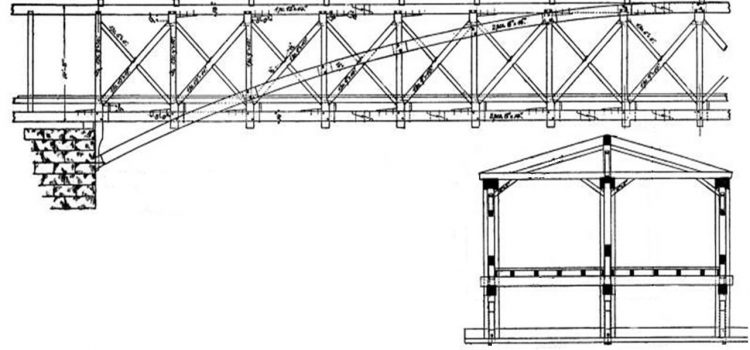
Íñiguez G, Fernandez-Cabo JL, Fernandez-Cabo MC, Arriaga-Martitegui F, Majano-Majano A. (2010) Remarkable ancient timber bridges up to the 1850’s. Part I: general review. International Conference on Timber Bridges (ICTB-2010), Lillehammer, Norwey.

Íñiguez G, Fernandez-Cabo JL, Fernandez-Cabo MC, Arriaga-Martitegui F, Majano-Majano A. (2010) Remarkable ancient timber bridges up to the 1850’s. Part I: general review. International Conference on Timber Bridges (ICTB-2010), Lillehammer, Norwey.

Abstract In 1850, the Bessemer converters were able to produce mass-production inexpensive steel. This technical advance was the key point that leaded to a suddenly extended use of steel in the bridge engineering field. Consequently, timber was pushed into the

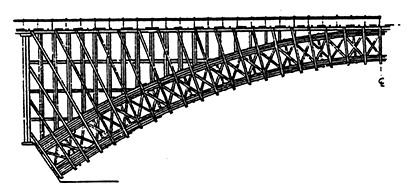
Fernandez-Cabo MC, Fernandez-Cabo JL, Íñiguez G, Arriaga-Martitegui F, Majano-Majano A. (2010) Remarkable ancient timber bridges up to the 1850’s. Part II: case studies and breakthroughs. International Conference on Timber Bridges (ICTB-2010), Lillehammer, Norwey.

Fernandez-Cabo MC, Fernandez-Cabo JL, Íñiguez G, Arriaga-Martitegui F, Majano-Majano A. (2010) Remarkable ancient timber bridges up to the 1850’s. Part II: case studies and breakthroughs. International Conference on Timber Bridges (ICTB-2010), Lillehammer, Norwey.

Abstract As showed in the first part of this work [1], the technical heritage prior to the 1850´s presents an important number of remarkable timber bridges, especially in the last hundred years of that period. This paper presents, in a

Majano-Majano A, Hughes M, Fernandez-Cabo JL. (2010) A fracture mechanics study of thermally modified beech for structural applications. World Conference on Timber Engineering (WCTE 2010), Riva del Garda, Trento, Italy.

Majano-Majano A, Hughes M, Fernandez-Cabo JL. (2010) A fracture mechanics study of thermally modified beech for structural applications. World Conference on Timber Engineering (WCTE 2010), Riva del Garda, Trento, Italy.

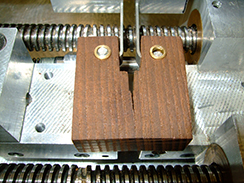
Abstract Thermal modification of wood is an established alternative to other preservative treatments that may be aggressive to the environment. When the use of thermally modified wood in structural applications is envisioned, the fracture properties become extremely important due to

Fernandez-Cabo JL, Majano-Majano A, San Salvador Ageo L, Ávila Nieto M. (2010) A novel façade sandwich panel with low-density wood fibres core. World Conference on Timber Engineering (WCTE 2010), Riva del Garda, Trento, Italy.

Fernandez-Cabo JL, Majano-Majano A, San Salvador Ageo L, Ávila Nieto M. (2010) A novel façade sandwich panel with low-density wood fibres core. World Conference on Timber Engineering (WCTE 2010), Riva del Garda, Trento, Italy.

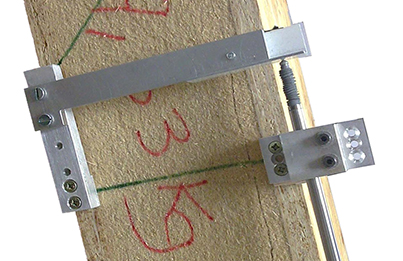
Abstract The work explores, experimentally and theoretically, the possibility of producing a novel cladding sandwich panel comprised of a low-density wood fibres (WF) core, made with GUTEX®, and timber engineering board faces. A short discussion of the possibility of using

Majano-Majano A, Hughes M, Fernandez-Cabo JL. (2009) Fracture characteristics and properties of thermally modified timber made out of beech. The 4th European Conference on Wood Modification (ECWM 2009), Stockholm, Sweden.

Majano-Majano A, Hughes M, Fernandez-Cabo JL. (2009) Fracture characteristics and properties of thermally modified timber made out of beech. The 4th European Conference on Wood Modification (ECWM 2009), Stockholm, Sweden.

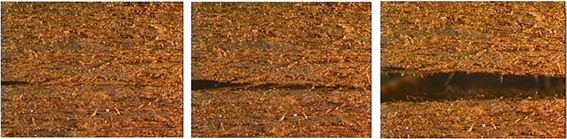
Abstract Thermally modified timber (TMT) is timber with properties that have been altered because of the high temperatures to which it has been subjected. Due to its good durability, TMT is commonly used for non-structural purposes in outdoor environments, without

ETSAMadera
Resumen de privacidad

Esta web utiliza cookies para que podamos ofrecerte la mejor experiencia de usuario posible. La información de las cookies se almacena en tu navegador y realiza funciones tales como reconocerte cuando vuelves a nuestra web o ayudar a nuestro equipo a comprender qué secciones de la web encuentras más interesantes y útiles.