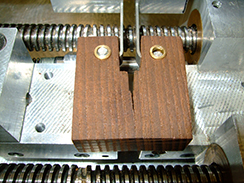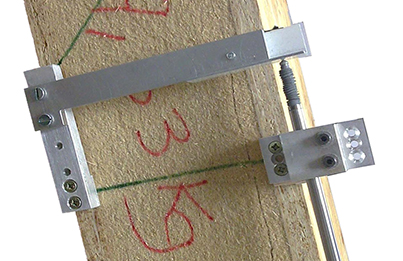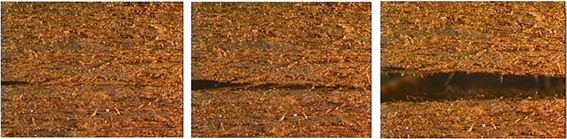
Majano-Majano A, Fernandez-Cabo JL, Hoheisel S, Klein M. (2011) Characterization of clear wood by a single test. 1º Ibero-Latin American Congress of Timber in Construction (CIMAD 11), Coimbra, Portugal.
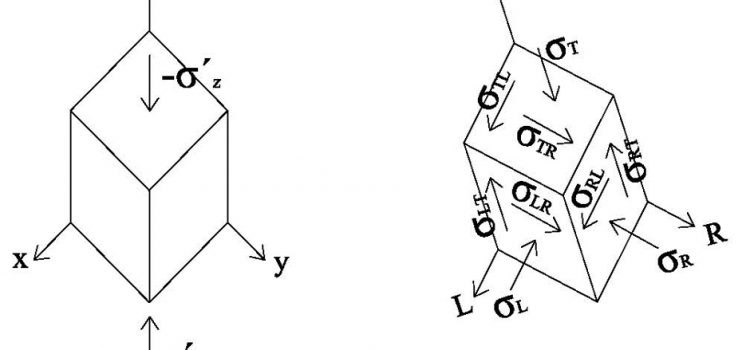
Majano-Majano A, Fernandez-Cabo JL, Hoheisel S, Klein M. (2011) Characterization of clear wood by a single test. 1º Ibero-Latin American Congress of Timber in Construction (CIMAD 11), Coimbra, Portugal.
Abstract The constitutive models used for wood and timber have been formulated in different scales. The term clear wood corresponds with the macroscopic scale, where the orthotropic elastic model is commonly used. That model, typically applied to local modeling (e.g.

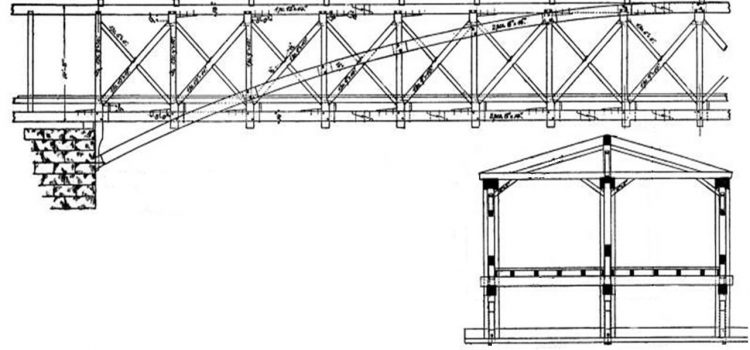
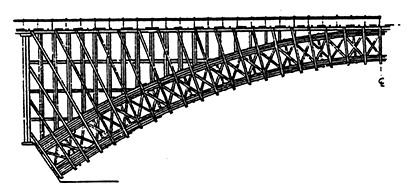
Íñiguez G, Fernandez-Cabo JL, Fernandez-Cabo MC, Arriaga-Martitegui F, Majano-Majano A. (2010) Remarkable ancient timber bridges up to the 1850’s. Part I: general review. International Conference on Timber Bridges (ICTB-2010), Lillehammer, Norwey.

Íñiguez G, Fernandez-Cabo JL, Fernandez-Cabo MC, Arriaga-Martitegui F, Majano-Majano A. (2010) Remarkable ancient timber bridges up to the 1850’s. Part I: general review. International Conference on Timber Bridges (ICTB-2010), Lillehammer, Norwey.

Abstract In 1850, the Bessemer converters were able to produce mass-production inexpensive steel. This technical advance was the key point that leaded to a suddenly extended use of steel in the bridge engineering field. Consequently, timber was pushed into the

Fernandez-Cabo MC, Fernandez-Cabo JL, Íñiguez G, Arriaga-Martitegui F, Majano-Majano A. (2010) Remarkable ancient timber bridges up to the 1850’s. Part II: case studies and breakthroughs. International Conference on Timber Bridges (ICTB-2010), Lillehammer, Norwey.

Fernandez-Cabo MC, Fernandez-Cabo JL, Íñiguez G, Arriaga-Martitegui F, Majano-Majano A. (2010) Remarkable ancient timber bridges up to the 1850’s. Part II: case studies and breakthroughs. International Conference on Timber Bridges (ICTB-2010), Lillehammer, Norwey.

Abstract As showed in the first part of this work [1], the technical heritage prior to the 1850´s presents an important number of remarkable timber bridges, especially in the last hundred years of that period. This paper presents, in a

Majano-Majano A, Hughes M, Fernandez-Cabo JL. (2010) A fracture mechanics study of thermally modified beech for structural applications. World Conference on Timber Engineering (WCTE 2010), Riva del Garda, Trento, Italy.

Majano-Majano A, Hughes M, Fernandez-Cabo JL. (2010) A fracture mechanics study of thermally modified beech for structural applications. World Conference on Timber Engineering (WCTE 2010), Riva del Garda, Trento, Italy.

Abstract Thermal modification of wood is an established alternative to other preservative treatments that may be aggressive to the environment. When the use of thermally modified wood in structural applications is envisioned, the fracture properties become extremely important due to

Fernandez-Cabo JL, Majano-Majano A, San Salvador Ageo L, Ávila Nieto M. (2010) A novel façade sandwich panel with low-density wood fibres core. World Conference on Timber Engineering (WCTE 2010), Riva del Garda, Trento, Italy.

Fernandez-Cabo JL, Majano-Majano A, San Salvador Ageo L, Ávila Nieto M. (2010) A novel façade sandwich panel with low-density wood fibres core. World Conference on Timber Engineering (WCTE 2010), Riva del Garda, Trento, Italy.

Abstract The work explores, experimentally and theoretically, the possibility of producing a novel cladding sandwich panel comprised of a low-density wood fibres (WF) core, made with GUTEX®, and timber engineering board faces. A short discussion of the possibility of using

Majano-Majano A, Hughes M, Fernandez-Cabo JL. (2009) Fracture characteristics and properties of thermally modified timber made out of beech. The 4th European Conference on Wood Modification (ECWM 2009), Stockholm, Sweden.

Majano-Majano A, Hughes M, Fernandez-Cabo JL. (2009) Fracture characteristics and properties of thermally modified timber made out of beech. The 4th European Conference on Wood Modification (ECWM 2009), Stockholm, Sweden.

Abstract Thermally modified timber (TMT) is timber with properties that have been altered because of the high temperatures to which it has been subjected. Due to its good durability, TMT is commonly used for non-structural purposes in outdoor environments, without

ETSAMadera
Privacy Overview

This website uses cookies so that we can provide you with the best user experience possible. Cookie information is stored in your browser and performs functions such as recognising you when you return to our website and helping our team to understand which sections of the website you find most interesting and useful.