
Abstract
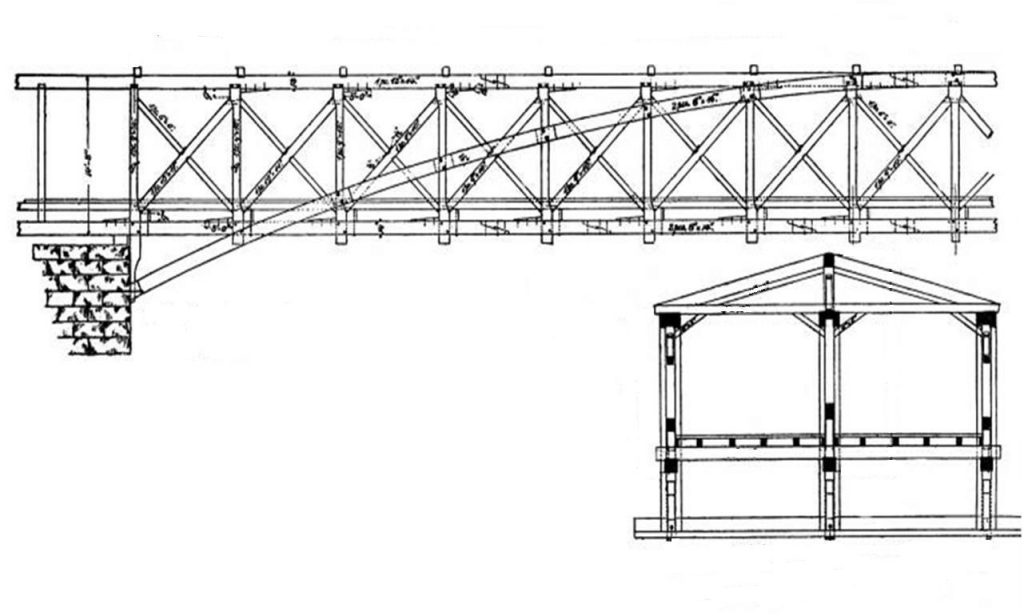
In 1850, the Bessemer converters were able to produce mass-production inexpensive steel. This technical advance was the key point that leaded to a suddenly extended use of steel in the bridge engineering field. Consequently, timber was pushed into the backstage as a structural material during many decades. In the other hand, timber has been fortunately recovered, especially from 1970´s, as engineering material. This paper presents the part I of a first stage work concerning to the study of remarkable ancient timber bridges from 1650 to 1850. Part I consists of a general review. The comparison with the current state of art proves that the technical heritage is worth analyzing as a lesson for the present. Selected case studies would be used to explain the historical timber bridge breakthroughs in part II [1]. The geographical areas analysed were restrained to Europe and USA due to the limitations to the access to first-hand sources. Nowadays works following these principles are many (see e.g. [2]), but James’s work [3] still continues being a basic guide for authors.