60 ECTS (1 year)
Afternoon schedule
Bilingual
+50% Practical
60 ECTS (1 year)
Afternoon schedule
Bilingual
+50% Practical
Academic plan of the Technological Pathway
The syllabus comprises two groups of subjects, most of them with more than 50% of practical content:
- compulsory subjects (16 ECTS), to provide the student with basic knowledge and competences as a solid foundation for their development in the PV sector.
- selective subjects (21 ECTS), designed to allow the student to deepen their knowledge and competences about the itinerary chosen.
In addition, a Final Master Project (15 ECTS) is programmed for the end of the Master. The Institute offers a variety of projects that allow the students to participate in active research lines funded by national or international, private or public projects.
Compulsory subjects:
| Subject | Acronym | Semester | ECTS |
| Fundamentals of Solar Cells | FCS | 1 | 6 (3T+3P) |
| Fundamentals of Phovoltaic Systems | FIFV | 1 | 6 (3T+3P) |
| Energy System: Market, Technologies and Prospects | SE | 1 | 4 (3T+1P) |
Itinerary compulsory subjects:
| Subject | Acronym | Semester | ECTS |
| Solar Cell Science and Technology Itinerary | |||
| Photovoltaic and Optoelectronic Fabrication Technology | TFO | 1 | 5 (2T+3P) |
| Physics of Photovoltaic Materials | FMFV | 1 | 3 (3T) |
| Advanced Concepts for Photovoltaic Cells | CAC | 2 | 6 (5T+1P) |
| Solar Cell Simulation Laboratory | LSCS | 2 | 3 (3P) |
| Characterization of Photovoltaic Materials and Devices | CDM | 2 | 6 (1T+5P) |
Optative subjects
| Subject | Acronym | Semester | ECTS |
| Optical Engineering | IO | 1 | 3 (3T) |
| Fundamentals of Electrical Engineering and Electronics | FIEE | 1 | 3 (2T+1P) |
| Simulation and Optimization Software for Photovoltaic Systems | SOSFV | 1 | 3 (1T + 2P) |
| Seminars on Current Topics of Photovoltaics | SEM-FV | 2 | 3 (3T) |
| Photovoltaic Materials Computational Laboratory | LCMFV | 2 | 3 (1T+2P) |
| Concentration Photovoltaic Systems Laboratory | LCPV | 2 | 3 (3P) |
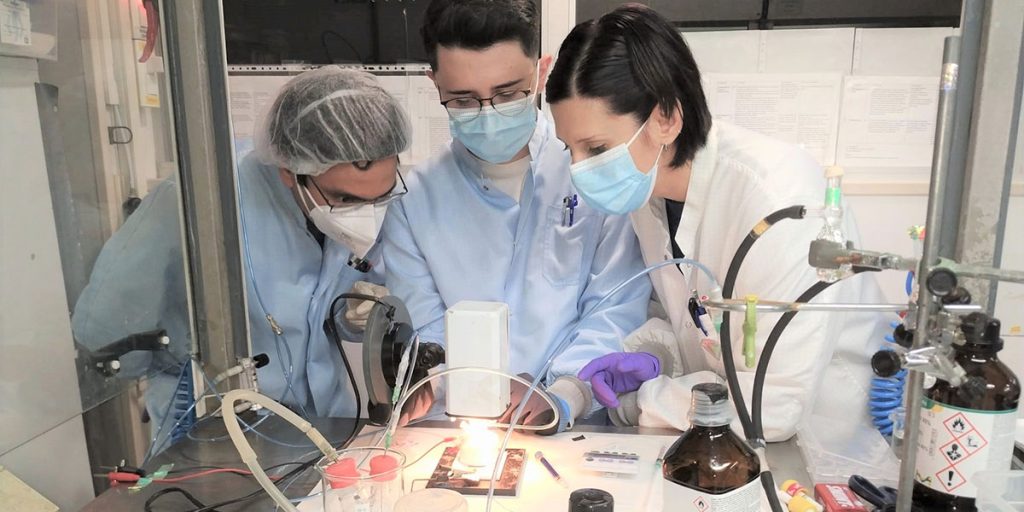
This Master is characterized by a strong load of practical work (> 50% of ECTS), including:
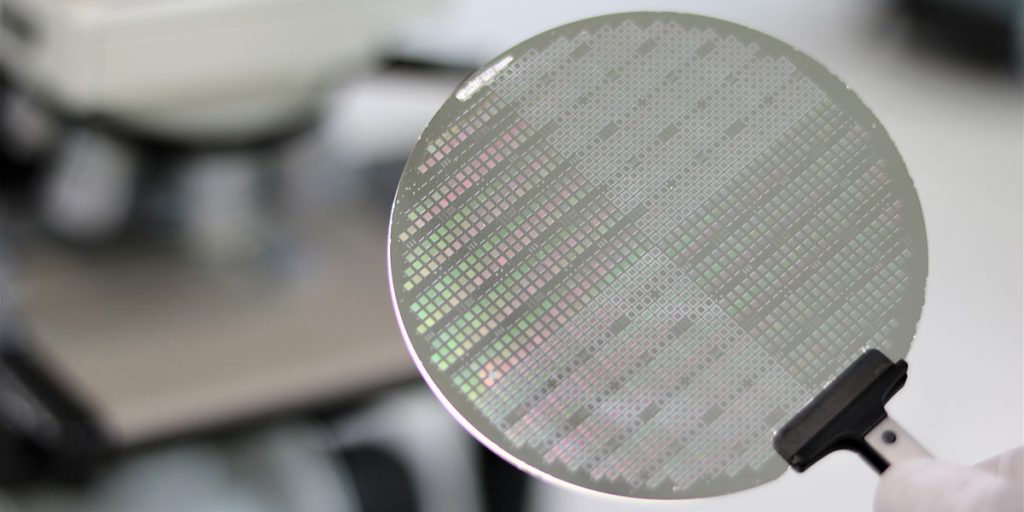
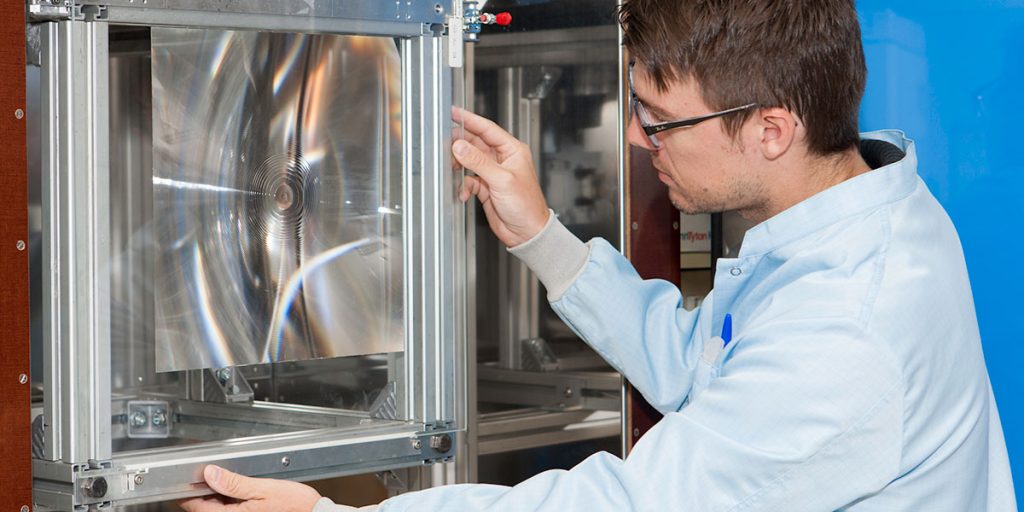
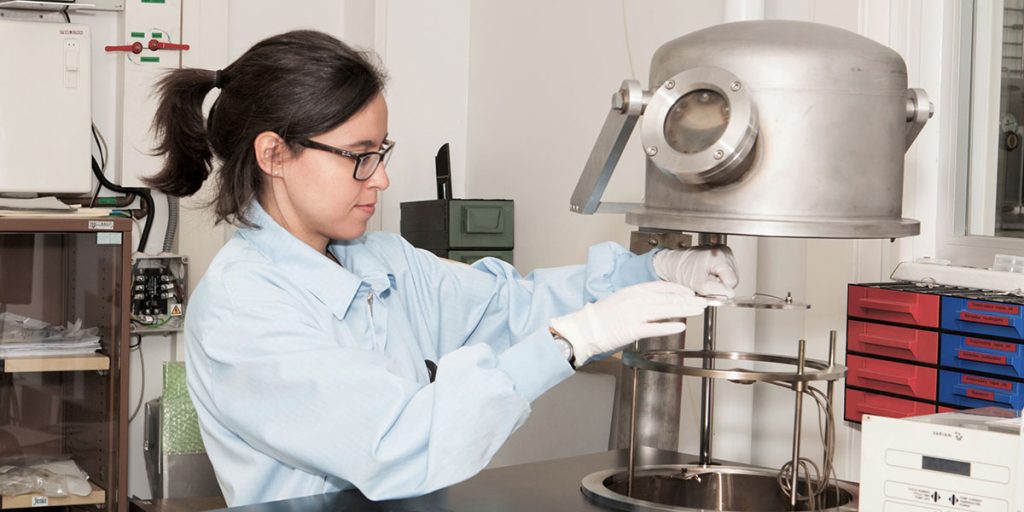
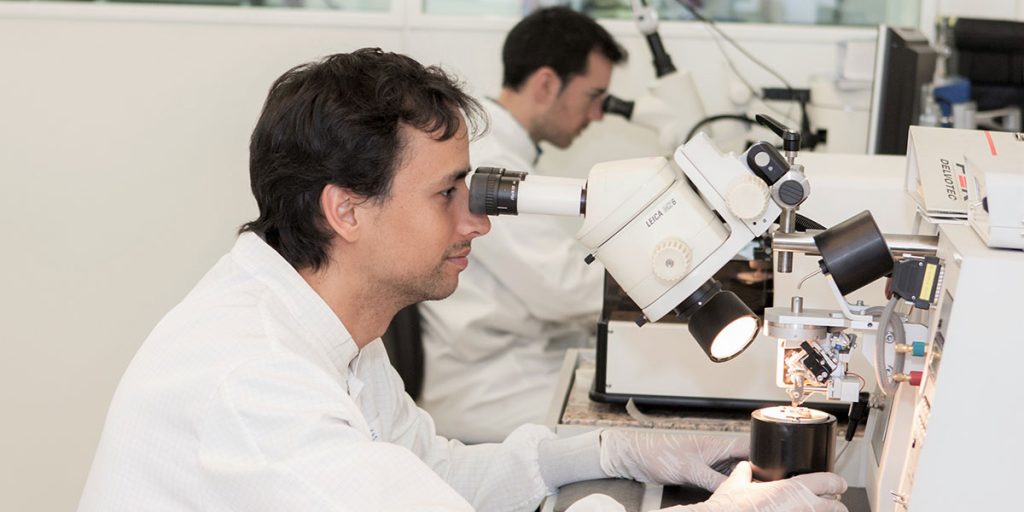
Using equipment and installations during the classes, for example a complete line of fabrication of solar cells or setups to monitor PV systems. These equipment are normally used for the research and engineering activities at our Institute.
Development of small projects facing practical cases, for example the assessment of solar cell development steps or the design of a PV system for maximum production.
Of course, theory classes are also an important and necessary part of this curriculum, but even in this aspect, the related problems and exercises are always focused on practical cases.
Finally, the Final Master Projects offered by the Institute are always focused on real-life case studies frequently linked to active research projects. This provides an optimum opportunity to apply and demonstrate the skills and competences adquired by the student.
General competences
- GC 1. English language proficiency.
- GC 2. Team Leadership.
- GC 3. Creativity.
- GC 4. Organizational and planning issues.
- GC 5. Information management.
- GC 6. Financial and administrative management.
- GC 7. Work in international environments.
Common specific competences
- SC 1. Understanding, analysis and judgement of the relevance of any contribution on the field of photovoltaic solar energy, related to the social, economic, scientific and technical environment.
- SC 2. Understanding, analysis and proposals for new concepts, methods or devices for photovoltaic conversion.
- SC 3. Design, analysis, characterization, planning and installation of photovoltaic components and systems for a general purpose, either autonomous or grid connected.
Elective specific competences
- EC 1. Analysis, design and implementation of photovoltaic systems of mid-high level of complexity.
- EC 2. Design and step-by-step construction of a functional prototype of photovoltaic module, within a teamwork schedule.
- EC 3. Implementation of available services and tools for the design of photovoltaic systems.
- EC 4. Implementation, development and innovation of technological processes for photovoltaic devices manufacturing.
Qualified professionals are heavily demanded for project management and engineering, infrastructure planning, PV manufacturing, research and development, consulting and academic and professional training.
The alumns of the Master in Photovoltaic Solar Energy enjoy a high rate of employment, as the track-record and interviews with our past alumns tells. In most cases, they work in the photovoltaic energy sector or in the renewable energy sector in general.
Another possibility after completing the Master is to continue the training towards a doctorate, for example through our Doctorate in Photovoltaic Solar Energy. In this case, our Master is the perfect choice to acquire a strong foundation to tackle a doctorate at IES-UPM or at any other University in the world. The alumns that plan to do a doctorate are offered a special itinerary to strenghthen their research skills and competences from the beginning of the Master.