Materials Technology and Environment
Our group carries out research in the fields of environmental engineering and sustainable civil infrastructure, integrating advanced analytical techniques with computational modeling. A core area of our work is environmental monitoring and risk assessment, particularly focusing on various contaminants. We develop and apply sophisticated analytical methodologies, such as high-performance liquid chromatography coupled to atomic fluorescence spectrometry (HPLC–(UV)–HG–AFS) and inductively coupled plasma atomic emission spectrometry (ICP-AES), for detailed arsenic speciation in edible algae and the study of heavy metal uptake and accumulation in native plant species from mining-polluted soils.
Our group uses machine learning (ML) and artificial intelligence (AI) models for environmental diagnostics and prediction. This includes developing Naïve-Bayes and Decision-tree models to assess groundwater quality in agricultural areas, focusing on nitrate contamination and saline intrusion. We use Artificial Neural Networks (ANN) and Multiple Linear Regression (MLR) to predict groundwater electrical conductivity for irrigation management, and ANN models for forecasting dissolved oxygen levels in coastal lagoons affected by agricultural runoff and eutrophication. These computational tools are often implemented using open-source platforms like KNIME, which yields efficiency and accessibility.
In the areas of sustainable materials and construction, our group develops eco-friendly concrete solutions. We have developed and characterized concretes incorporating glass powder as a partial cement substitute, demonstrating its viability for applications such as wind farm infrastructure and exterior pavements. We have also studied the synthesis of TiO2 nanoparticles for photocatalytic cement composites, improving pollution degradation and enhancing mechanical properties. Additionally, our group studies structural strengthening techniques for RC beams using prestressed Carbon Fiber Reinforced Polymer (CFRP) bars. A common theme across our work is the development of methodologies for sustainability assessment in infrastructure projects, evaluating economic, environmental, and social impacts through quantitative frameworks.
Recent interests and contributions
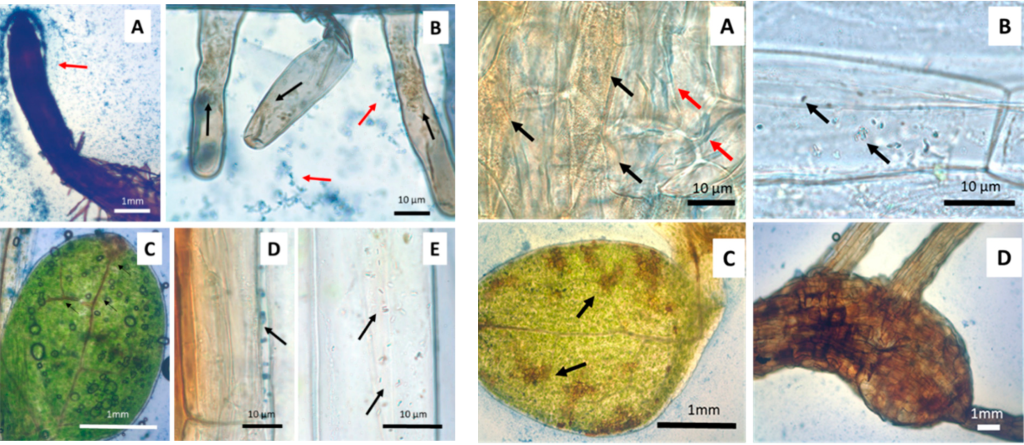
- Environmental contaminant analysis and bioremediation. Our group has developed and applied analytical methods for environmental contaminant analysis and risk assessment. We have proposed methods for arsenic speciation in edible marine algae, identifying eleven arsenic species and highlighting the need for legislation to limit toxic arsenic forms in food. Our work includes extensive studies on the uptake, translocation, and accumulation of arsenic and heavy metals (Cd, Cr, Cu, Ni, Pb, Zn) in native plant species growing in mining-polluted soils, aimed at identifying hyperaccumulator plants for phytoremediation. In collaboration with researchers at Universidad Rey Juan Carlos, we have investigated the role of plant microbiomes and endophytic bacteria in enhancing plant survival under arsenic stress, employing gnotobiotic models and exploring bioaugmentation strategies to improve phytoremediation efficiency.
- Machine learning for water quality management. Our group applies machine learning (ML) and artificial intelligence (AI) for water quality diagnosis and prediction, particularly in vulnerable areas. We have developed Naïve-Bayes and Decision-tree models to classify groundwater quality (high, medium, low) in regions with high agricultural activity, effectively identifying contamination from nitrates and saline intrusion. Furthermore, we have introduced Artificial Neural Networks (ANN) and Multiple Linear Regression (MLR) models to accurately predict the electrical conductivity (EC) of groundwater, a crucial indicator of salinity, to support sustainable irrigation management in semi-arid zones. Our group also applied ANN models to predict dissolved oxygen (DO) levels in surface water discharged into coastal lagoons, providing a valuable tool for managing eutrophication linked to agricultural runoff.
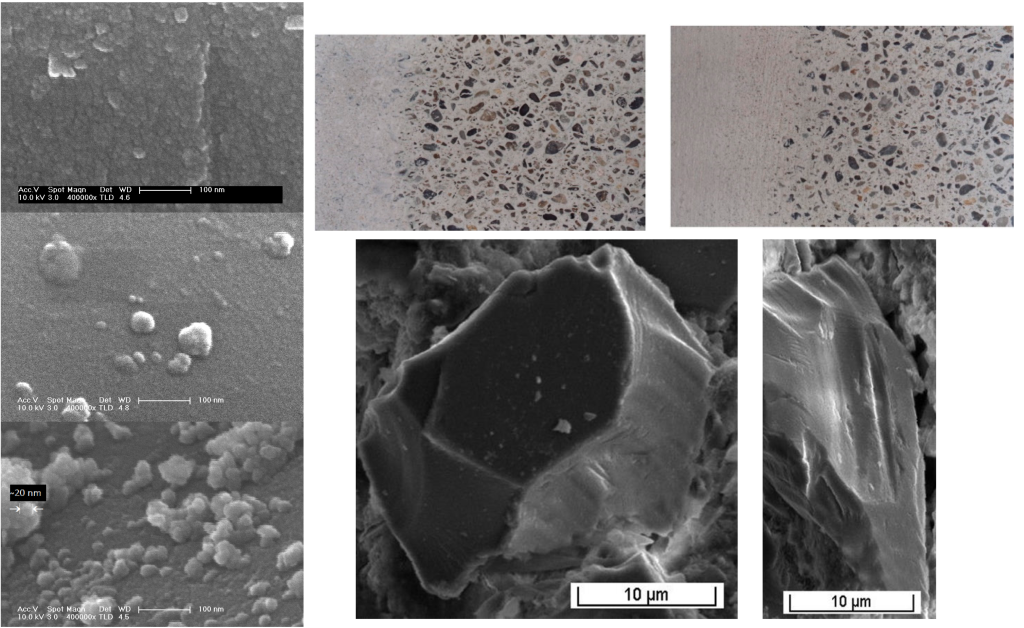
- Sustainable construction materials. Our group has contributed to the development of eco-friendly and sustainable construction materials, focusing on waste valorization and enhanced material properties. We have investigated the use of glass powder as a partial cement substitute in concrete, characterizing its impact on consistency, air content, density, workability, and compressive strength. Our research demonstrates the material’s viability for applications like wind turbine foundations, wind farm roads, and exterior pavements, contributing to circular economy principles by reusing waste and reducing environmental impact. Additionally, we specialize in the controlled synthesis of TiO2 nanoparticles for photocatalytic cement composites. These materials exhibit enhanced photocatalytic activity for pollution degradation (e.g., Methylene Blue) and offer moderate reinforcement of mechanical properties, creating self-cleaning and environmentally beneficial building materials.
- Structural reinforcement and infrastructure sustainability assessment. Our group contributes to civil engineering through innovations in structural reinforcement techniques and the development of comprehensive sustainability assessment methodologies for infrastructure projects. We have developed and patented a novel technique for strengthening Reinforced Concrete (RC) beams using prestressed Near Surface Mounted (NSM) Carbon Fiber Reinforced Polymer (CFRP) bars. This method introduces preloads directly against the beam, aiming to maximize CFRP performance, recover deformations, and significantly increase bearing capacity and rigidity. Furthermore, we have designed an easy-to-apply methodology for sustainability assessment in infrastructure projects, which quantifies economic, environmental, and social impacts through a “Total Influence Factor” (TIF). This tool provides a framework for evaluating project viability, identifying areas for corrective actions, and guiding decision-making towards more sustainable infrastructure development.
Groups and laboratories
Materials Technology and Environment Group
Scientific-technological services
Multielement analysis by Inductively Coupled Plasma Optical Emission Spectroscopy (ICP-OES)
Optical device for verifying pile driving
CIVILis researchers involved
Selected references
- S. García-Salgado, M.A. Quijano, M.M. Bonilla. Arsenic speciation in edible alga samples by microwave-assisted extraction and high performance liquid chromatography coupled to atomic fluorescence spectrometry. Analytica Chimica Acta 714, 38–46, 2012. https://doi.org/10.1016/j.aca.2011.12.001
- Eva M. García-del-Toro, Sara García-Salgado, Luis F. Mateo, M. Ángeles Quijano, M. Isabel Más-López. Machine Learning as a Diagnosis Tool of Groundwater Quality in Zones with High Agricultural Activity (Region of Campo de Cartagena, Murcia, Spain). Agronomy 12 (12), 3076, 2022. https://doi.org/10.3390/agronomy12123076
- Luis F. Mateo, M. Isabel Más-López, Eva M. García-del-Toro, Sara García-Salgado, M. Ángeles Quijano. Artificial Neural Networks to Predict Electrical Conductivity of Groundwater for Irrigation Management: Case of Campo de Cartagena (Murcia, Spain). Agronomy 14 (3), 524, 2024. https://doi.org/10.3390/agronomy14030524
- Eva M. García del Toro, Daniel Alcala-Gonzalez, María Isabel Más-López, Sara García-Salgado, Santiago Pindado. Use of Ecofriendly Glass Powder Concrete in Construction of Wind Farms. Applied Sciences 11 (7), 3050, 2021. https://doi.org/10.3390/app11073050
- Eva M. García del Toro, Luis Francisco Mateo, Sara García-Salgado, M. Isabel Más-López, Maria Ángeles Quijano. Use of Artificial Neural Networks as a Predictive Tool of Dissolved Oxygen Present in Surface Water Discharged in the Coastal Lagoon of the Mar Menor (Murcia, Spain). International Journal of Environmental Research and Public Health 19 (8), 4531, 2022. https://doi.org/10.3390/ijerph19084531
- M. Isabel Más-López, Eva M. García del Toro, Sara García-Salgado, Daniel Alcala-Gonzalez, Santiago Pindado. Application of Concretes Made with Glass Powder Binder at High Replacement Rates. Materials 14 (14), 3796, 2021. https://doi.org/10.3390/ma14143796
- María del Carmen Molina, James F. White, Sara García-Salgado, M. Ángeles Quijano, Natalia González-Benítez. A Gnotobiotic Model to Examine Plant and Microbiome Contributions to Survival under Arsenic Stress. Microorganisms 9 (1), 45, 2021. https://doi.org/10.3390/microorganisms9010045
- Elena Cerro-Prada, Sara García-Salgado, M. Ángeles Quijano, Fernando Varela. Controlled Synthesis and Microstructural Properties of Sol-Gel TiO2 Nanoparticles for Photocatalytic Cement Composites. Nanomaterials 9 (1), 26, 2019. https://doi.org/10.3390/nano9010026
- Sara García-Salgado, David García-Casillas, Ma. Angeles Quijano-Nieto, Ma. Milagros Bonilla-Simón. Arsenic and Heavy Metal Uptake and Accumulation in Native Plant Species from Soils Polluted by Mining Activities. Water Air Soil Pollut 223, 559–572, 2012. https://doi.org/10.1007/s11270-011-0882-x
- Vicente Alcaraz Carrillo de Albornoz, Eva M. García del Toro, M. Isabel Más-López, Alfredo Luizaga Patiño. Experimental Study of a New Strengthening Technique of RC Beams Using Prestressed NSM CFRP Bars. Sustainability 11 (5), 1374, 2019. https://doi.org/10.3390/su11051374
- María Isabel Más-López, Eva M. García-del-Toro, Daniel Alcala-Gonzalez, Sara García-Salgado. Sustainability Assessment in Infrastructure Projects. Sustainability 15 (20), 14909, 2023. https://doi.org/10.3390/su152014909