Hydrology and climate change in civil engineering
Our research group studies sustainable water resource management, particularly in the face of climate change and increasing human demands. Our work integrates advanced modeling with optimization and multi-criteria decision analysis, to address complex hydrological and environmental challenges. The group is highly multidisciplinary, with expertise spanning civil engineering, hydraulics, economics, business, and applied physics. Key areas of focus include optimizing dam management for multiple objectives like flood control, human supply, irrigation, and hydropower energy production, assessing and mitigating the ecological impacts of hydropower plants while ensuring energy production. We also use modeling and optimization to develop adaptation strategies for agricultural water management under climate change. Our group is also active in hydrological risk assessment, including flood forecasting using distributed models, and restoring vulnerable deltaic ecosystems. In the latter case, we have contributed to delta research by analyzing the mobilization of sediment transport. Our research aims to provide practical, evidence-based tools and recommendations for decision-makers and stakeholders to balance competing water interests and enhance resilience in river and coastal environments.
Recent interests and contributions
- Advanced optimization for dam management. Our group has contributed to interactive multiobjective evolutionary optimization (MOEO) for complex dam management problems. We introduced Pars-NSGA-II, a novel method that integrates stakeholder preferences and expertise using multi-criteria decision analysis directly into the optimization process. This approach addresses key obstacles to the practical implementation of MOEO by making the process more user-friendly and understandable for decision-makers. Applying this methodology to a case study (Lake Pozzillo, Sicily, Italy) with five objectives (flood control, irrigation, hydropower), we have demonstrated that the proposed approach could generate optimal strategies that greatly improve flood attenuation while satisfying water and energy demands, outperforming current management practices. The methodology is designed for general applicability to other complex water resource management challenges.
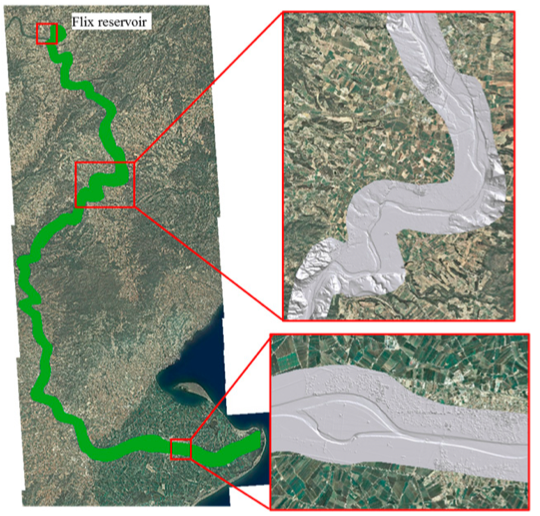
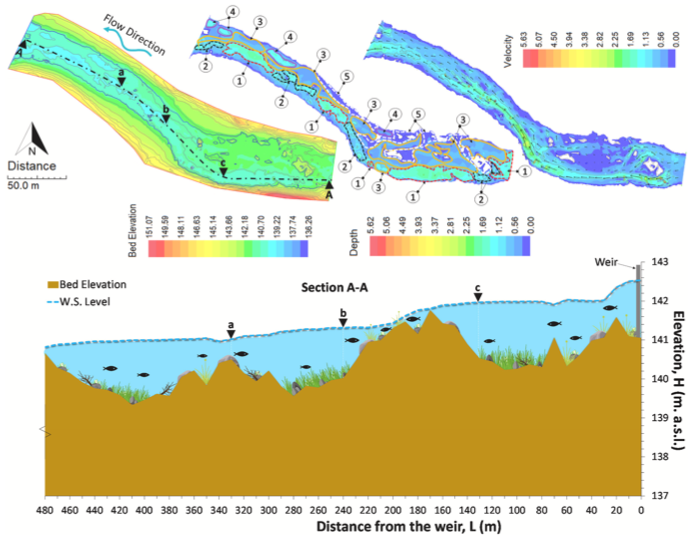
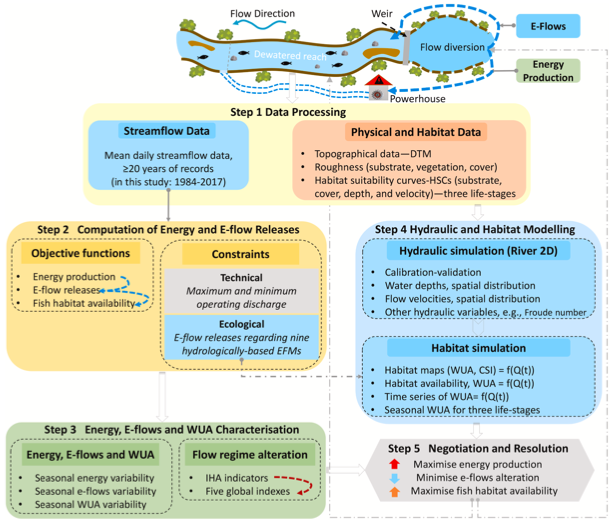
- Environmental flows and sustainable hydropower. We have investigated the water-energy-ecosystem nexus, particularly evaluating the impacts of run-of-river (RoR) hydropower plants. We have quantitatively assessed how various hydrologically-based environmental flow (e-flow) methods influence hydropower production, flow regime alteration, and fish habitat conditions for species like the Iberian barbel across different life stages and seasons. We have proposed new combined and dynamic e-flow methods that promote reasonable hydropower production while minimizing habitat loss and flow alteration. Additionally, we conducted a global review of ecological impacts of different RoR hydropower schemes (dam-toe, diversion weir, pondage), identifying common impacts and recommending non-structural and structural mitigation measures for sustainable development.
- Climate change adaptation in agricultural water management. We have studied the impact of climate change, and potential adaptation strategies, for agricultural water management in Europe. Through a review of over 168 academic publications, we characterized regional risks and opportunities related to water availability for irrigation. We identified and evaluated 33 adaptation measures based on potential benefits, technical feasibility, and costs, categorizing them as agronomic, management, infrastructural, and policy-level interventions. Our work suggests that improving coordination planning, setting clear water use priorities, and increasing water allocation for ecosystems are highly beneficial policy-level actions. At the farm level, improved drainage and small reservoirs may also be highly effective. Our work aims to support the development of concrete adaptation plans to increase the sustainability of water resources for irrigation.
- Hydrological risk assessment and delta restoration. This research area addresses flood forecasting and the restoration of vulnerable deltaic systems like the Ebro Delta. Our group has developed a probabilistic flood forecasting tool for the Francolí river basin in Spain, utilizing a distributed hydrological model (RIBS) and analog-based precipitation forecasts to enhance early warning systems for flood events. For the Ebro Delta, we quantified the severe reduction in sediment transport (a 67% decline from historical levels) caused by extensive damming and water abstractions, predicting further decreases under climate change scenarios. To mitigate coastal erosion and subsidence, we have proposed and analyzed Nature-based Solutions (NbS), including mechanical and hydrodynamic sediment mobilization from reservoirs, controlled river floods, and innovative sand recycling mechanisms along the deltaic coast.
Groups and laboratories
Hydroinformatics and Water Management Group
Scientific-technological services
CIVILis researchers involved
Selected references
- Iglesias, A., Garrote, L., Flores, F., & Moneo, M. Challenges to Manage the Risk of Water Scarcity and Climate Change in the Mediterranean. Water Resources Management, 21, 775–788, 2007. https://doi.org/10.1007/s11269-006-9111-6
- Ciscar, J.-C., Iglesias, A., Feyen, L., Szabó, L., Van Regemorter, D., Amelung, B., Nicholls, R., Watkiss, P., Christensen, O. B., Dankers, R., Garrote, L., Goodess, C. M., Hunt, A., Moreno, A., Richards, J., & Soria, A. Physical and economic consequences of climate change in Europe. Proceedings of the National Academy of Sciences, 108 (7), 2678–2683, 2011. https://doi.org/10.1073/pnas.1011612108
- Castiglione, F., Corrente, S., Greco, S., Bianucci, P., Sordo-Ward, A., Garrote, L., Foti, E., Musumeci, R. E. Interactive multiobjective evolutionary optimization model for dam management support. Journal of Hydrology 647, 132304, 2025. https://doi.org/10.1016/j.jhydrol.2024.132304
- Bianucci, P., Sordo-Ward, A., Lama-Pedrosa, B., Garrote, L. How do environmental flows impact on water availability under climate change scenarios in European basins? Science of the Total Environment 911, 168566, 2024. https://doi.org/10.1016/j.scitotenv.2023.168566
- Carril-Rojas, D., Guzzon, C., Mediero, L., Fernández-Fidalgo, J., Garrote, L., Llasat, M. C., Marcos-Matamoros, R. A Flood Forecasting Method in the Francolí River Basin (Spain) Using a Distributed Hydrological Model and an Analog-Based Precipitation Forecast. Hydrology 12, 220, 1–33, 2025. https://doi.org/10.3390/hydrology12080220
- Ciscar, J.-C., Iglesias, A., Feyen, L., Szabó, L., Van Regemorter, D., Amelung, B., Nicholls, R., Watkiss, P., Christensen, O. B., Dankers, R., de Roo, A., Dosio, A., Hiederer, R., Hunt, A., Jimenez-Martin, J., Lavalle, C., Longueville, J. E., Manders, T., Mangin, A., … Sordo-Ward, A. Physical and economic consequences of climate change in Europe. Proceedings of the National Academy of Sciences 108 (44), 1508–1513, 2011. https://doi.org/10.1073/pnas.1011612108
- Garrote, L., Iglesias, A., Flores, F. Challenges to manage the risk of water scarcity: Drought planning in the Tagus basin (Spain). Water Resources Management 21 (4), 775–788, 2007. https://doi.org/10.1007/s11269-006-9111-6
- Iglesias, A., Garrote, L. Adaptation strategies for agricultural water management under climate change in Europe. Agricultural Water Management 155, 113–124, 2015. https://doi.org/10.1016/j.agwat.2015.03.016
- Kuriqi, A., Pinheiro, A. N., Sordo-Ward, A., Garrote, L. Influence of hydrologically based environmental flow methods on flow alteration and energy production in a run-of-river hydropower plant. Journal of Cleaner Production 232, 1028–1042, 2019. https://doi.org/10.1016/j.jclepro.2019.05.358
- Kuriqi, A., Pinheiro, A. N., Sordo-Ward, A., Garrote, L. Water-energy-ecosystem nexus: Balancing competing interests at a run-of-river hydropower plant coupling a hydrologic–ecohydraulic approach. Energy Conversion and Management 223, 113267, 2020. https://doi.org/10.1016/j.enconman.2020.113267
- Kuriqi, A., Pinheiro, A. N., Sordo-Ward, A., Bejarano, M. D., Garrote, L. Ecological impacts of run-of-river hydropower plants—Current status and future prospects on the brink of energy transition. Renewable and Sustainable Energy Reviews 142, 110833, 2021. https://doi.org/10.1016/j.rser.2021.110833
- Martin-Carrasco, F., Santillán, D., López-Gómez, D., Iglesias, A., Garrote, L. Sediment Transport Constraints for Restoration of the Ebro Delta. Water 17 (11), 1620, 1–32, 2025. https://doi.org/10.3390/w17111620
- Sánchez-Arcilla, A., Garrote, L., Gracia, V., Cáceres, I., Sánchez-Artús, X., Caiola, N., Espanya, A., Espino, M., Garcia, M. A., Grassa, J. M., Ibáñez, C., López, D., Mestres, M., Peña, J. M., Bladé, E., Pernice, U., Puértolas, L., Santillan, D., Zemah-Shamir, S., Iglesias, A. Combining NbS to restore deltas. Application to the Ebro in the NW Mediterranean. Nature Conservation 59, 101–137, 2025. https://doi.org/10.3897/natureconservation.59.142061