Public works heritage and sustainability
Our research group focuses on the heritage valorisation and dissemination of public works, particularly civil engineering structures, within urban and territorial contexts. Our core activity revolves around identifying, documenting, analysing, and evaluating the historical, technical, social, aesthetic, and unique values of built heritage. A significant emphasis is placed on the city of Madrid, studying its bridges, railway stations, and historic water supply systems to understand their role in the city’s conformation and identity. Our group pioneers the use of advanced digital technologies, including mobile applications, interactive maps, geolocation, 3D models, and augmented reality, to make this heritage accessible, engaging, and understandable to a wide public. Through these innovative tools, we aim at connecting citizens with their built environment, promoting cultural and sustainable tourism, and facilitating the long-term protection and management of public works heritage. Our group also fosters multidisciplinary collaboration and educational initiatives to achieve its objectives.
Recent interests and contributions
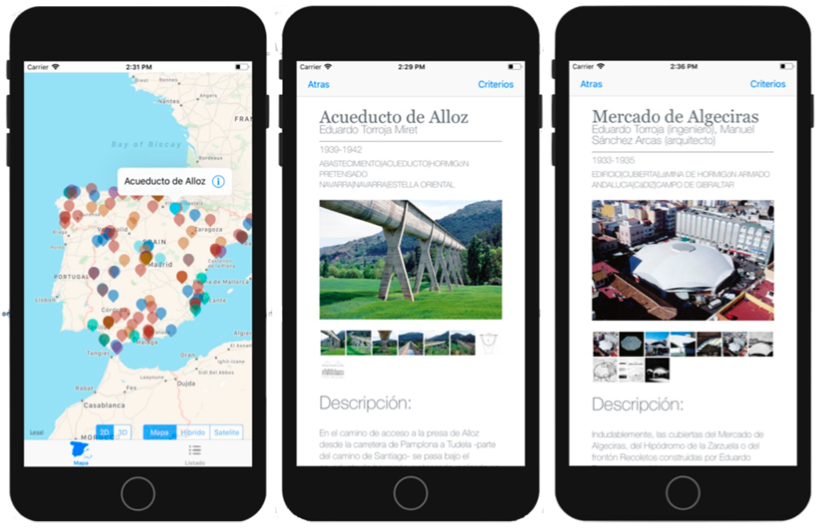
- Heritage valorisation and digital dissemination of public works. We have contributed to developing new methodologies for identifying, assessing, and communicating the diverse heritage values of public works. The proposed methodologies extend beyond traditional architectural concepts to include territorial scale and social impact. We have developed and implemented innovative digital tools like mobile applications (e.g., VAPROP_Rutas, GEOPACK, PHDuero, GOING) and interactive web platforms that leverage geolocation, 3D modeling, and augmented reality. These tools enhance public engagement, facilitating the access to complex information and fostering a deeper understanding and appreciation of civil engineering heritage in its cultural landscape.
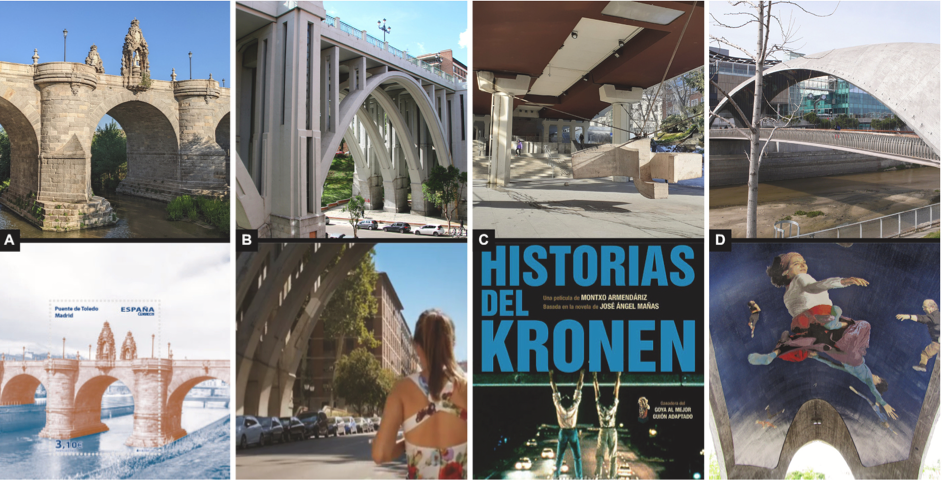
- Madrid’s bridges heritage and urban development. A long-standing focus of our group is Madrid’s heritage. In particular, we have studied Madrid’s bridges, analysing their historical evolution and technological characteristics. Our work points to their pivotal role in the city’s growth and urban fabric. We categorise bridges by their location and function, from ancient river crossings to modern ring road structures, to illustrate their dynamic relationship with Madrid’s physiography. A contribution of our group is the “Bridges of Madrid. Technique and culture” online platform, which provides geolocated information, historical maps, 3D models, and self-guided routes. This platform actively engages citizens and promotes the cultural and symbolic significance of these structures.
- Madrid’s railway stations heritage. Our group has explored the historical and cultural significance of Madrid’s railway stations, tracing their impact on urban mobility and development, and on the collective memory. We have examined major stations like Atocha, Chamartín, and Príncipe Pío as essential hubs that shaped the city’s expansion and social interactions. Like “Bridges of Madrid”, we believe the “Stations, places of interchange” digital platform is a significant contribution of our group. The platform offers geolocated data, technical details, and insights into the artistic and social dimensions of these structures. Our work illustrates the vital role of stations as places for exchange and civic life within the urban landscape.
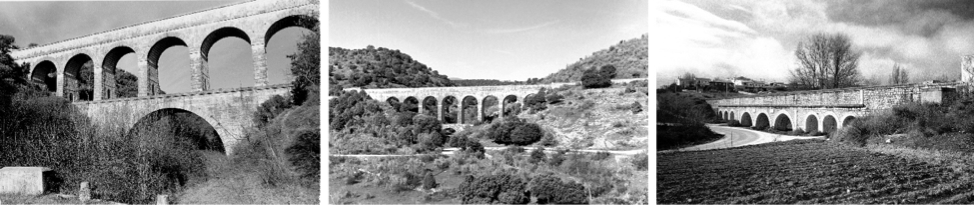
- Heritage conservation and management of historic water supply systems (Canal de Isabel II). We have conducted comprehensive studies on Madrid’s historic water supply, particularly Canal de Isabel II, emphasizing its overall value as an integrated system rather than isolated components. We have documented its dams, aqueducts, siphons, and tanks, highlighting their historical, technological, social, and landscape significance. A contribution of our group is the analysis of how elements that are no longer in their original use have been successfully converted for new educational and recreational purposes, such as parks and exhibition halls, demonstrating adaptive reuse for long-term preservation and public benefit.
Groups and laboratories
Public Works Heritage: Digitalization and Sustainability
Fundación Miguel Aguiló | Para la investigación del patrimonio y paisaje construidos (english)
Scientific-technological services
CIVILis researchers involved
Selected references
- Hernández Lamas, P., Bernabéu Larena, J., Cabau Anchuelo, B., Martín-Caro Álamo, J. A., Gil Plana, Á., de Castro Cuartero, O. Heritage valorisation of Madrid’s bridges and stations. Applications and new dissemination tools. Cities 166, 106275, 2025. https://doi.org/10.1016/j.cities.2025.106275
- Bernabeu Larena, J., Bernabeu Larena, A., Burgos Ruiz, F., Garrido Colmenero, G. Drava Telefon and Splavarska footbridge in Maribor, Slovenia. Book chapter (ISBN 978-1-041-11139-9), 2025. https://doi.org/10.1201/9781003658641-207
- Bernabéu-Larena, J., Cabau-Anchuelo, B., Plasencia-Lozano, P., Hernández-Lamas, P. Use and Management in the Heritage Conservation of the Historic Water Supply of Canal de Isabel II, Madrid. Appl. Sci. 12 (13), 6731, 2022. https://doi.org/10.3390/app12136731
- Bernabéu Larena, J., de Castro Cuartero, Ó., Gil Plana, Á., Cabau Anchuelo, B., Hernández Lamas, P. Civil Works’ Urban Heritage: The Significance of the Water Supply, Bridges, Roads and Rail Networks in the Conformation of Madrid. Land 14, 1299, 2025. https://doi.org/10.3390/land14061299
- Hernández-Lamas, P., Cabau-Anchuelo, B., de Castro-Cuartero, Ó., Bernabéu-Larena, J. Mobile Applications, Geolocation and Information Technologies for the Study and Communication of the Heritage Value of Public Works. Sustainability 13, 2083, 2021. https://doi.org/10.3390/su13042083
- Peinado-Santana, S., Hernández-Lamas, P., Bernabéu-Larena, J., Cabau-Anchuelo, B., Martín-Caro, J. A. Public Works Heritage 3D Model Digitisation, Optimisation and Dissemination with Free and Open-Source Software and Platforms and Low-Cost Tools. Sustainability 13, 13020, 2021. https://doi.org/10.3390/su132313020