
Fuente Original: ISMC News: ISMC News 20 May 2024 — ISMC
Featured Soil Modeller Maite Jiménez
Evaluating Water Use in Agricultural Systems
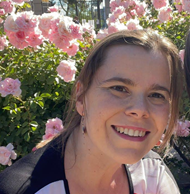
Maite Jiménez is a researcher at the Research Centre for the Management of Agricultural and Environmental Risks (CEIGRAM) of the Universidad Politécnica de Madrid (UPM), Spain. During her PhD at the Agri-Food Research and Technology Centre of Aragon (CITA) in Zaragoza, she studied agricultural engineering at this university and specialized in environmental and irrigation modelling. She focused on evaluating soil-water use in agricultural systems and monitoring irrigation return flows and their environmental impact. Before, she joined the private sector for hydrological and snow reservoir modelling at high mountains and continued her professional pathway at consulting companies.
– Please tell us briefly about yourself and your research interest.
The sustainable use of available resources and improving efficiency are key under the current environmental context. Therefore, I was fascinated by the possibility of doing my PhD addressing the agronomic and environmental challenges faced by the modernization of irrigation systems, revealing the complex paradox of efficient water use in agriculture. To this end, analyzing many data types (water, edaphological, meteorological, etc) and applying computer tools, such as hydrogeological modelling, was necessary. At this point, I got into modelling using software packages such as HYDRUS 1D or MODFLOW during my doctoral training or currently with SWAT.
– How did you first become interested in soil modelling and learn about ISMC?
The agronomical and environmental analysis should be based on understanding the soil-plant-water system. So, soil knowledge becomes a key factor in this work when evaluating the modernization of the irrigation system. In this line, the soil map of the study area in my PhD work was developed for hydrologic modelization purposes. This led me to a HYDRUS 1D training short course in Prague with Jirka Šimůnek or a three-month stay at Colorado State University for a MODFLOW model of the irrigated area.
I learned deeply about ISMC at my current position at CEIGRAM invited by Prof. Ana María Tarquis. Nevertheless, I had been checking the web previously.
-Can you share with us your current research focus? And, please tell us briefly how your research could contribute to the ISMC Science Panel’s activities
As a continuation of the agricultural water use research line, I am currently engaged in evaluating water demand for agricultural use under climate change scenarios. This is the main objective of the AGUAGRADA project. The project pretends the modelization at sub-basin level with SWAT as the primary hydrologic tool integrating the soil-crop-water system. The crop modelization of the system also aims to be improved with AQUACROP. Afterwards, the climate change scenarios will be introduced to analyze the potential adaptation strategies for this climate change.
-Please tell us how ISMC can help you advance in your career.
ISMC is the perfect meeting point for soil modellers. ISMC provides the opportunity to establish interactions between international researchers. Also, it offers the perfect auditorium for exchange and, of course, to improve our soil modelling knowledge, especially for young modellers.
– What resources or skills would you recommend that early career members of ISMC should acquire? And how can ISMC help and support early career members in this regard?
That is an excellent question I would like someone to tell me about it!! As an early career member, I would like to acquire every skill of senior researchers and become a DaVinci, but it is impossible for sure. At this point, I found some fundamental skills: observation and analysis capacity to get into the system processes to be modelled; and to be patient in setting up the model, the self-learning and the trial and error methodology are going to be the general procedure in modelling. On the other hand, there are those methodological skills related to learning aspects (physical, chemical, and biological processes, software management, programming, etc) that ISMC is the perfect network place to improve it.