
Research
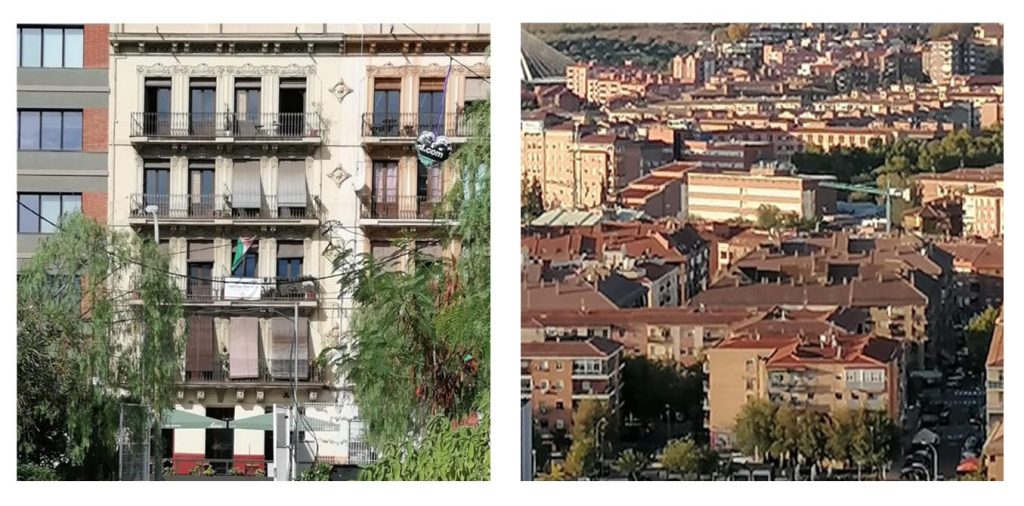
Our research topics:
- Integrated Urban Regeneration
- EU, national, regional and local agendas and urban policies
- Urban dimension of Cohesion Policy for the post-2027 period
- Beyond participation approaches
- Adaptive urban transformation
New Research:
The Jean Monnet Chair RegenEU organises a special session in the Annual Conference of EURA 2026: RESPONSES TO URBAN DECLINE IN EUROPE: REGENERATE… OR WHAT?

This year’s conference, organised by IUAV, took place in Venice—a true urban laboratory. Over three days, we had the opportunity to exchange ideas, reflect collectively, and explore the “other Venice”: the city that continues to resist the pressures of overtourism. In this context, the Jean Monnet Chair RegenEU organised a special session entitled:
RESPONSES TO URBAN DECLINE IN EUROPE: REGENERATE… OR WHAT?
As the existing city has become the central focus of urban planning in Europe, attention needs to be redirected towards disadvantaged urban areas—neighbourhoods that continue to experience persistent cycles of exclusion, inequality and vulnerability, shaped by intertwined global and local dynamics. In this framework Integrated urban regeneration remains a key policy approach. While it has been widely criticised for its limitations, it continues to be the only framework recognised in both the literature and in practice for addressing the complex challenges that keep certain areas trapped in cycles of deprivation and poverty.
Building on this perspective, we posed the following questions:
💡 Is urban regeneration still the answer for these areas?
💡 What is the current state of urban regeneration in European policymaking?
💡 What has become of the regeneration wave that flourished in the 1990s?
💡 Is urban regeneration an outdated policy? If so, why—and how should it evolve?
📊 Some takeaways from the session:
▶️ There is a clear neoliberal shift away from integrated regeneration models towards more fragmented and selective approaches—developments that place-based regeneration seeks to counterbalance.
▶️ The thematic scope of regeneration has expanded (including climate, governance and social cohesion), but integration across these domains remains weak.
▶️ Political cycles, institutional capacity and funding frameworks strongly shape policy outcomes.
▶️ National trajectories are increasingly diverging, while the role of the EU is evolving.
▶️ Persistent crucial challenges to be addressed include territorial inequality, multi-level coordination and the risk of gentrification.
▶️ Urban regeneration remains a critical policy tool; however, its future effectiveness will depend on its ability to reconnect with integrated approaches, address structural inequalities and strengthen the role of local communities.
Thanks a lot to @julietcarpenter @ignaziovinci @karstenzimmermann and all the other colleagues that contributed to the discussion.
We will continue exploring these issues through future activities of the Jean Monnet Chair RegenEU and the EURA Working Group on Urban Regeneration.
New Jean Monnet Chair RegenEU research entitled “Urban regeneration in the framework of the Spanish Urban Agenda: Advancing towards a national policy for vulnerable neighbourhoods?”.
This article stems from the work programme of RegenEU and focuses on how urban policy frameworks do—or do not—promote the urban regeneration of vulnerable neighbourhoods within the European context. In this case, the analysis concentrates on Spain.
The article offers a critical examination of the role currently played by the Spanish Urban Agenda (SUA) in the regeneration of neighbourhoods with the highest levels of vulnerability, in a context in which Spain still lacks an explicit national policy in this field.
🔍 Main contributions of the article
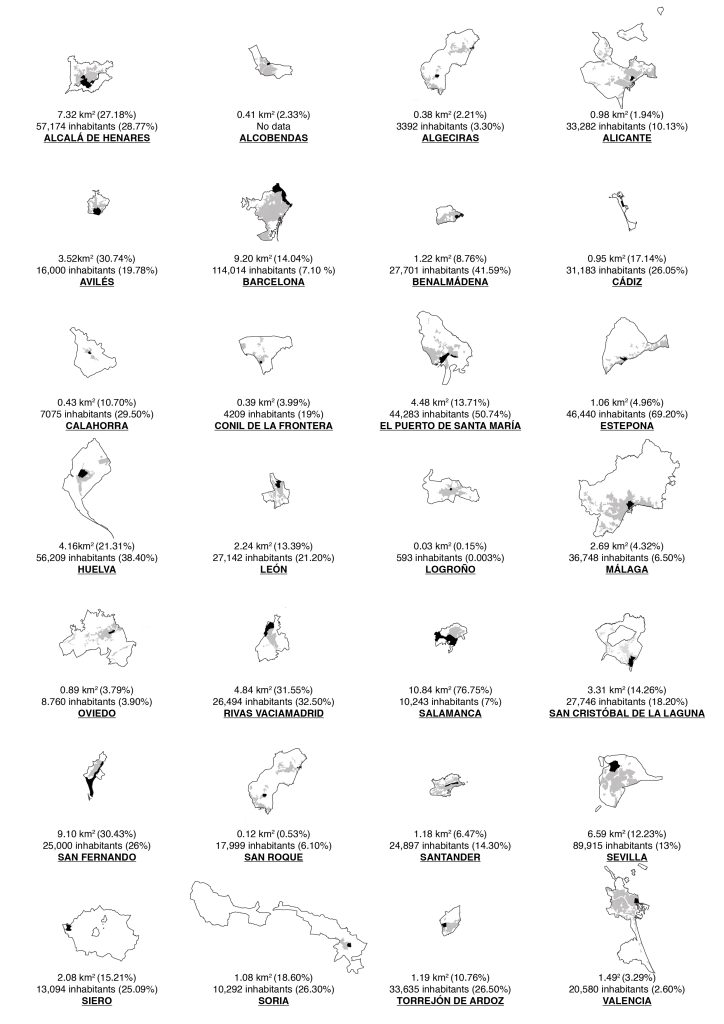
▪️ It provides a systematic analysis of the local action plans developed under the Spanish Urban Agenda with funding from Spain’s Recovery, Transformation and Resilience Plan, focusing on how urban regeneration is understood and operationalised at the local level.
▪️ It highlights the need for a national urban regeneration policy based on a multi‑level implementation system, spanning from the EU level to the local scale.
Access to the article:
https://lnkd.in/eAYTuEJp
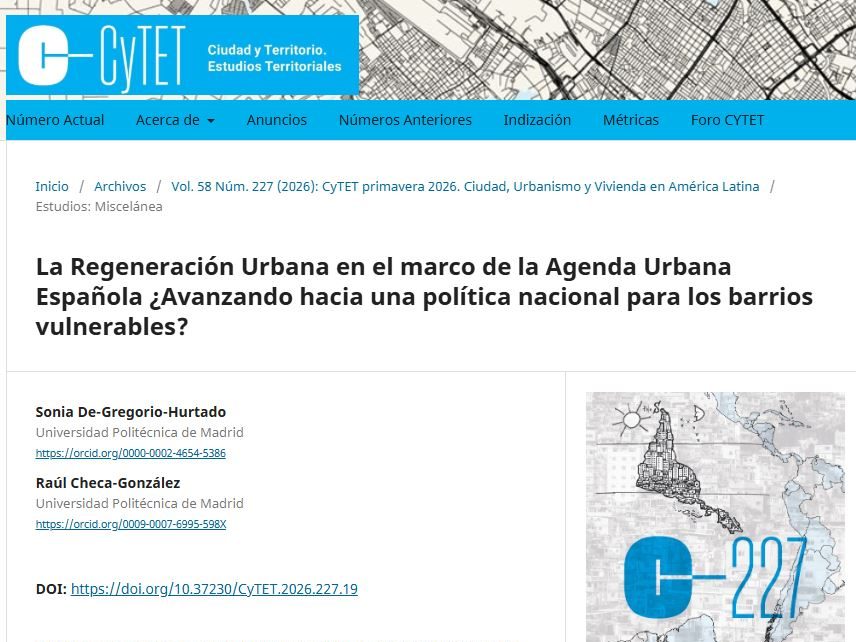
New Jean Monnet Chair RegenEU research focuses on the strategic and statutory complementarity in urban regeneration under Cohesion Policy. It provides and insight to the topic and policy recommendations based on the Spanish case
The European Union (EU) has been identified as a leading stakeholder relating to urban regeneration. In cases such as Spain, on which this research focuses, the EU influence has resulted in an understanding of urban regeneration as a policy of strategic nature when it is financed with European funding. Nevertheless, the literature on the urban dimension of regeneration has reinforced the need to implement strategic and statutory complementarity in urban transformation to address the complex problems of vulnerable urban areas. New RegenEU research focuses on this policy issue. The research identifies that under the urban EU Cohesion Policy (CP) 2014–2020, only 4 out of 28 integrated sustainable urban development strategies in Spain implemented the urban regeneration strategic approach in complementarity with statutory instruments. This has led to regeneration projects with restricted capacity to address the physical problems identified, a fact that perpetuates the disadvantage of the neighbourhoods where they operated and limits the efficiency of EU funding. The results highlight the value of reviewing urban instruments under the CP, advancing towards a vision in which statutory/strategic approaches will work in complementarity in the post-2027 period.
Access to the article: https://www.mdpi.com/2071-1050/17/17/8039
Jean Monnet Chair RegenEU research provides a propositional agenda to advance local community participation in urban regeneration policies
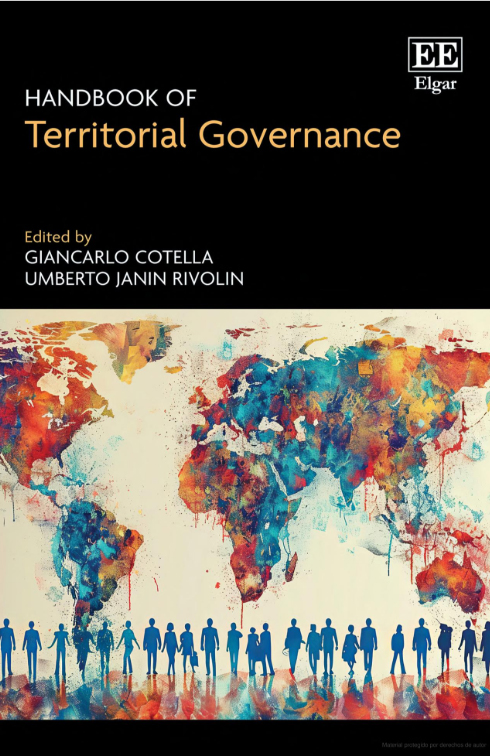
A chapter by Sonia De Gregorio Hurtado entitled “Territorial governance in urban regeneration. A propositional agenda” has been recently published in the “Handbook of Territorial Governance” edited by Giancarlo Cotella and Umberto Janin Rivolin. The study identifies relevant topics to advance ‘propositional’ research in participation within urban regeneration schemes.
Abstract: Participation in urban regeneration is a field in which extensive practice has developed in the last three decades in Europe. On the basis of this experience, we have learned that in the framework of regeneration instruments effective participation is a condition to achieve the regeneration objectives. Nevertheless, problems and obstacles persist that recurrently limit the results of participative processes in these kinds of initiatives. The relevance of this policy issue, and the fact that urban regeneration emerges as a crucial field of political action in the present scene, highlight the importance of giving rise to a research agenda aimed to provide knowledge to overcome traditional limitations and deploy the transformative potential of urban participation in territorial governance. The chapter builds on this objective by developing a systematic literature review. By identifying the main problems and the potential for innovation in participation, the chapter proposes lines of study to advance action towards more efficient participatory regeneration processes in the wider framework of territorial governance.
Access to the chapter: https://www.elgaronline.com/edcollchap/book/9781035317288/chapter12.xml
RegenEU in the Annual Conference of EURA with two sessions entitled “Urban Regeneration at the Crossroad”
The reflection on urban regeneration in Europe has taken a lot of room over the last decades. This polysemic policy, set up in the late 1980s, contributed to addressing major problems of European cities and opened paths that modernized governance styles and statutory frameworks to deal with urban obsolescence. At present, however, urban regeneration, understood as a public policy, seems to be losing relevance in political discourses (De Gregorio Hurtado, 2024). Rather a degressive “evolution of the concept” towards “urban renewal” focused on physical processes in which the private sector plays an important role seems to be observable. These circumstances occur at a time when the many challenges we face as a European society are territorialized in cities, ranging from positive energy districts to an endless reinterpretation of the arrival city (migration). This leads us to suggest that putting into place policies and instruments for urban regeneration is as relevant and necessary as in the past. The sessions in the EURA Conference of 2025 aim to open a space for this reflection (linked to the EURA WG on Urban Regeneration action) around these topics:
- Theoretical reflection on the role and meaning of urban regeneration in the present. Is urban regeneration an evolving concept? Which meanings, if any, is it incorporating? What other meanings and purposes are losing relevance?
- Which urban regeneration policies and instruments are necessary to face current EU/global challenges?
- Which is the role of the different government levels from an evolutionary perspective?
- Innovation in urban regeneration
- Local communities and other actors taking the lead?
- Main trends in urban regeneration. Can we identify mainstreaming elements that constitute the base for an urban regeneration taxonomy? Or do we recognize an open-multi-diverse panorama?
The sessions are proposed in synergy with the action of the Jean Monnet Chair RegenEU (UPM) and European Planning Cultures (TU Dortmund) and will be chaired by Sonia De Gregorio Hurtado. Chair Holder of the Regen-EU Jean Monnet Chair in Universidad Politécnica de Madrid (UPM) and Karsten Zimmerman. European Planning Cultures, TU Dortmund
More info on the conference in this link: https://rise.articulate.com/share/rSwukxuFZjNxjGKn8jNTzIXbjeA2BmO7#/
RegenEU organizes a session in the Regional Studies Association Conference on the future of the urban axis of Cohesion Policy
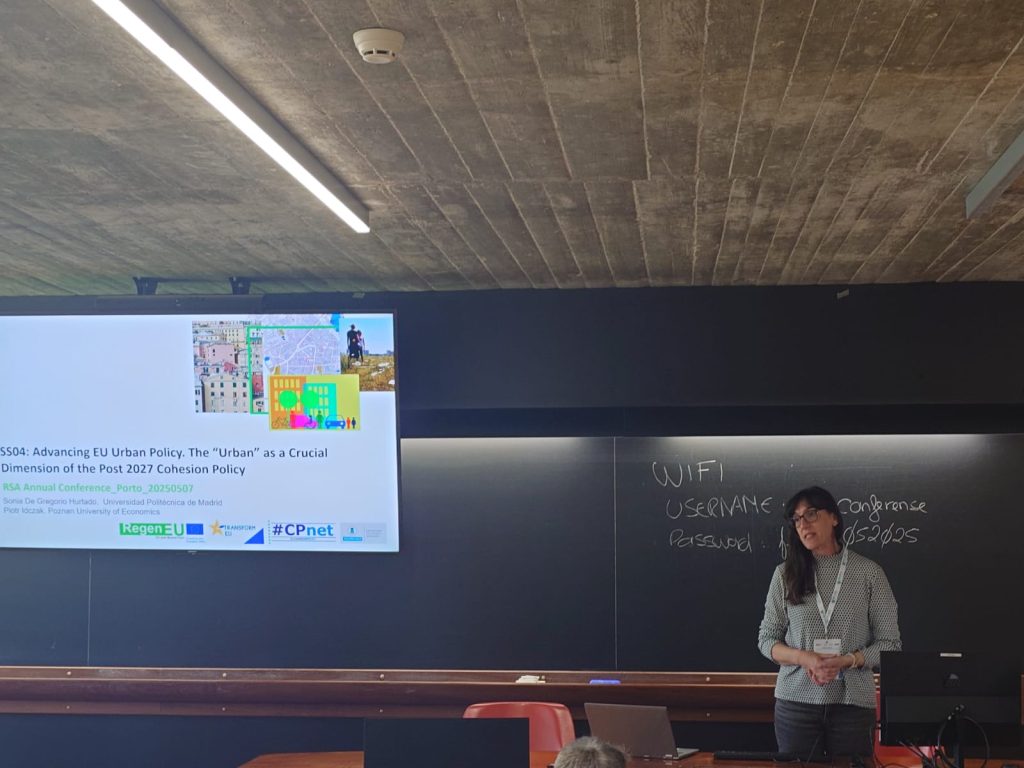
Last week the @RSA annual conference took place in Porto. @Piotz Idczak and Sonia De Gregorio organized a session entitled Advancing EU Urban Policy. The “Urban” as a Crucial Dimension of the Post 2027 Cohesion Policy that featured with the participation of @Martin Ferry, Stefan Kah, and Silvia Iossa. It was part of the action of the #CPnet, the Jean Monnet Chair RegenEU, and the Jean Monnet Center of Excellence “TransformEU”.
It focused on the role that cities need to play to advance quality of life and equitable resilience in Europe considering that Cohesion Policy needs to be instrumental in that regard. The session was designed to contribute to the current reflection on the post-2027 Cohesion Policy. This is a summary of some of the recommendations that emerged from the session:
👉 Focus Cohesion Policy on the “left-behind EU” (vulnerable urban areas) reintroducing urban regeneration of vulnerable neighbourhoods as a key principle of the urban dimension of CP.
👉 Regeneration of vulnerable areas should become a specific objective in post-2027 CP with an obligatory budget allocated in each MS.
👉 Urban territorial instruments – as urban ITI – have brought substantial added value to CP as prominent examples of place-based policy making.
👉 Associated challenges (setting scales and boundaries, embedding collaborative governance, cross-sectoral orientation) must be recognised, especially through capacity-building.
👉 Evidence important in broader EU funding debate: launch of new EU instruments and funds (e.g. RRF) as alternative sources for urban stakeholders, centralisation debate within CP.
👉 Cities should be integrated into the institutional framework of the CP financial instruments and, as implementing bodies, should assume a significant share of the responsibilities and formal procedures related to the provision of loans/grants.
👉 Support based on the financial instruments should primarily target large-scale urban projects that offer a broad investment scope.
👉 Address the relationship among the urban dimension of CP, national urban policies, and the planning systems in the Member States
👉 The strategic nature of CP urban instruments can work in synergy with statutory instruments of the urban planning systems of the MS. There is a lot of potential in undertaking this path.
We continue working on this collaborativelly. More to come in the framework of future #CPnet and RegenEU activity (stay tunned).
“The regeneration or urban vulnerable neighbourhoods; an EU policy that matters?”
Research developed by the Jean Monnet Chair RegenEU reflects on the regeneration of vulnerable neighbourhoods under the EU urban policy. It has been recently published in the book “Urban Regeneration in Europe” edited by Uwe Altrock and Detlef Kurth
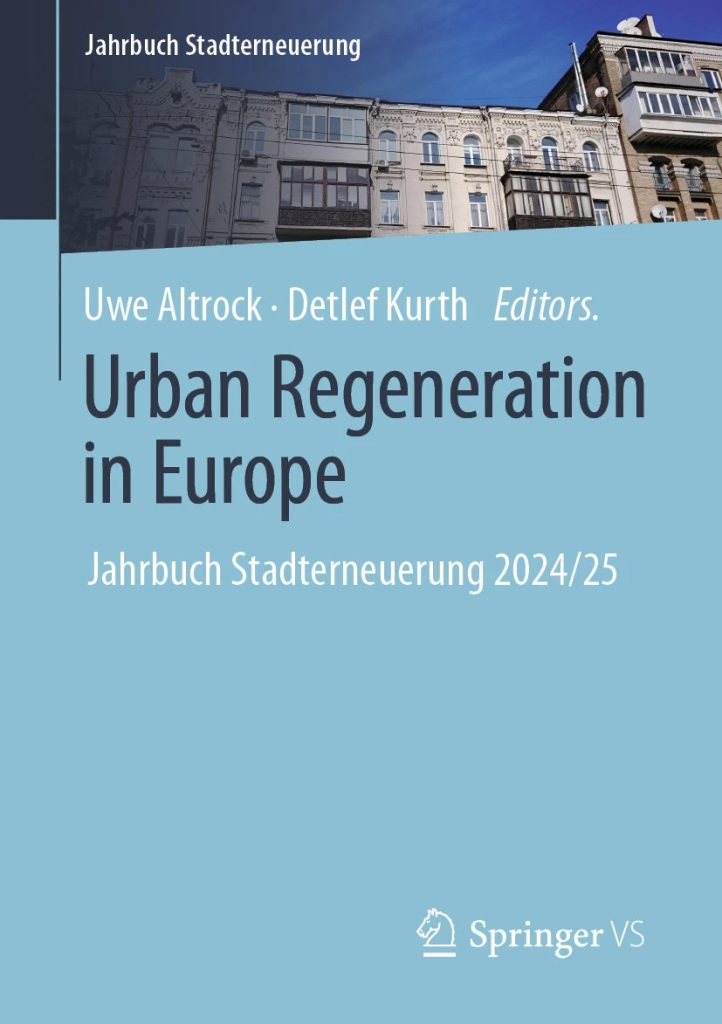
This work departs from studies that have stressed increasing vulnerability and a lack of urban regeneration in European Union (EU) cities in the programming periods 2007-2013 and 2014-2020 of the Cohesion Policy. In the context of the coming Cohesion Policy period in which innovative instruments will be crucial in addressing urban poverty and vulnerability – in line with that proposed by the European Green Deal -, this study demonstrates how urban regeneration has lost visibility and relevance in European Commission (EC) instruments and its related policy discourse through time, and how this has resulted in public stakeholders’ decreasing interest in urban regeneration and in weaker strategies being put into place in the programming period 2014-2020 of Cohesion Policy. The diachronic perspective adopted allows us to reveal the changing definition of the EU ‘urban problem’ from the end of the 1980s to the present moment, as well as the evolution of policy priorities; with vulnerable neighbourhoods being particularly identified as receiving insufficient attention. All this confirms the need to rethink and boost urban regeneration at EU level and integrate it as a specific objective of the Cohesion Policy for the period 2021-2027.